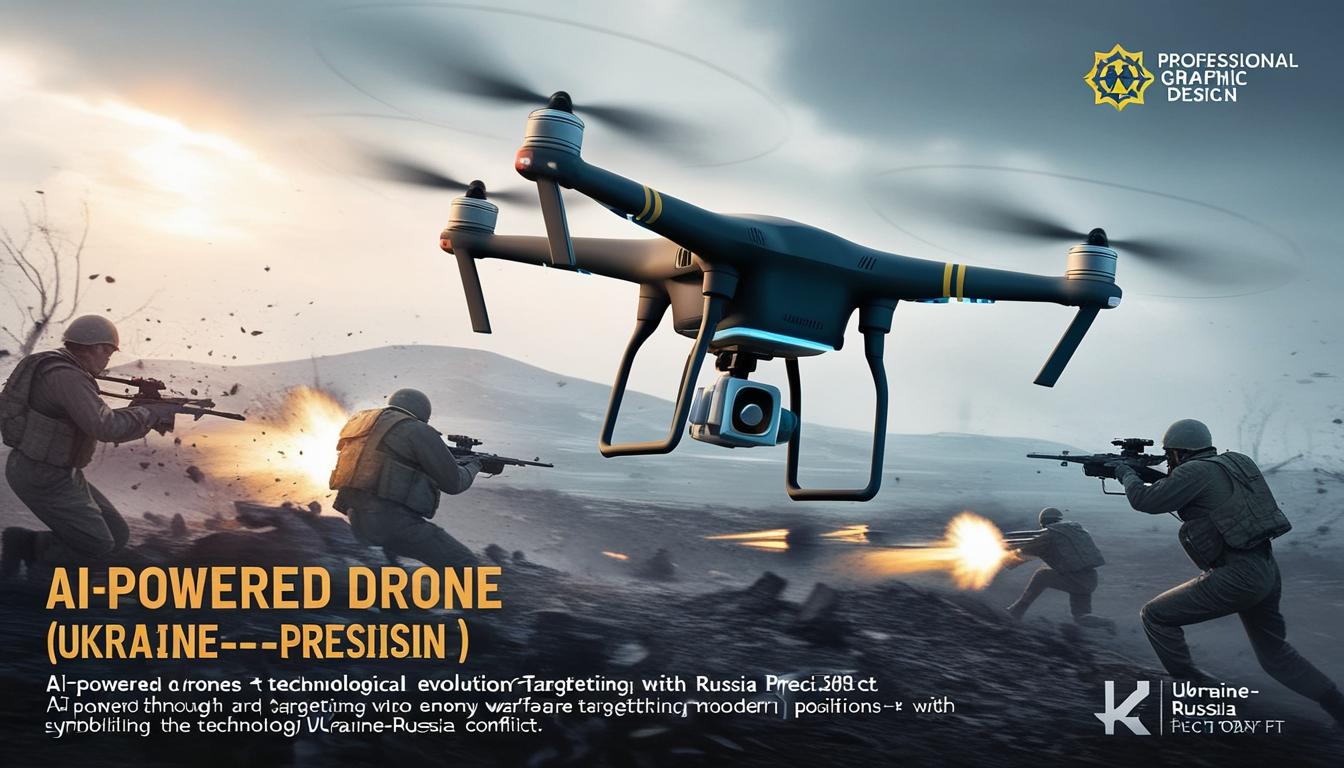
In the ongoing conflict between Ukraine and Russia, the battlefield is witnessing a significant technological shift with Ukraine's increasing use of domestically produced AI-enhanced drone systems. These advanced systems, capable of operating independently of human pilots, mark a new chapter in the technological arms race that has intensified since Russia's full-scale invasion began in February 2022.
Kateryna Chernohorenko, Ukraine's Deputy Defence Minister, has revealed that dozens of AI-driven drone systems manufactured by Ukrainian firms have been deployed to military forces. These drones are designed to overcome obstacles like signal jamming, which has severely hampered traditional manually piloted drones. The AI systems enable drones carrying explosives to identify and reach their targets autonomously, a crucial development in environments saturated with electronic warfare.
The application of AI in drone operations, especially in areas such as target recognition and flight control, is becoming increasingly important. It represents a strategic approach to counteract the intensified electronic warfare tactics employed by Russian forces, which include creating signal jamming "domes" to protect valuable targets from drone strikes. These measures disrupt the communication link between drones and their operators, thus impeding their effectiveness.
First-person view (FPV) drones, initially popular among civilian hobbyists for racing, have emerged as the most prevalent strike drones in the conflict. Both Ukrainian and Russian forces have been ramping up production of these cost-effective drones. However, the advent of AI-operated systems promises to enhance their precision. Current strike rates for FPV drones have fallen dramatically due to electronic countermeasures, with Ukrainian officials predicting that AI-targeted drones could achieve a hit rate of about 80%.
Samuel Bendett of the Center for a New American Security highlighted that while the integration of AI into warfare is still in its early stages, its potential impact is significant. At present, many of the solutions are based on existing commercial technologies, but as developments continue, more sophisticated features could be deployed.
Ukrainian forces are not only using these AI systems for offensive purposes but also for defence. AI-equipped interceptor drones are being utilised to counter Russian reconnaissance drones that direct artillery and missile attacks against Ukrainian targets. Chernohorenko emphasised the need for these interceptors to have AI targeting capabilities to effectively neutralise the threat posed by reconnaissance drones.
Dmytro Vovchuk, COO of Ukrainian software company NORDA Dynamics, shed light on their contribution to this technological front. The company has developed computer vision software that allows drones to autonomously navigate to targets selected by a pilot through the drone's camera. This technology has already been adopted widely, with NORDA Dynamics delivering over 10,000 units out of the 15,000 sold to drone manufacturers.
Despite the significant number of systems in circulation, they still only account for a small fraction of Ukraine's annual production capacity, which stands at 4 million drones. Vovchuk noted the effectiveness of these systems against high-value targets that are typically guarded by electronic warfare measures. He reported successful strikes on several tanks and logistics nodes, although the densely jammed electronic environment often prevents visual confirmation of hits.
As the conflict continues, the role of AI in warfare is expected to expand, potentially reshaping combat strategies and the dynamics on the ground. The development and deployment of AI-enabled drones represent not only a technological advancement but also a critical tactical evolution in Ukraine's defence strategy.
Source: Noah Wire Services