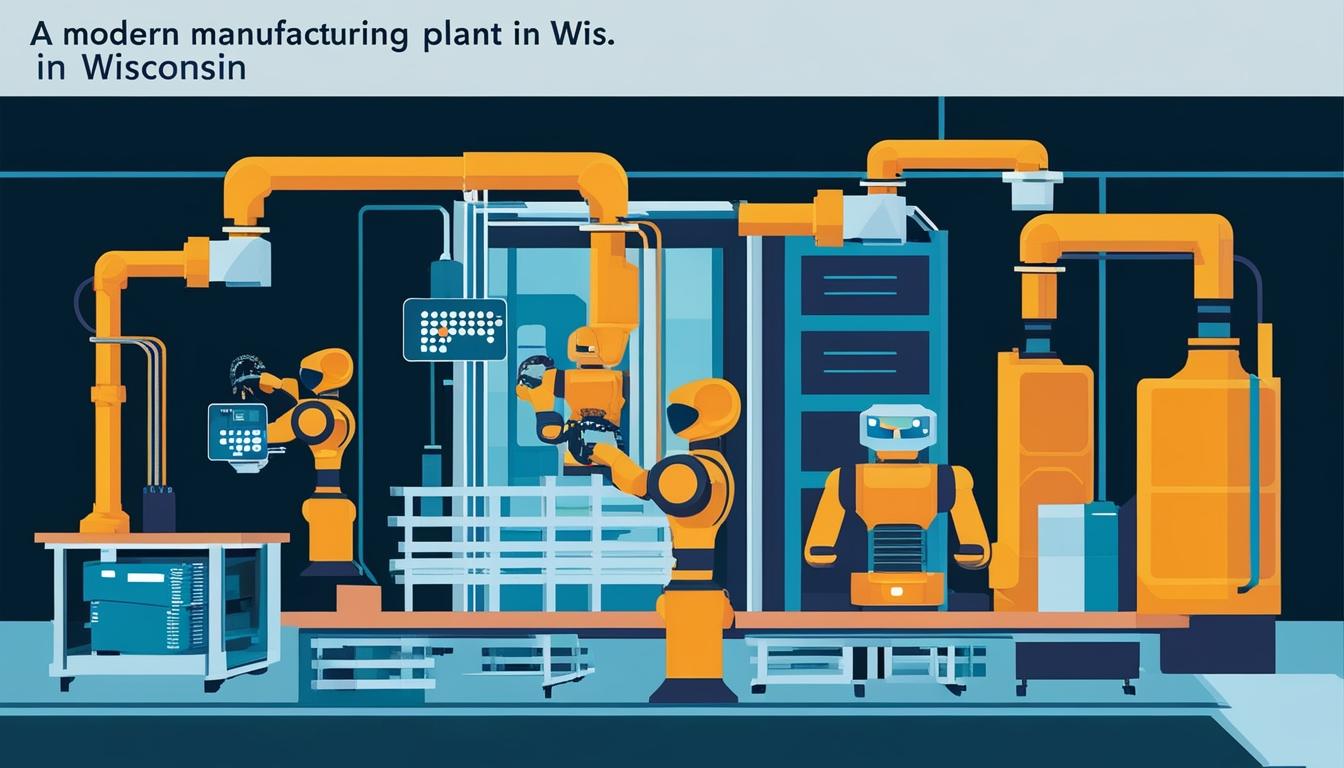
Wisconsin Poised to Lead in AI-Driven Manufacturing Revolution
Wisconsin, a state renowned for its history of innovation in manufacturing, is positioning itself as a frontrunner in integrating artificial intelligence (AI) into the manufacturing sector. On October 30, approximately 60 stakeholders, including industry leaders, academic researchers, and workforce experts, gathered at the world headquarters of Husco International Inc. to discuss the future of manufacturing catalysed by AI advancements.
Located in Wisconsin, Husco International Inc. specialises in high-performance hydraulic and electro-mechanical components. The meeting, attended by executives from about 20 Wisconsin-based companies, centred on discussions steered by the Institute for Furthering AI and Computing in Manufacturing, which is affiliated with the University of Wisconsin-Milwaukee. This consortium is seeking to become the pioneer “AI for Resilient Manufacturing” institute as part of Manufacturing USA, a network supported by the National Institutes of Science and Technology (NIST) but operated by non-profits across 17 locations in the United States.
The ambitious initiative aims at securing a potential five-year grant of $70 million from NIST, contingent on the completion of a rigorous multi-stage application process. The focus of this effort is to foster the safe, efficient, and ethical incorporation of AI technologies in American manufacturing, ultimately enhancing U.S. competitiveness on the global stage. This mission is particularly timely as other nations, notably China, rapidly develop AI capabilities to gain an edge in manufacturing.
Wisconsin's strategic position in this endeavour is bolstered by its prominent manufacturing workforce, accounting for approximately 18% of the state’s labour force, the second highest concentration in the U.S. The state is also home to significant engineering institutions and technical colleges, which, in combination with nearby research facilities such as the Argonne National Laboratory in Illinois, form a robust foundation for this AI-driven transformation.
Presently, AI applications in manufacturing include predictive maintenance, inventory management, supply chain operations, quality assurance, advanced robotics, and customer demand forecasting. These applications promise to shift the industry towards a market "pull" approach, offering tangible benefits for small and medium-sized manufacturers willing to harness AI technology effectively.
During the Husco meeting, participants underscored that AI is not intended to replace jobs but rather to transform menial tasks into more meaningful and productive work, resulting in improved job satisfaction. A consensus was reached that AI could redefine job roles within the sector, offering a "step-ladder approach to job progression."
While the implementation of AI holds great promise, it inevitably comes with challenges, such as ensuring the technology is used constructively without compromising privacy and security. Participants expressed confidence that Wisconsin could lead this charge by setting a standard for responsible AI deployment in manufacturing.
As artificial intelligence continues to advance and reshape industries globally, Wisconsin's proactive steps towards integrating AI in manufacturing could position it as a leader in this evolving landscape. The state's commitment to innovation reflects its history of firsts, potentially setting the stage for a future where AI plays a pivotal role in manufacturing productivity and competitiveness.
Source: Noah Wire Services