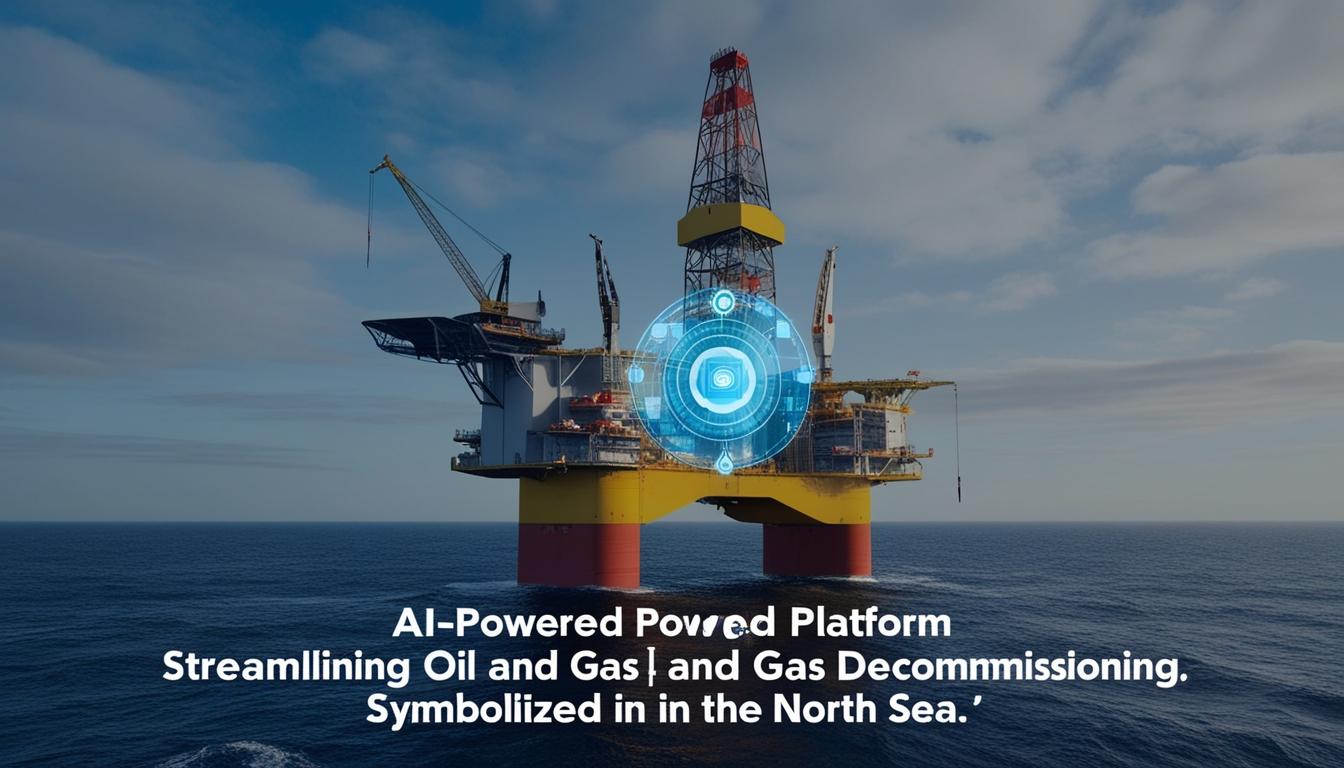
Aberdeen AI Firm Rahd AI Announces Major Breakthrough in Oil and Gas Decommissioning
In a significant development for the energy sector, artificial intelligence firm Rahd AI, with a technology centre based in Aberdeen, has unveiled a pioneering platform that promises to enhance the efficiency of decommissioning oil and gas infrastructure. The breakthrough, claimed by the developers, has the potential to save taxpayers and industry billions through more efficient processes.
Rahd AI, a company under the umbrella of Ventex, an Aberdeen-headquartered climate tech venture studio, operates with its primary base in Perth, Australia. Jake Stride, a former global energy technology lead at Microsoft and currently a board member of Subsea Energy Australia, leads the innovative company.
This cutting-edge platform leverages extensive datasets from over 15,000 wells, extracted from global environmental statements, field plans, and governmental and agency reports. It stands as the largest repository of its kind, containing comprehensive details on fields, basins, wells, infrastructure, and rigs.
The data undergoes a meticulous cleaning and structuring process via Rahd AI's proprietary data management system. Once prepared, the data is fed into a large language model designed to inform comprehensive decommissioning plans for oil and gas fields. This model has shown its potential to reduce the UK's decommissioning expenses by up to 35%.
Jake Stride explained the collaborative approach of the platform: "Operators and governments are contributing insights and recommendations, which are then anonymised and securely shared. This collaboration allows us to outline pathways for reducing decommissioning costs across our extensive data repository."
Rahd AI's technology has already demonstrated its capabilities in Australia through a pilot programme, showing how it can achieve a 10% cost saving. The firm's innovative approach is currently undergoing further validation via a rapid implementation programme in collaboration with the UK’s Net Zero Technology Centre and energy giants such as Equinor, Harbour Energy, TotalEnergies, Repsol, Petrobras, and ConocoPhillips.
The UK Government aims to trim decommissioning costs by 10% by 2026 and 35% by 2035. Rahd AI is optimistic about achieving the 35% milestone by 2027, significantly ahead of schedule, which could result in billions of pounds in savings.
In the context of the UK Continental Shelf (UKCS), the North Sea Transition Authority (NSTA) estimates decommissioning costs will reach between £40bn and £46bn by 2050. With tax relief impacting tax receipts by an estimated £24bn over the decommissioning period, achieving a 35% cost reduction could increase tax revenues to the UK Treasury by more than £8bn, alongside saving energy companies an additional £2bn.
Steve Gray, managing partner at Ventex, praised the platform's capabilities: “A Rahd AI-driven decommissioning plan will be capable of scheduling, pricing, integrating, and de-risking dependencies in each service and technology. It provides insights that were previously unattainable.”
This innovative development from Rahd AI marks a significant stride towards more sustainable and economically viable solutions in the decommissioning of oil and gas infrastructure, representing a potential boon for both the industry and taxpayers alike.
Source: Noah Wire Services