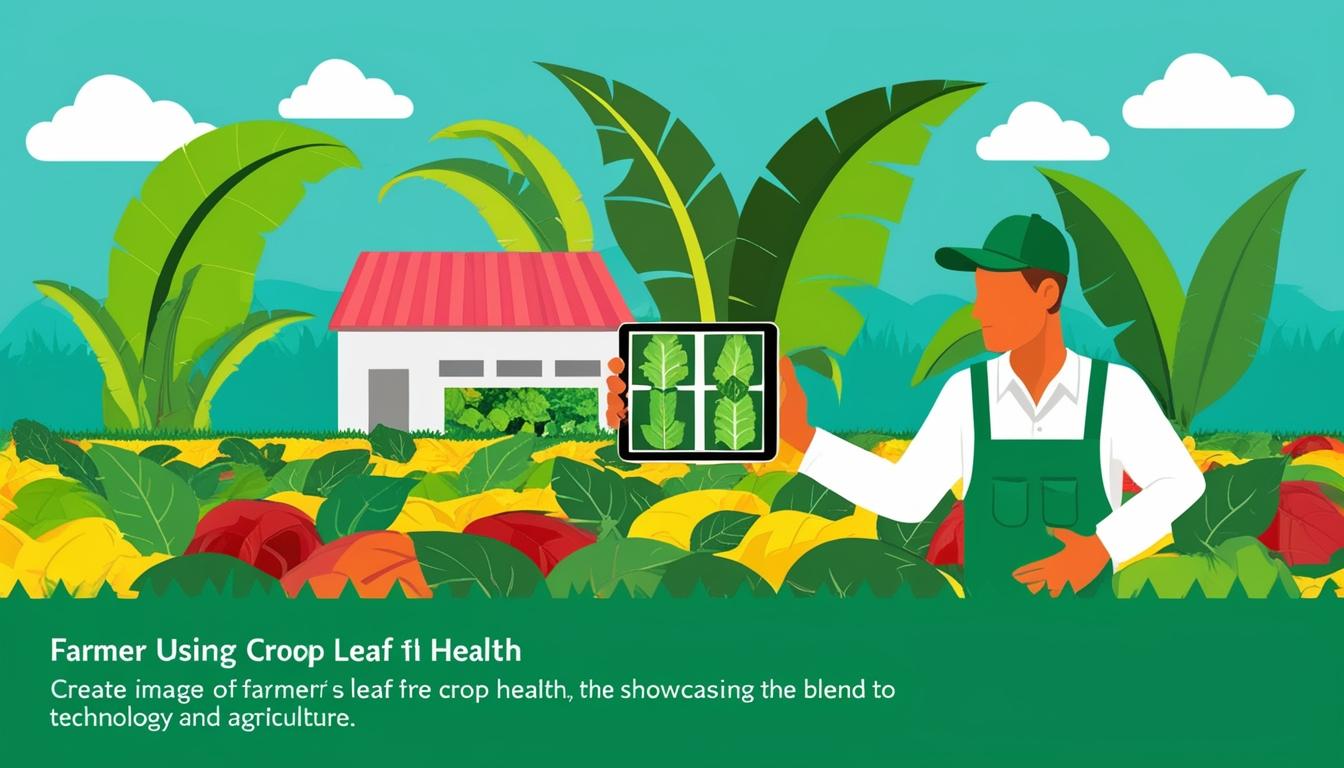
Researchers have achieved significant advancements in the realm of artificial intelligence by employing deep learning techniques to automate the detection and classification of crop leaf diseases, particularly in tropical areas where such afflictions are prevalent. These scientific strides are documented in a study published in the journal Tropical Plants, with findings that could reshape agricultural practices in regions vulnerable to plant diseases.
The study spotlights the persistent challenges posed by high temperatures and humidity levels in tropical climates, which create an optimal breeding ground for various plant diseases. These factors present a formidable threat to food security, necessitating effective solutions. Traditional approaches to detecting plant diseases primarily involve manual observation and expertise, methods that are often deemed inefficient and costly within large-scale agricultural settings.
The deployment of deep learning-based disease detection models emerges as a promising alternative, offering solutions that are both efficient and cost-effective. These models have demonstrated the ability to identify diseases at an early stage, thus facilitating timely intervention that can mitigate the spread of afflictions and protect crop yields.
Deep learning, a subset of machine learning, underpins these advances, allowing computational models to be automatically optimised for tasks such as object detection, image classification, and localisation. The study utilises sophisticated techniques such as stochastic gradient descent and the Adam optimiser to eliminate the necessity for manual parameter configuration, thereby streamlining the feature extraction process. Unlike conventional machine learning methods that demand manual feature crafting, deep learning models autonomously learn from complex and extensive data sets, making them particularly adept at automating intricate tasks associated with agriculture.
Key to these advancements are architectures such as Convolutional Neural Networks (CNN), You Only Look Once (YOLO), and Single Shot Multibox Detector (SSD), which have demonstrated exceptional proficiency in detecting and classifying crop leaf diseases with remarkable accuracy. The study boasts recognition accuracies exceeding 90% in most scenarios, with some models achieving beyond 99% accuracy. Such precision underscores the potential of these models to revolutionise disease detection in tropical agriculture, where the rapid spread of diseases poses a significant concern.
Aside from their accuracy and reliability, these models are also lauded for their cost-effectiveness. They notably reduce the labour costs traditionally associated with manual disease detection. The ability to deploy trained models on mobile devices for real-time monitoring further enhances their accessibility to non-expert users, thereby promoting timely disease prevention and improving agricultural output. This development supports precision agriculture practices, significantly impacting tropical farming landscapes.
Huang Mengxing, one of the researchers involved in the study, emphasised the breakthroughs enabled by these technologies, noting, "Deep learning models provide unparalleled accuracy and speed in detecting leaf diseases. By deploying these models in tropical agriculture, we can significantly enhance crop management, reduce labour costs, and promote sustainable farming practices."
The integration of deep learning into tropical agricultural practices offers a potent tool against plant diseases, bolstering productivity and encouraging sustainable cultivation methods. With continued research and refinement, these AI-driven systems hold the potential to become an integral component of modern agricultural strategies, especially in regions where plant disease outbreaks threaten food security.
As agriculture progresses towards technological integration, deep learning models for leaf disease detection represent a significant milestone, propelling the industry into a future where artificial intelligence is interwoven with traditional farming methodologies.
Source: Noah Wire Services