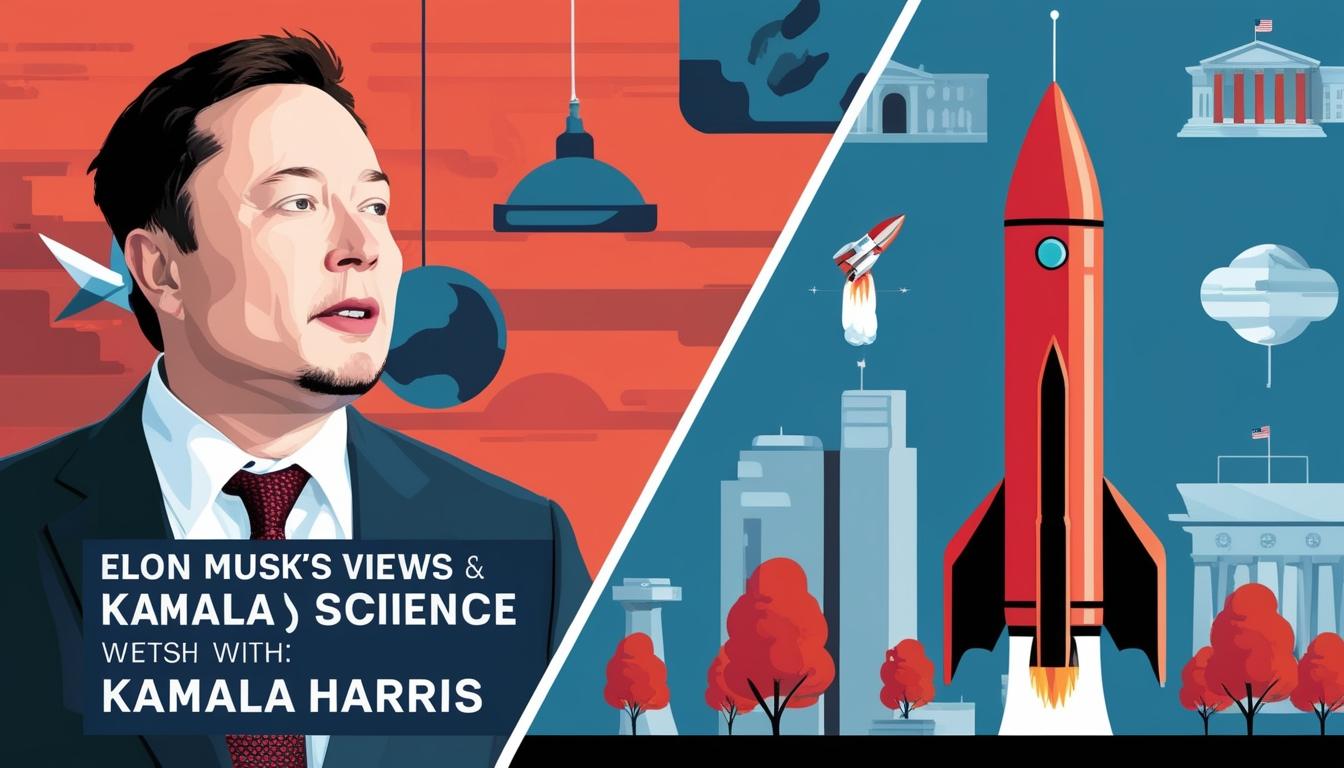
Billionaire's Assertions on Space Exploration Stir Controversy Among Scientists
In an unexpected statement earlier this year, Elon Musk, the influential billionaire and CEO of SpaceX, posited that the election of Vice President Kamala Harris as President would hinder humanity's ambition to colonise Mars. Musk suggested that a former reality television star and convicted felon leading the nation would be more conducive to achieving a "multi-planetary" status. This viewpoint has sparked considerable debate among experts and public figures alike.
Musk's comments came during a tech conference, where he argued that "overregulation" is a substantial barrier to technological progress. This stance overlooks the significant role that governmental support and contracts, especially from NASA, have played in SpaceX's advancements and success.
In stark contrast to Musk’s assertion, Kamala Harris has been an active proponent of space exploration initiatives in her role as the chair of the White House's National Space Council. Her dedication to the field is further exemplified by her consideration of Mark Kelly, a former NASA astronaut, as a potential vice-presidential running mate.
Musk's statement did not go unanswered. Yann LeCun, a prominent computer scientist and the chief scientist at Meta, responded via social media, urging Musk to remain calm. LeCun countered Musk's claim by asserting that humanity's potential to become a multi-planet species does not hinge on the outcome of the presidential election. "We will become a multiplanet species regardless of who gets elected," LeCun tweeted, adding, "We will even become a multiplanet species if you die tomorrow."
LeCun further argued that a presidential administration supportive of science, research, and education, like that of Harris, would accelerate the journey to becoming a multi-planetary species. He referenced recent remarks by former President Donald Trump, who described universities as being overrun by "Marxist maniacs and lunatics," and shared concerns about running mate JD Vance's encouragement to attack higher education institutions.
Moreover, LeCun highlighted a contradiction in Musk's priorities, noting the urgency of addressing the climate crisis on Earth as opposed to the fervour for rapid Martian colonization. He referenced Musk’s past actions, such as stepping down from Trump's advisory councils after the U.S. withdrawal from the Paris climate agreement, suggesting a shift in Musk's environmental commitment that now appears more aligned with Trump's climate scepticism.
Through his tweets, LeCun went as far as to label Musk as perhaps the greatest threat to American democracy today, indicating a significant clash of ideas concerning leadership, science policy, and exploration priorities.
The debate over the path toward a multi-planetary future continues, underscoring broader discussions about leadership, scientific integrity, and the balance between addressing Earth’s present challenges and exploring new frontiers.
Source: Noah Wire Services