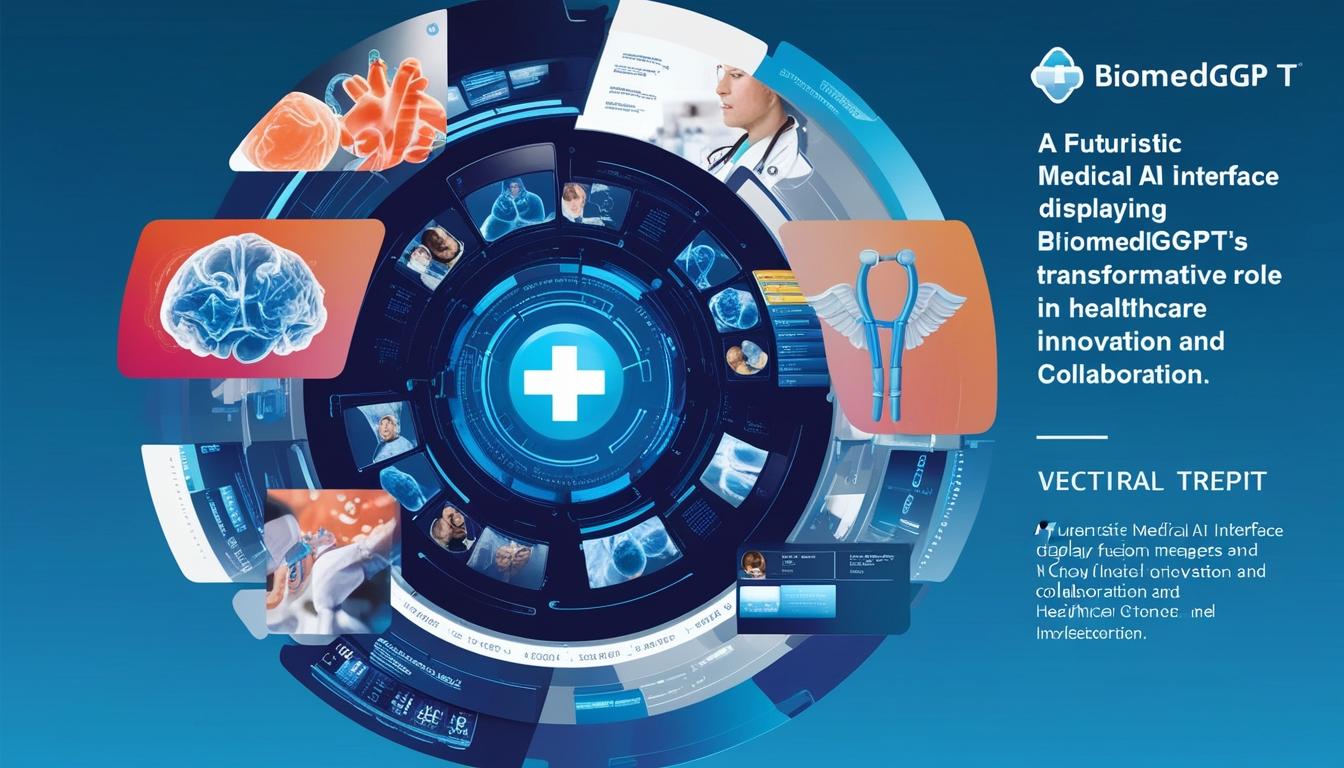
BiomedGPT: Revolutionising Biomedical AI with Comprehensive Capabilities
In the realm of biomedical AI, a groundbreaking development known as BiomedGPT is creating waves, having been highlighted in the esteemed journal, Nature Medicine. BiomedGPT stands as an innovative artificial intelligence model developed to tackle a broad spectrum of medical and scientific tasks, demonstrating remarkable versatility and adaptability. This pioneering project is the result of a collaborative effort among researchers from various prestigious institutions.
The project takes the form of an open-source and lightweight vision-language foundation model, explicitly designed as a generalist. Unlike conventional AI systems, which are often tailored to perform specific tasks, BiomedGPT distinguishes itself through its ability to manage numerous tasks using a unified technology platform. This versatility renders it a powerful tool for medical practitioners, offering potential applications ranging from interpreting medical images to synthesising scientific research.
The creation and study of BiomedGPT are led by prominent figures such as Lichao Sun, an assistant professor of computer science and engineering at Lehigh University, along with Kai Zhang, a PhD student under Sun's supervision. They have been instrumental in developing this AI system, which merges two critical AI capabilities: understanding biomedical images and assessing biomedical text. This integration enables the system to address a wide variety of challenges within the biomedical domain effectively.
Highlighting its capabilities, the model's performance has been rigorously evaluated across 25 datasets spanning nine distinct biomedical tasks and modalities. Impressively, BiomedGPT has achieved 16 state-of-the-art results, showcasing its robust predictive abilities. A human evaluation focusing on three radiology tasks further validated its performance, underlining its potential as a transformative tool in medical decision-making and patient care.
A crucial component in the development of BiomedGPT was its validation in real-world healthcare environments. Massachusetts General Hospital (MGH), a leading member of the Mass General Brigham healthcare network and an affiliate of Harvard Medical School, was pivotal in this phase. MGH provided crucial clinical expertise, allowing the model to be tested in practical scenarios. This involved working with radiologists at MGH, where BiomedGPT excelled in tasks like visual question answering and radiology report generation, thereby establishing its accuracy and utility in clinical settings.
The project is a testament to interdisciplinary collaboration, involving experts from an array of institutions including the University of Georgia, Samsung Research America, University of Pennsylvania, Stanford University, University of Central Florida, UC-Santa Cruz, University of Texas-Health, Children's Hospital of Philadelphia, and the Mayo Clinic. This extensive collaboration brought together specialists from fields such as computer science, medicine, radiology, and biomedical engineering, each contributing essential knowledge for the development and validation of the model.
The team's efforts reflect the complex nature of creating a system capable of significantly enhancing patient outcomes across various medical concerns. Furthermore, the open-source nature of BiomedGPT's codebase allows other researchers to build on this foundation, potentially accelerating advancements in biomedical AI.
As research and clinical validation continue, BiomedGPT has the potential to significantly streamline healthcare processes and enhance the accuracy of diagnoses, underscoring the importance of collaborative efforts in technological innovation.
Source: Noah Wire Services