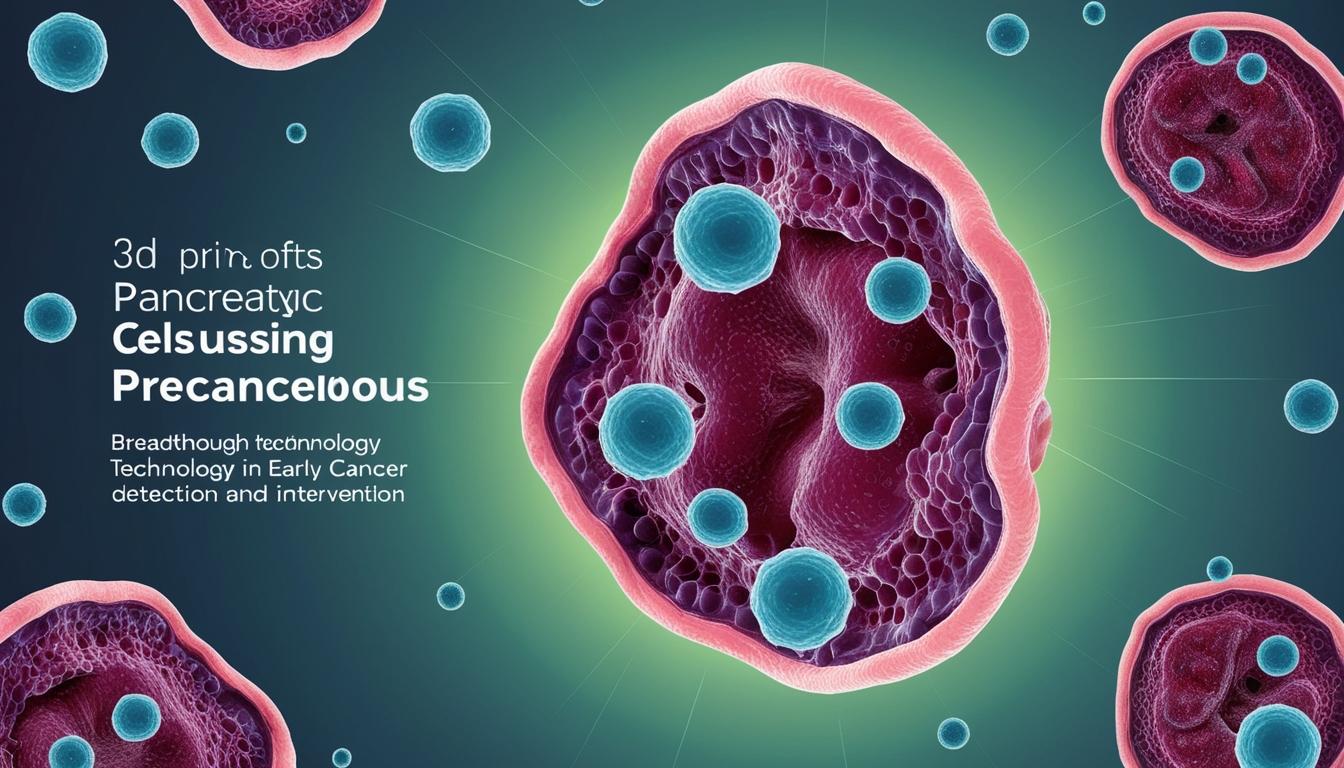
Researchers at Johns Hopkins University have announced a significant advancement in the early detection of pancreatic cancer, a disease which ranks as the third leading cause of cancer-related deaths in the United States. The breakthrough, which utilises a pioneering 3D genome profiling technique known as CODA, holds promise for improving early detection and potentially saving lives through earlier intervention.
For the first time, scientists have successfully created a 3D print of precancerous cells located in a human pancreas. This innovative technology permits doctors and researchers to examine tissue in a three-dimensional format and subsequently map genetic alterations onto this model. The traditional methods of detection, which often rely on radiology exams, struggle to identify these precancerous cells. This is largely due to the fact that such precancers do not appear in standard radiological results, complicating efforts for early pancreatic cancer detection.
The process begins with the utilisation of microscopic slides, each representing a sample of pancreatic tissue. Thousands of images are scanned from these slides, and through the integration of artificial intelligence and advanced coding, a detailed visualisation of the tissue is created. Pathologists then carry out DNA sequencing to analyse the cells, with the aim of understanding how some of these cells transition into malignant cancer.
Dr. Laura Wood, an associate professor of pathology and oncology at the Johns Hopkins Kimmel Cancer Center, has emphasised the importance of this breakthrough. Dr. Wood noted, "What are the features of these precancers that are more likely to progress, so then we know which ones to intervene on." This insight could be crucial in determining which precancerous formations are likely to develop into cancer, subsequently guiding intervention efforts more precisely.
A particularly intriguing aspect of this discovery is the finding that the majority of people may carry precancerous cells in their pancreas. The challenge lies in determining why only some of these cases lead to full-blown cancer. The research team hopes that the knowledge gained from this technique will shed light on this phenomenon, offering clues potentially applicable to other types of cancer as well.
Looking ahead, the team at Johns Hopkins is optimistic that the CODA technique could extend its utility beyond pancreatic cancer to assist in identifying precancerous conditions in other organs. This groundbreaking work not only highlights the potential for technological advancements in medical diagnostics but also charts a path towards more effective screening and intervention strategies in the future.
Source: Noah Wire Services