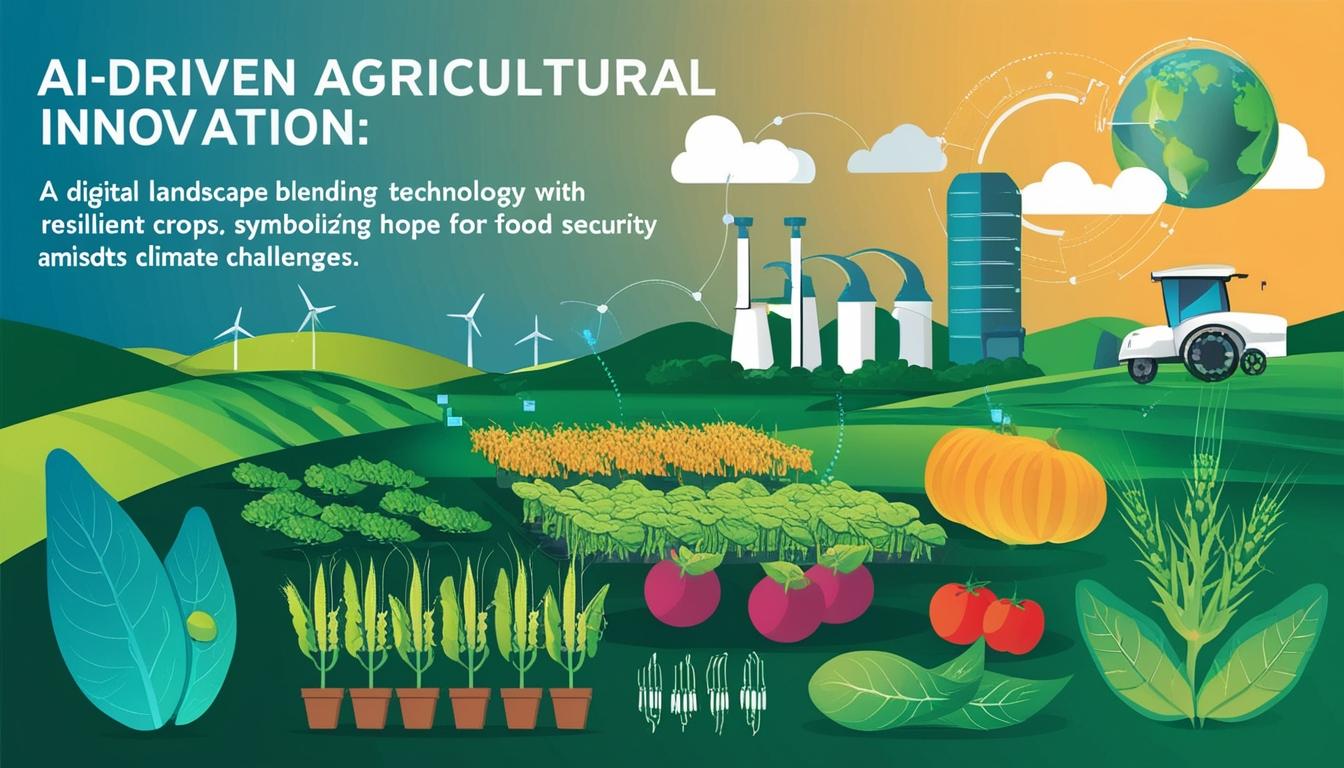
COP29 to Address Technological Advances in Global Food Security Amidst Climate Change
Warsaw is set to host the 29th annual Conference of the Parties (COP29) in November, where world leaders, scientists, and policymakers will converge to discuss pressing issues related to climate change, with a particular focus on agriculture and food production systems. As the global population continues to grow, the need to innovate in food production while reducing environmental impact has become increasingly urgent.
This year's conference will spotlight the role of emerging technologies, especially artificial intelligence (AI), in developing resilient agricultural systems. The central questions revolve around leveraging technology to enhance nutrition and sustainability, mitigating the adverse impacts of traditional food production methods on the planet.
A key figure at the forefront of these discussions is a plant biotechnologist engaged in efforts to identify and preserve plant species with superior genetic traits. This work is critical in fostering food security and conserving biodiversity in a changing climate. The focus lies on preserving climate-resilient genes, including those from endangered tree species and under-utilised indigenous African leafy vegetables.
The traditional methods of conserving plant material, such as cryopreservation and plant tissue culture, are being complemented by advanced biotechnological techniques. These include breeding programs that produce resilient, fortified foods and genetic modifications that enhance pest resistance. The potential of AI to revolutionise these processes is significant, allowing for the efficient prediction and identification of valuable plant traits, thus creating crops capable of thriving in various climate conditions.
AI’s role in agriculture extends to managing vast datasets related to soil, weather, and climate responses. By automating processes and optimising workflows, AI can reduce wastage and enhance resource use by adjusting inputs in real-time based on continuous feedback and monitoring. Such capabilities promise a more efficient and climate-resilient agricultural sector.
A notable breakthrough facilitated by AI is in protein chemistry, a pivotal area for food production. In 2024, the Nobel Prize in Chemistry recognised the innovation of the AlphaFold AI platform, which deciphers the complex structures of proteins. This advancement allows for the design of novel proteins that could revolutionise food production and healthcare, with scientists now able to edit genomes for robust protein synthesis across diverse environments.
Despite these strides, the deployment of AI in agriculture remains uneven globally, with significant gaps in resource availability and investment. Africa, poised to benefit immensely from AI-driven advancements in food security, faces challenges due to these discrepancies. The continent's leaders are urged to advocate strongly at COP29 for equitable access to AI resources, ensuring that vulnerable populations benefit from technological advancements.
The narrative at COP29 will seek to address the cumulative impact of climate change on impoverished communities, particularly in Africa. Policymakers are called upon to push for AI tools that identify vulnerable groups and ensure fair distribution of the benefits from increased food production.
As the conference approaches, the anticipated dialogue at COP29 is set to align AI’s transformative potential with the urgent need for climate-resilient agricultural systems. This dual focus aims to secure food systems globally while prioritising social equity and environmental sustainability.
Source: Noah Wire Services