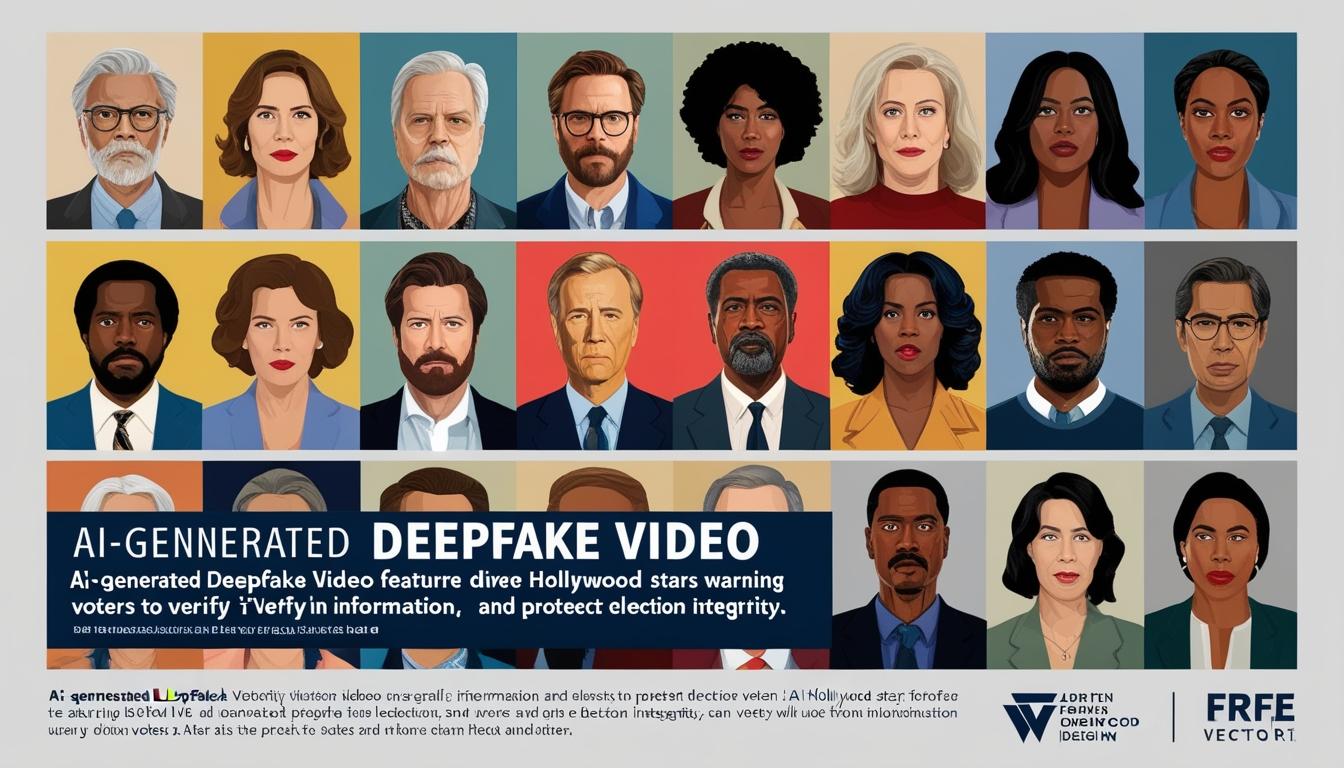
Election interference is entering a new era as the utilisation of artificial intelligence (AI) and deepfake technology becomes more prevalent. In response, a viral public service announcement titled "Don't Let AI Steal Your Vote" aims to educate the public about potential threats during elections. The video, which has garnered over 6 million views on YouTube, features digitally generated appearances of Hollywood stars, including Rosario Dawson, Amy Schumer, Chris Rock, and Michael Douglas, with some of these portrayals being deepfakes. The initiative is spearheaded by RepresentUs, a national non-partisan anti-corruption organisation.
Joshua Graham Lynn, CEO and co-founder of RepresentUs, described the enthusiasm among participating public figures. "Everybody that you see there either gave us their likeness or performed in person voluntarily. They were excited to contribute to promoting voter participation," Lynn shared with Scripps News. The AI-generated video serves as a warning for voters to scrutinise online content more closely as election-related deepfakes become more advanced and harder to detect.
Authorities such as the Department of Homeland Security have previously alerted state election officials about the risks posed by AI tools. These tools could be exploited to forge election records, impersonate election workers, generate misleading voter calls, or disseminate false information more persuasively.
Purdue University Professor Kaylyn Jackson Schiff has discussed the growing public scepticism caused by both real and manipulated media. This phenomenon, referred to as "the liar's dividend," suggests that the proliferation of AI-driven content allows individuals to challenge the credibility of authentic media by citing the existence of deepfakes.
Schiff and Christina Walker, a PhD candidate at Purdue, are actively monitoring the impact of deepfakes in the political arena. Their research has documented over 500 instances since June 2023 in their Political Deepfakes Incidents Database, noting that while some deepfakes serve satirical purposes similar to political cartoons, others can inflict reputational damage if shared without context.
Despite the challenges in identifying deepfakes due to rapid technological advances, Walker mentions that there are still signs, such as extra or missing fingers and blurry faces, which can indicate digital manipulation. She advises voters to rely on official sources, particularly around sensitive election periods, to verify any startling information they encounter.
As the threat of AI-driven disinformation looms, experts continue to emphasise the importance of critical thinking and verification. With elections being a critical component of democratic society, the integrity and trust in the electoral process remain of paramount importance.
Source: Noah Wire Services