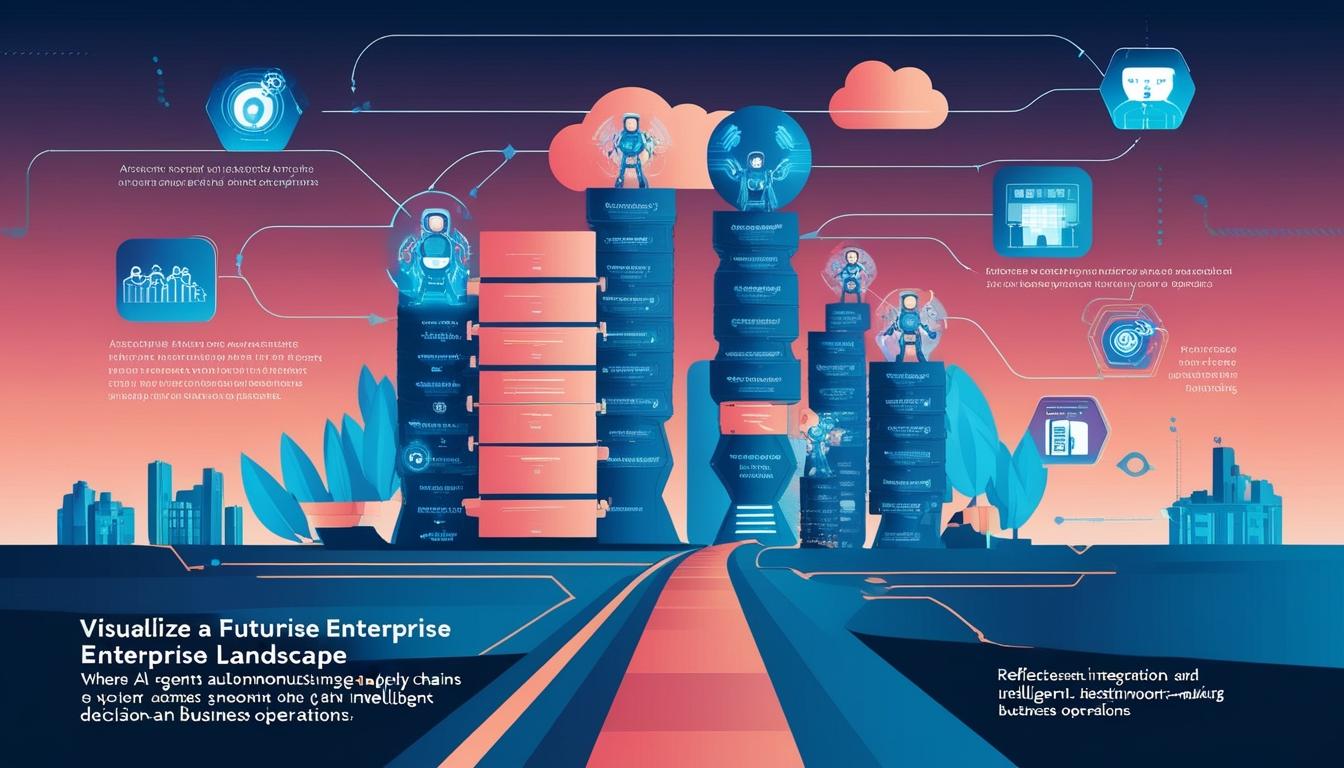
Enterprise Transformation Through Agent Orchestration: A New Frontier in Artificial Intelligence Integration
In the rapidly evolving landscape of enterprise IT, a new technological advance is set to redefine business operations through artificial intelligence (AI). This evolution, known as agent orchestration, is poised to bridge the gap between vast enterprise data stores and customer engagement, radically transforming the enterprise architecture framework. Unlike traditional methods, agent orchestration introduces an innovative approach that transcends mere system connectivity, enabling systems to think and act autonomously.
Traditionally, enterprise application integration (EAI) has been at the heart of business operations, focusing on consolidating diverse systems. In the 2000s, industry leaders such as IBM’s WebSphere, Microsoft’s BizTalk Server, and Oracle's Fusion Middleware led the charge with robust tools for integrating disparate applications. TIBCO’s ActiveMatrix, Informatica’s PowerCenter, and SAP NetWeaver played pivotal roles in real-time data integration across various industries, shaping the agile enterprise environments of today.
However, the conventional EAI approach could not fully meet the demands imposed by contemporary real-time business dynamics. Enterprises have realised that merely connecting systems does not leverage the potential of their data. Agent orchestration addresses this shortcoming by employing AI-powered layers that intelligently mediate and enhance interactions within business systems. This model shifts the paradigm from moving data to transforming it into actionable intelligence.
In practical terms, agent orchestration can revolutionise operations such as supply chain management in manufacturing. Here, intelligent agents autonomously oversee stock levels, predict demand, and place procurement orders, thereby shifting from basic automation to cognitive integration. These agents learn and adapt as business conditions evolve, demonstrating real-time responsiveness and agility.
The strategic implementation of agent orchestration enables enterprise architecture to achieve higher levels of intelligence. For example, in customer service roles, representatives benefit from AI-driven insights derived from real-time analysis of customer behaviour, allowing for more informed engagement. Similarly, the financial services sector benefits from enhanced fraud detection systems that adapt to new threats, reducing false positives and catching unconventional fraud patterns that static systems might miss.
As agent orchestration takes centre stage, a new generation of technology vendors is emerging, echoing the dominance of past EAI giants like IBM and Microsoft. These vendors focus on developing platforms specialising in autonomous workflows, cross-system intelligence, and decision-making automation. Their solutions promise to build intelligent, scalable architectures essential for enterprises aspiring to meet future challenges head-on.
An essential feature of agent orchestration is its self-improving capability, which continuously refines processes across the enterprise. This dynamic evolution provides significant strategic advantages by allowing organisations to swiftly adapt their operations, a crucial factor in competitive markets characterised by shifting consumer expectations.
While outlining these advancements, it is crucial to address the perennial concerns of security and data governance. With industries such as banking and healthcare handling sensitive data, maintaining compliance is paramount. Standardised protocols for agent communication are being established to ensure these autonomous workflows do not compromise privacy or security while remaining adaptable and efficient.
The benefits are already being reported by early adopters. Organisations implementing these systems experience notable improvements in operational efficiency, customer satisfaction, and market agility. The capability to swiftly adapt to changing market conditions is emerging as a critical competitive differentiator.
As the role of AI continues to expand within enterprises, those adopting agent orchestration stand to gain a significant competitive edge. Business leaders today are assessing how to integrate these systems into their organisations to remain responsive and successful in an ever-changing business environment. By harnessing the power of orchestrated intelligence, enterprises can achieve a level of agility and insight previously impossible with traditional integration strategies, marking a decisive shift towards an intelligent, AI-driven future.
Source: Noah Wire Services