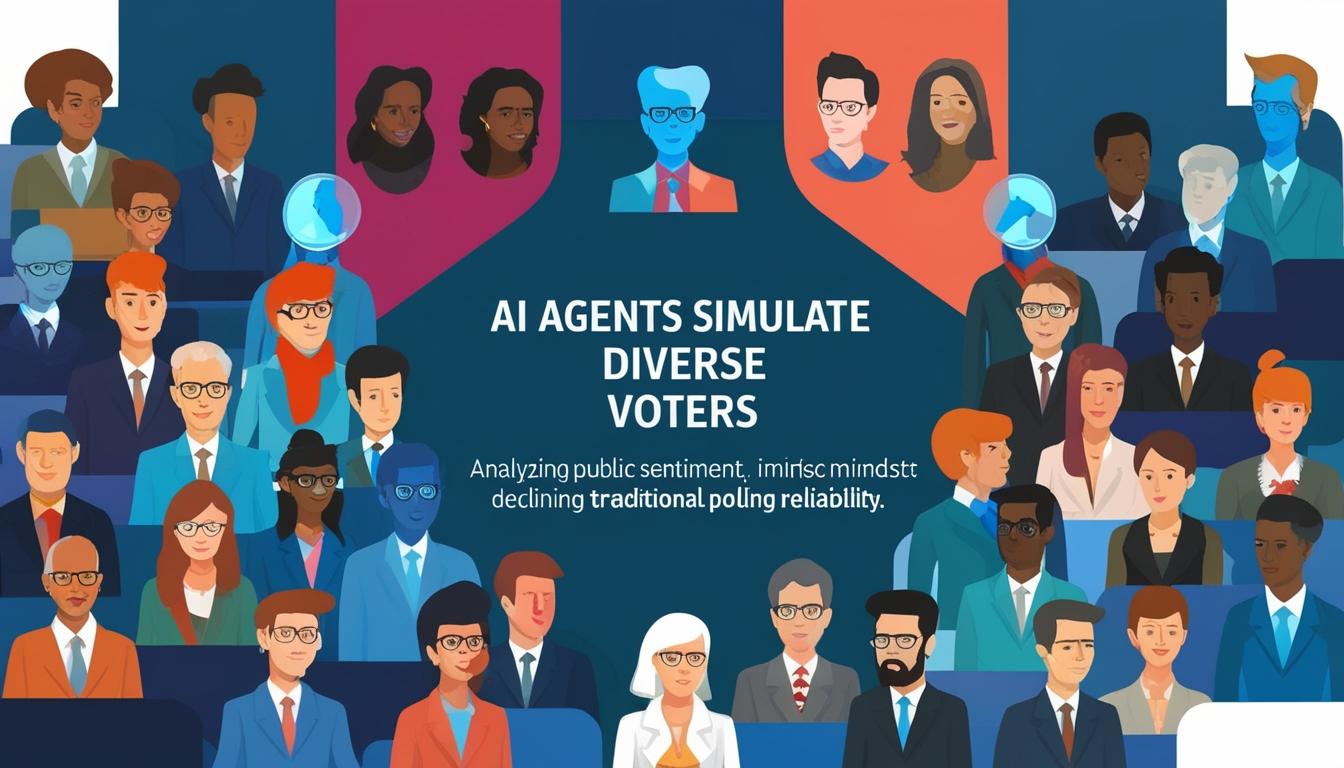
In an evolving landscape of political polling, researchers from Harvard University are exploring innovative methods to address the declining reliability of traditional polling techniques. The rise in AI technology presents a potential solution, capable of transforming how political campaigns and movements assess public sentiment, according to a report from the Harvard Kennedy School's Ash Center.
Political polling has long been considered a cornerstone of modern politics, but conventional methods face significant challenges. The primary issue is the growing difficulty in engaging potential respondents. With individuals increasingly wary of spam calls and inundated inboxes, response rates have plummeted. Pew Research highlights a stark decline in response rates, dropping from 36 percent in 1997 to just six percent by 2018, indicating a widespread hesitance to participate that extends across global polling efforts.
Furthermore, even when individuals do participate, the authenticity of their responses can be questionable. Factors such as social desirability bias and party allegiance can lead to either self-censorship or strategic responses to align or distance from certain political positions. This has raised concerns about the accuracy of polls, as they often divert attention from pressing policy discussions to focus on fluctuating numbers.
To counter these issues, Harvard researchers propose leveraging AI, specifically large language models (LLMs), as a means of supplementing traditional polling. Trained on extensive datasets, these AI models have the capacity to parse and synthesise opinions from across the internet. By analysing these vast digital landscapes, they can identify demographic trends and predict reactions to emerging policy issues with a level of precision rivalling experienced political analysts.
An innovative aspect of this approach involves the creation of AI agents modelled to mimic individuals from diverse demographic backgrounds, each with distinct media consumption patterns. By simulating responses from thousands of these AI agents, researchers can provide a continuous and consistent stream of data, unencumbered by human availability or bias. This allows for dynamic testing scenarios where political strategies can be evaluated across multiple voter segments, offering comprehensive insights into potential electoral reactions.
Despite its potential, AI polling is not without limitations. The accuracy of AI responses is significantly tied to the quality and timeliness of its training data. If the data are outdated or contextually deficient, it can lead to inaccuracies, as observed in early model iterations regarding public opinion shifts in U.S. foreign policy post-Russia's invasion of Ukraine in 2022.
Researchers suggest integrating methods that allow AI agents to autonomously update their data inputs. By mirroring the media consumption habits of specific demographics, these AI entities can produce answers that more accurately reflect human opinion. Additionally, querying for contextual and historical data allows for a more nuanced and accurate analysis.
While AI polling's precision may never fully equal human polling, its adjunctive use with traditional methods can reveal new insights, particularly in identifying areas of uncertainty or swift political shifts. Consequently, AI can serve as an enhancement, rather than a replacement, for conventional polling processes.
As the technology advances, AI polling is poised to become an integral tool for political campaigns and media, although mainstream acceptance may be gradual. Initially, AI-derived insights might be employed internally by campaign strategists, while public trust leans towards traditional polling techniques. However, a watershed moment—such as an AI system outstripping human poll accuracy in a major election—could shift perceptions decisively in favour of AI integration.
Source: Noah Wire Services