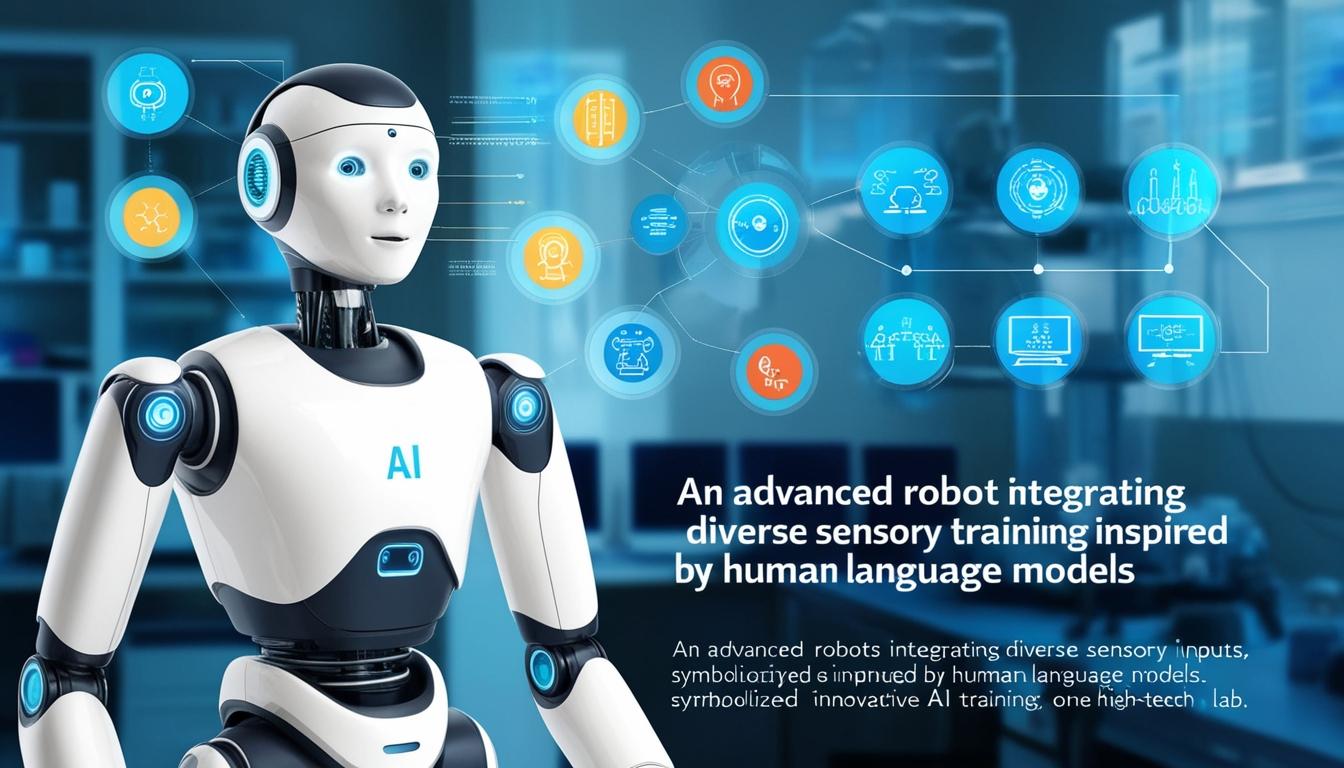
In a significant stride towards the enhancement of robotic intelligence, researchers at the Massachusetts Institute of Technology (MIT) are pioneering a transformative approach to robot learning that draws inspiration from large language models (LLMs) such as GPT-4. This innovative methodology, centred around the Heterogeneous Pretrained Transformers (HPT) architecture, is poised to redefine the capabilities of robots, particularly in their ability to learn and adapt to dynamic environments.
Renowned for its groundbreaking contributions to technology and engineering, MIT's robust research environment fuels cutting-edge advancements at institutions such as the MIT Computer Science and Artificial Intelligence Laboratory (CSAIL). The laboratory has a history of producing influential developments in fields from autonomous vehicles to socially adept humanoid robots. The introduction of the HPT model underscores MIT’s ongoing commitment to pioneering the evolution of intelligent machines.
Historically, robots have predominantly relied on imitation learning—emulating human actions to master tasks. However, this approach often falters in unfamiliar circumstances or when environmental parameters, such as lighting or obstacles, vary. The central challenge lies in the limited scope of data available to robots, hindering their adaptability and generalisation in diverse conditions.
Taking cues from the success of LLMs, which excel in generating human-like text through vast and varied datasets, MIT researchers are reimagining robotic training. The HPT architecture operates by integrating multiple sensor inputs, from visual data to tactile information, mimicking the multifaceted way in which humans perceive their surroundings. This model excels in synthesising complex information, thus enabling robots to function effectively in a wide array of settings without needing extensive retraining.
Lirui Wang, the study’s lead author, highlights the unique nature of robotic data compared to linguistic data. "In the language domain, the data are all just sentences. In robotics, given all the heterogeneity in the data, if you want to pretrain in a similar manner, we need a different architecture," Wang explains. The adaptability of the HPT model stands as a testament to its potential, as it promises to bridge the gap between robotic applications and human-level cognitive flexibility.
The far-reaching implications of this development extend across various industries. The envisaged "universal robot brain" could bring about extraordinary efficiencies and capabilities spanning from manufacturing and logistics to healthcare and home automation. Unlike traditional robotic systems that require specific training for each task, HPT-based robots could tackle a broad spectrum of challenges right out of the box, reflecting the adaptability seen in LLMs.
Moreover, this advancement could revolutionise sectors such as healthcare, where adaptive robots might support surgeons in operating rooms, or in education, where they could tailor learning experiences to individual needs. Disaster response is another field set to benefit, with robots potentially navigating complex environments to aid in search and rescue operations.
Despite these promising prospects, the journey towards a universal robot brain is fraught with challenges. Key concerns include managing diverse data inputs to avoid overloads from irrelevant information and addressing the significant resources required for training these large-scale models. Security and data privacy pose additional hurdles, mirroring those faced by LLMs, where inadvertent data storage and leaks could occur.
Nonetheless, the MIT research team remains optimistic. Drawing on the lessons learned from LLMs, they foresee a trajectory of continued advancements that might usher in an age where robots move from single-task functionalities to versatile general-purpose roles.
MIT's dedication to integrating AI and robotics with societal benefits highlights the potential of HPT as an enabler of positive technological interaction. Through strategic interdisciplinary collaboration, MIT aspires to foster a future where robots not only complement human activities but also scale up in sophistication for more profound global impact.
In summary, MIT's HPT model represents a critical leap forward towards the future of robotics, raising possibilities for a universal brain that could transform the way machines interact with their environment and each other. As the research progresses, it holds the promise of equipping robots with unprecedented cognitive adaptability, mirroring the transformative effects seen in language processing AI models.
Source: Noah Wire Services