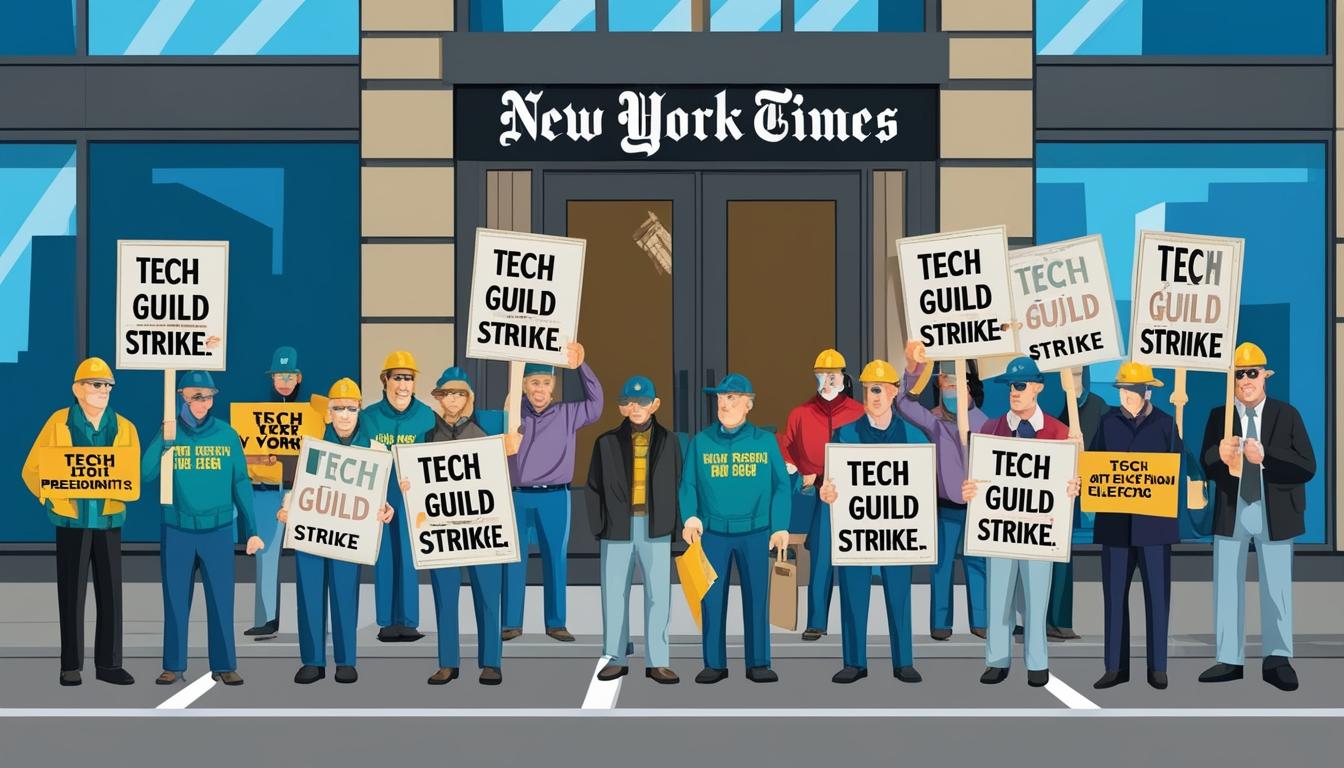
On the morning of Monday, 6th November, the New York Times Tech Guild, representing approximately 600 tech staff workers, initiated a strike that could profoundly impact crucial election coverage. This industrial action marks a significant moment as it occurs just a day before the US presidential election, drawing substantial attention from both inside and outside the media landscape.
The decision to strike stems from a vote on 10th September, where the Tech Guild committed to industrial action during election week if ongoing negotiations with New York Times management did not reach a satisfactory conclusion. Despite persistent dialogue, carried on late into Sunday night, attempts to secure a mutually agreeable contract have failed, prompting the strike.
The Tech Guild’s members include software engineers, product managers, data analysts, and designers, responsible for sustaining the digital backbone of the newspaper. Their work underpins several vital digital offerings such as live-blogs, mobile push alerts, the newspaper's popular games, and election tools, including the election needle, a renowned feature of election night coverage.
Kait Hoehne, a senior software engineer and guild member, expressed that the group had hoped to avert the strike but ultimately felt compelled due to insufficient movement from the management on key issues. "We love our jobs, and we’re looking forward to being able to do them," she remarked, indicating the intense disappointment among the workers.
The Guild had issued a deadline of 4th November for an agreement, asking for annual wage increases of 2.5% and a formalisation of current hybrid working arrangements that include two days per week in the office. Despite these demands, management has not acquiesced, escalating existing tensions into the now materialised strike.
In response, the Guild has urged readers to respect their picket line through a digital boycott, involving eschewing the Times' recreational offerings such as Wordle and the daily digital crossword. Annie Shields, a campaign lead for the News Guild of New York, emphasised this request with a post encouraging the temporary sacrifice of gaming "streaks" in solidarity with the tech workers.
The strike’s timing has sparked a heated reaction due to its proximity to the presidential election, a pivotal event for the nation. The New York Times’s publisher, A.G. Sulzberger, highlighted the potential disruption, stating, "Hundreds of millions of people are depending on The Times’s journalism on Election Day and afterward."
In an unexpected development, Aravind Srinivas, CEO of AI search company Perplexity, offered to step in for the striking workers, prompting backlash on social media. His willingness to provide election support has been viewed by critics as "scabbing," a term for individuals who opt to work in the roles of striking workers, which often draws criticism for undermining collective labour actions.
This strike additionally follows a recent conflict between the New York Times and Perplexity regarding the latter's alleged scraping of Times articles for AI purposes, leading to a cease and desist letter. Given this fraught backdrop, Srinivas’s offer adds another layer of complexity to the ongoing situation.
As of now, Tech Guild members continue to demonstrate outside the Times headquarters in New York, while negotiations persist. The unfolding developments are being closely monitored as the strike poses significant implications not only for journalistic operations highlighting the presidential and other electoral races but also for broader labour relations within the media industry.
Source: Noah Wire Services