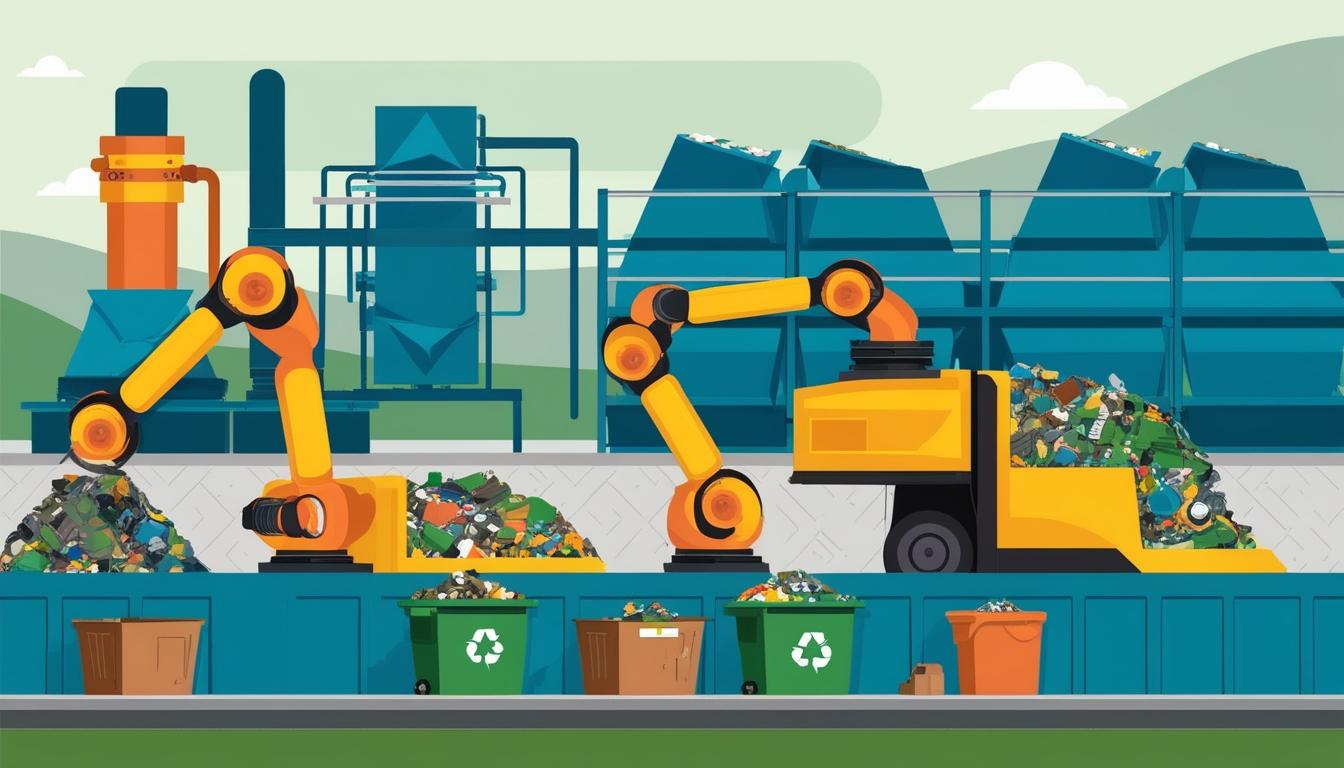
Re-Gen Waste Management, a leader in recycling and waste management, has committed to a significant investment of £10 million aimed at advancing their technological capabilities over the next three years. This substantial financial commitment will focus on implementing artificial intelligence and robotics at their Newry sorting facility in County Down, Northern Ireland. The initiative is positioned as a key component of their strategy to aid in the decarbonisation of Northern Ireland's waste system.
The company has outlined its ambition to bolster the efficiency of its operations, enhancing its ability to recycle blue and black bin household waste by sending it to local industries for repurposing. This move comes as a continuation of Re-Gen's technological evolution; the company has already invested £12 million over the past three years in similar advancements. These prior enhancements have seen positive integration at the plant, and the new investment will aim to further refine and extend the use of existing equipment.
Re-Gen’s operations, which began nearly two decades ago, are centred on the meticulous separation of household waste, including glass, paper, card, metal, and plastic. By focusing on meeting the rigorous quality demands of local reprocessors, Re-Gen processes approximately 200,000 tonnes of material annually using highly carbon-efficient sorting methods. Their approach significantly reduces the need for landfill use, aligning with broader governmental aims to decarbonise the waste management system and support efforts to achieve net-zero carbon emissions.
Central to Re-Gen’s technological toolkit is an advanced analyser platform. This technology enables the company to closely monitor the material and contamination levels, allowing them to adjust processes and produce high-quality recyclate. By maintaining dialogues with reprocessors, such as their collaboration with the firm High-5, Re-Gen is able to optimise the recycling chain, particularly in returning glass to bottle production. This collaboration not only enhances the volume of recycled glass available but also decreases the dependency on raw materials, thus minimising the environmental footprint associated with glass manufacturing.
Joseph Doherty, CEO of Re-Gen Waste Management, expressed confidence in the company’s trajectory and its role in waste management innovation. He stated, “Our ability to meet the specific input requirements of reprocessors across a range of materials is a direct result of our investments in advanced technology and strategic collaborations. We have already invested heavily in the latest technologies and are committed to further significant investment to ensure that we are able to recycle as much as possible from the waste we sort.”
Doherty reiterated the company's commitment to technological refinement and innovation as pivotal to the decarbonisation efforts in Northern Ireland's waste management sector. "By continually refining and innovating through technology, we are driving the decarbonisation of Northern Ireland’s waste system and playing a significant part in ensuring we meet fast-approaching net zero carbon targets," he added. He emphasised Re-Gen’s long-term dedication to continuous investment, aiming to maximise recycling opportunities both presently and moving forward.
This forward-looking investment serves as a testament to Re-Gen’s ongoing commitment to environmental sustainability and its pivotal role in modernising waste management practices. These initiatives are expected to enhance the capabilities and contributions of Re-Gen in striving towards a more sustainable and environmentally conscious future for waste management in Northern Ireland.
Source: Noah Wire Services