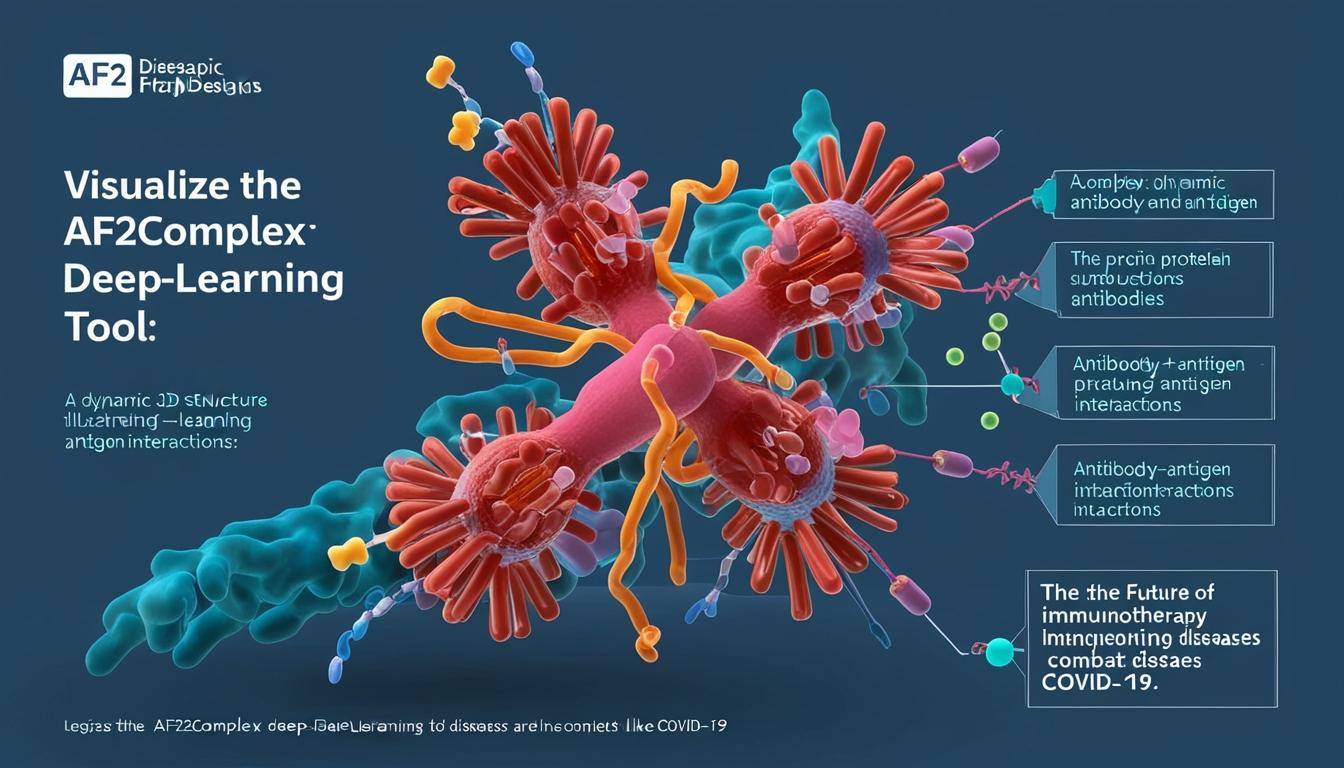
In a groundbreaking development within the field of immunotherapy, researchers at Georgia Tech have unveiled a deep-learning tool named AF2Complex, designed to predict antibody interactions with viral proteins. This innovation came to prominence with its application against the COVID-19 virus, accurately foreseeing which antibodies could effectively bind to the virus's spike protein, a crucial step in developing therapeutic treatments.
Immunotherapy, a technique that harnesses antibodies to target specific antigens on cell surfaces, has shown significant promise in addressing conditions ranging from cancer to viral infections such as COVID-19. However, the process of identifying appropriate antibodies remains a complex and arduous task, traditionally hindering the rapid development of treatments.
Addressing this issue, the team at Georgia Tech, led by Mu Gao and including notable contributors such as Jeffrey Skolnick, developed AF2Complex. This tool leverages the principles of deep learning, a sophisticated subset of artificial intelligence, to expedite the prediction of effective antibody-antigen combinations.
The research, recently published in the Proceedings of the National Academy of Sciences, demonstrated that AF2Complex could accurately identify 90% of the optimal antibodies from a test run involving 1,000 samples. This capability not only holds potential for quicker response in current COVID-19 treatments but also lays the groundwork for future applications in various diseases.
Building upon the success of DeepMind's AlphaFold, which in 2020 made significant strides in predicting the structures of single proteins, the Georgia Tech team enhanced this model to tackle protein complexes. This advancement marks a significant leap from mapping single proteins to deciphering complex protein interactions, which include much smaller and intricate interfacial regions between antibodies and antigens.
The COVID-19 virus's complex antigen-binding sequences, coupled with an extensive database available for study, provided an ideal training ground for refining the AF2Complex model. By using known antibody sequences to explore evolutionary patterns, researchers fine-tuned the model to generate precise 3D structures of protein complexes, thereby aiding in the understanding and development of effective therapeutic strategies.
The potential of AF2Complex extends beyond COVID-19. The researchers envisaged its application in preparing for future pandemics by drastically reducing the time required to develop vaccines and therapeutic antibodies. As Skolnick explains, the model could significantly streamline the experimental process by prioritizing the most promising antibody-antigen interactions, thus optimising resources and research efforts.
Currently, the team is collaborating with Emory University to conduct experimental validations of their predictions, with an eye towards commercialising this pioneering model. This collaboration aims to enhance the practical applications of deep-learning tools in therapeutic development as the scientific community braces for possible future health crises.
Overall, the development of AF2Complex represents a notable milestone in biomedical research, promising to enhance the efficiency and effectiveness of immunotherapy in treating a range of diseases. By leveraging advanced AI capabilities, the Georgia Tech team contributes a significant tool to the global effort to better respond to current and future health challenges.
Source: Noah Wire Services