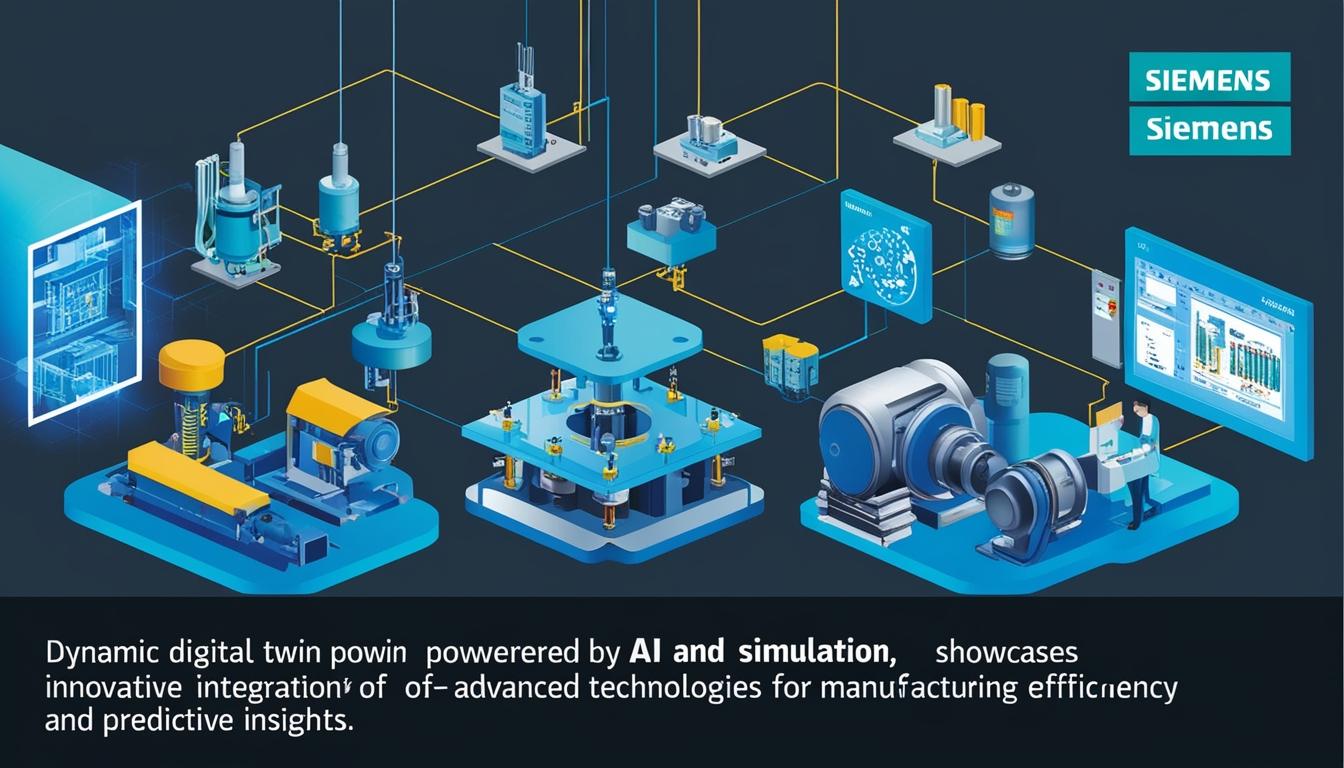
Siemens has made a significant move in the industrial software landscape by acquiring Altair Engineering, a leader renowned for its expertise in Artificial Intelligence (AI), simulation, and high-performance computing (HPC) technologies. This acquisition is part of Siemens’ strategic plan to enhance its AI-powered industrial software portfolio, aiming to integrate cutting-edge simulation capabilities into its existing offerings. Tony Hemmelgarn, the President and CEO of Siemens Digital Industries Software, has emphasized that this addition will bolster Siemens' capabilities with industry-leading mechanical and electromagnetic features, supplementing a comprehensive physics-based simulation portfolio within the Siemens Xcelerator framework.
The acquisition underscores Siemens’ commitment to expanding its Product Lifecycle Management (PLM) and digital twin capabilities, an area where the company sees immense potential for growth and innovation. The integration of Altair's sophisticated AI and simulation tools into Siemens' PLM platforms, particularly Teamcenter and Simcenter, could revolutionize the way digital twins and simulations are utilized in engineering and manufacturing processes. Altair’s expertise could enable Siemens to produce more advanced digital twins that not only represent physical products but also accurately predict behaviours and outcomes using high-fidelity simulations and real-time data.
Siemens believes that by incorporating Altair’s technology, it can enhance digital twin capabilities, transforming them from static visual tools to dynamic predictive models driven by AI. This shift would enable manufacturers to make smarter, data-informed decisions throughout the product lifecycle—from initial design and development to production and maintenance phases—potentially resulting in improved efficiency and reduced costs.
However, a key question arises regarding Siemens' ability to effectively embed these capabilities as a transformative core feature within its PLM platform. The successful integration of advanced AI and simulation technologies requires more than just technological advancement; it demands a seamless incorporation into existing systems to ensure these tools are not merely optional add-ons but integral components that offer substantial business benefits.
The acquisition also brings Altair's high-performance computing capabilities into Siemens' fold, which is a critical element in enhancing digital twin technologies. Siemens positions itself as a leader in digital twin innovation, primarily through its Xcelerator platform, which leverages real-time operational data to improve asset management, production efficiency, and product quality. Altair's HPC platforms could significantly improve Siemens' digital twin capabilities, enabling more detailed, faster simulations that can handle large scales of data, essential for predictive maintenance and optimization across manufacturing sectors.
However, the integration of these HPC solutions poses challenges due to the requirements for specialised infrastructure, significant processing power, and technical know-how. Siemens will need to evaluate how to incorporate these sophisticated tools into its mainstream offerings to maximize their impact, potentially transforming how manufacturers optimise operations and predict system behaviour.
Additionally, Altair recently acquired Cambridge Semantics, a company specializing in knowledge graph and data fabric technologies. This acquisition could allow Siemens to enhance its ability to connect disparate data sources across complex manufacturing ecosystems. Knowledge graphs can serve as a powerful framework for unlocking AI-driven insights and enhancing digital twin models by organising and contextualizing vast amounts of enterprise data. Successful integration of this technology could lead to "data-rich" digital twins, creating a seamless digital thread that connects various stages of the lifecycle, from PLM to actual operational data.
The application of Cambridge Semantics’ technology, known for its use in sectors such as defence and life sciences, to the manufacturing industry presents a challenge. Siemens will need to adapt this advanced data integration technology to align with industrial-specific requirements, ensuring that knowledge graphs become more than just another tool, but a foundational element of Siemens’ digital transformation strategy.
In summary, Siemens’ acquisition of Altair reflects a significant opportunity to lead in AI-driven industrial software, PLM, and digital twin innovations. The strategic success of this move will depend heavily on Siemens’ ability to deeply integrate these new capabilities into its core platforms and utilise them as transformative, fundamental aspects of its digital offerings. Whether Siemens will manage to leverage these assets effectively to maintain its competitive edge remains a topic of keen interest in the rapidly evolving industrial software sector.
Source: Noah Wire Services