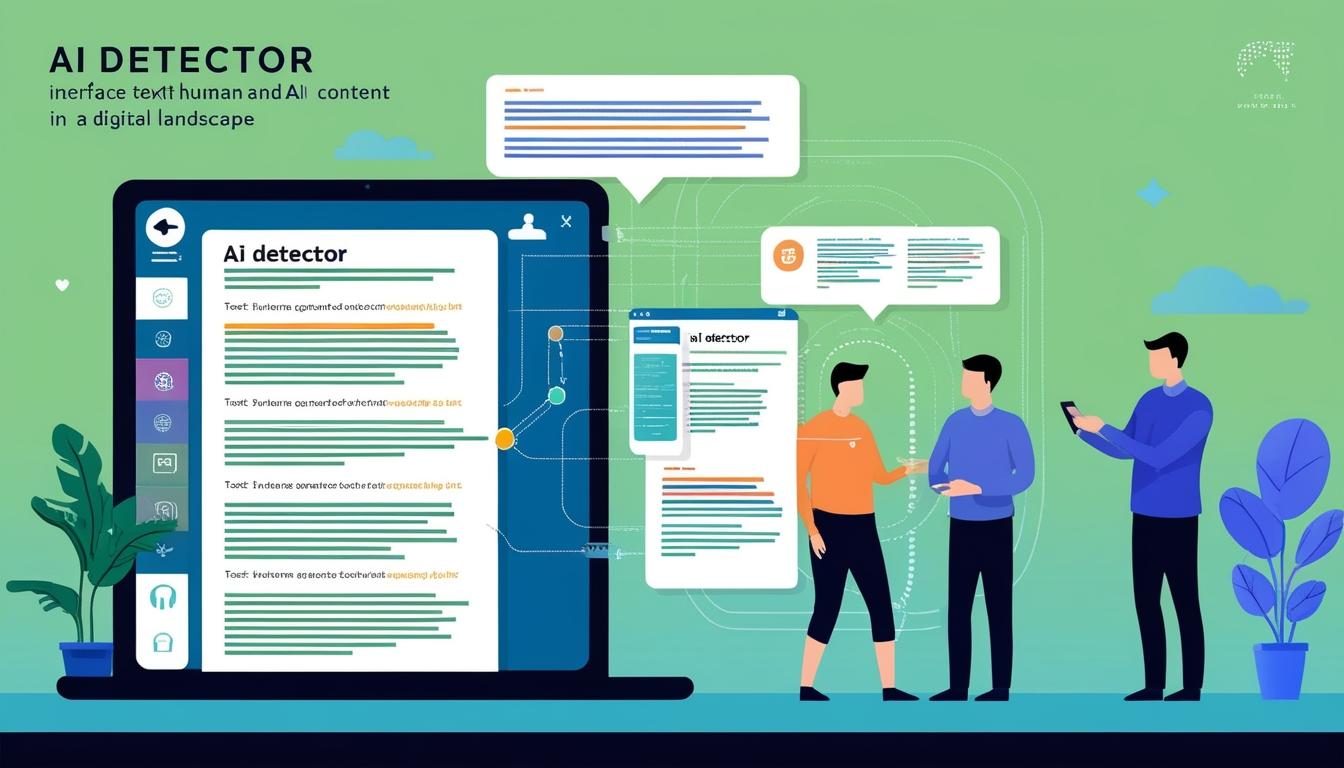
In the evolving landscape of digital text creation and consumption, AI Detector tools have gained prominence as a method to distinguish between human-authored content and that generated by artificial intelligence (AI). These tools are increasingly being employed across various sectors to address the growing presence of AI-generated text, which is crafted by a proliferating array of AI writing technologies such as ChatGPT, Google Gemini, and Jasper among others.
AI Detector tools function by evaluating text based on several parameters, including "burstiness," "perplexity," and sentence structure, to determine the likelihood of AI authorship. Users begin by pasting their text into the tool's interface, which then runs a report providing a percentage indicating the proportion thought to be generated by AI versus that composed by humans. This technology assists users, particularly in academia and content management, in maintaining standards for what is often referred to as "human-grade" content.
The demand for AI Detector tools comes in response to the rapid advancements and increasing sophistication of AI writing tools. These tools have become adept at producing coherent and contextually relevant text by processing vast amounts of online information. Accordingly, distinguishing between AI-generated and human-produced content is becoming more challenging. This task is crucial across educational institutions, publishing houses, and SEO agencies that seek to uphold standards of originality and authenticity.
In addition to identifying AI-generated content, some AI Detector tools offer features like plagiarism checking and content "humanizers," which are designed to render AI text more similar to that written by humans. However, it's important to note that while some AI-generated content may appear derivative, it's not traditionally plagiarized, since AI models synthesize information from a variety of sources on the internet.
As AI technology continues to advance, the efficacy and accuracy of AI Detector tools are expected to improve. Developers are in a continuous race against the evolving capabilities of AI writers, working to enhance their tools’ ability to accurately differentiate between human and AI writing. This ongoing development is particularly relevant as various industries grapple with the extent to which AI content should be integrated into their practices.
Despite their potential, these tools are not infallible and, on occasion, may inaccurately classify human-written content as AI-generated or vice-versa. Consequently, institutions and industries using these detectors often set thresholds for AI versus human content percentages, determining what is acceptable within their specific context.
Ultimately, the adoption of AI Detector tools signifies a significant step in how organisations, particularly those focused on content creation, navigate the balance between human and AI contributions. As AI technology becomes more ubiquitous, these tools offer a practical solution for those who prioritise content authenticity and originality in an increasingly digital world.
Source: Noah Wire Services