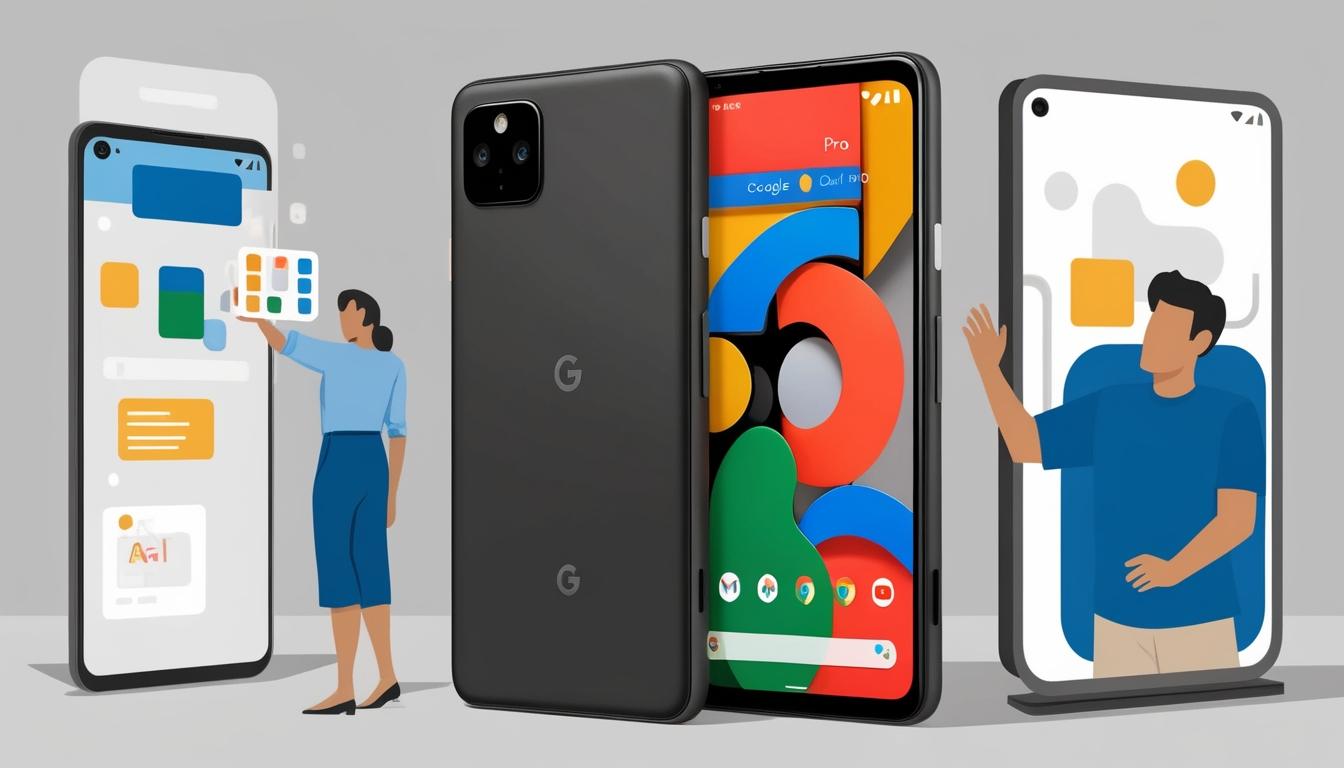
The Role of AI in Google’s Latest Smartphone: A Closer Look at the Pixel 9 Pro
In recent years, artificial intelligence (AI) has positioned itself at the forefront of technological innovation, and Google’s latest smartphone, the Pixel 9 Pro, is no exception. Released by Google, the Pixel 9 Pro has been heralded as the company’s most impressive phone to date, with particular praise for its sleek design, powerful performance, and advanced camera system. However, Google's marketing strategy has heavily emphasised the role of AI, particularly the new Gemini AI model, in enhancing user experience on the device.
Features of the Pixel 9 Pro
The Pixel 9 Pro captures attention with its elegant design and impressive hardware capabilities. Running on the latest Android 15 operating system, users have reported that it provides a smoother experience compared to previous versions. The camera is a standout feature, utilising cutting-edge technology to assist users in capturing high-quality images effortlessly.
Despite these capabilities, a notable conversation surrounding the Pixel 9 Pro revolves around Google's integration of AI. According to reviews, the influence of AI in everyday usage of the device is not as significant as Google's promotional content suggests. Users have interacted with the AI tools provided, such as Gemini Live, mainly for basic functions like setting alarms and adding calendar appointments.
AI in Smartphones: Necessity or Novelty?
Enthusiasts of digital innovation might argue for AI's intrinsic value; nevertheless, the everyday utility of AI in smartphones is questioned by some users. Interviews with self-identified "power users" reveal that AI is not considered a vital component. Instead, they prioritise features such as improved app sandboxing, higher quality audio, better performance in low-end and mid-range devices, and more effective desktop integration.
Conversely, non-power users express a desire for phones that “just work” without emphasising advanced AI capabilities. This sentiment underscores a preference for reliability and ease of use over sophisticated, though perhaps unnecessary, AI features.
The Implications of AI Integration
The integration of AI in smartphones is not without its hidden costs. As per industry insights, the long-term incorporation of AI could introduce additional expenses for consumers. For instance, Google's Gemini Advanced is reportedly free for the first year on a new Pixel device, leading to subsequent charges if users do not opt out.
Moreover, AI-powered features require substantial computational power, which may impact device resources and necessitate more powerful hardware. This could inadvertently drive up the cost of future devices, potentially affecting consumer decisions and market trends. The requirement for additional energy resources to power AI capabilities also raises environmental considerations.
The Future of AI in Smartphones
The broader smartphone market continues to flourish, with projections indicating significant growth, driven by consumer demand for reliable and feature-rich devices. AI, while a contemporary focus in technological marketing, remains a supplementary attribute rather than a core necessity for many users.
Phone manufacturers seem to be capitalising on the popularity of AI, potentially as a means to differentiate products within a highly competitive market. However, questions remain whether AI is a genuine value addition or if it represents a trend that may not resonate with all consumers.
In conclusion, the Pixel 9 Pro stands as a testament to Google’s engineering excellence, yet it highlights an ongoing debate in the smartphone industry: the real versus perceived value of AI. As technology progresses, manufacturers may need to evaluate consumer preferences to ensure innovations align with user needs, ensuring that the push for advancement does not overshadow the fundamental requirements of mobile communication devices.
Source: Noah Wire Services