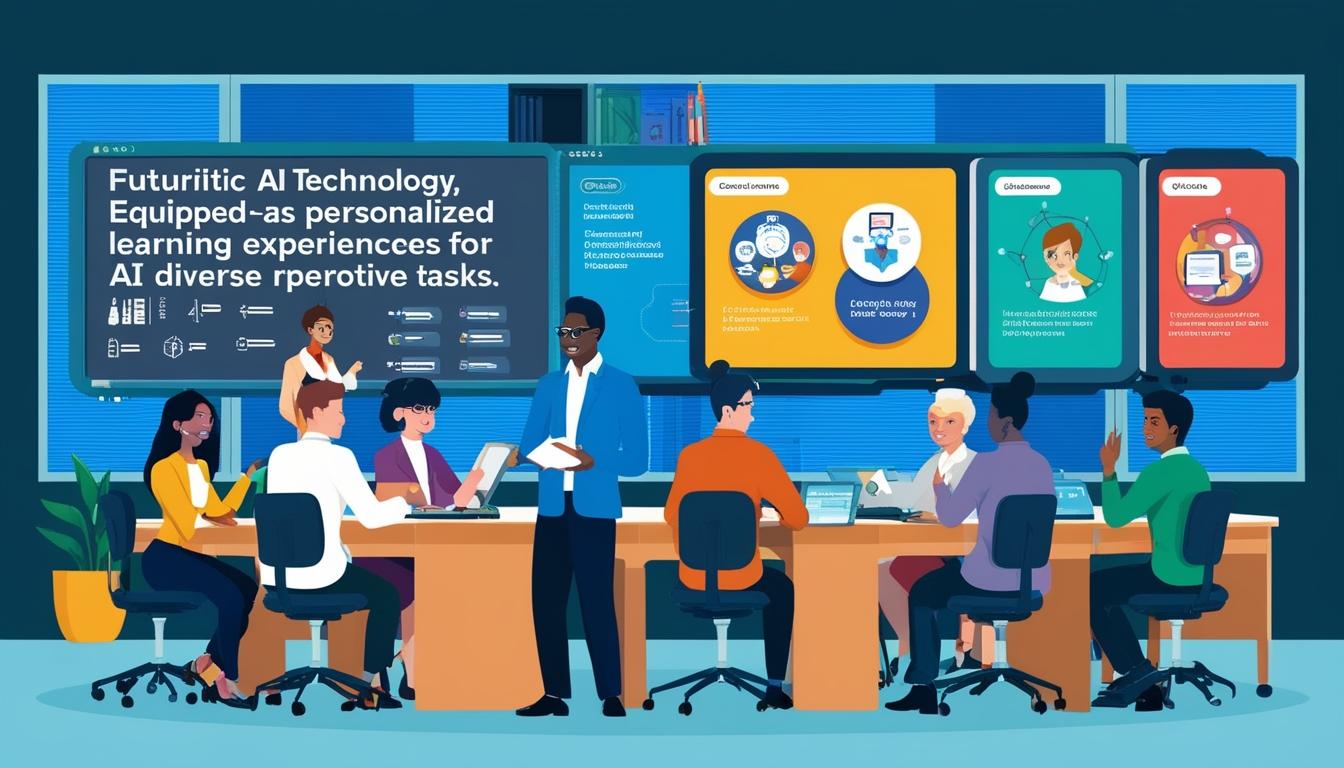
AI-Powered Learning: Reshaping the Future of Workplace Education
The Growing Trend of AI Adoption
In recent years, Artificial Intelligence (AI) has made significant strides across various sectors. Notably, its use in generative AI (GenAI) surged from 33% in 2023 to 65% in 2024. AI integration is increasingly becoming a crucial element for businesses, not merely a passing trend but a strategic response to contemporary challenges. Organisations are navigating a landscape marked by demographic shifts, labour shortages, elevated employee expectations, and transformative organisational needs.
As of 2024, an estimated 72% of businesses have adopted AI technologies across different domains. The potential of AI in enhancing Learning and Development (L&D) initiatives is considerable. AI-driven learning platforms offer highly personalised experiences, analytical insights, and operational automation, providing companies with tools to address skill gaps and productivity hurdles. However, selecting appropriate AI-driven learning technologies remains a key challenge, essential to engaging employees and preparing them for the evolving workforce demands.
The Challenges Faced by Modern Enterprises
Enterprises currently face a transformative period as global birth rates decline and an ageing population approaches retirement. This shift results in a loss of "tacit knowledge", the unspoken expertise accrued over many years, as experienced workers exit the workforce. According to World Economic Forum projections, 23% of jobs may be influenced by AI by 2027, though the impact is already being felt.
Research indicates that 61% of employees have experimented with AI at work at least once. However, a significant portion of this learning occurs independently, outside of regular working hours. A study by Docebo has shown that 70% of workplace learning takes place off the clock, highlighting the need for organisations to integrate learning opportunities during working hours to retain talent. The survey further reveals that 67% of employees are more inclined to change employers if they lack learning opportunities in their current roles.
The corporate learning ecosystem is broadening. Companies are now investing in education not just for their employees, but for clients and partners as well, effectively extending their learning audiences. Data from Docebo suggest that organisations have intensified their external training endeavours, with over half catering to non-employee groups, including customers and business partners.
AI as a Catalyst in Workplace Learning
AI-powered learning platforms are emerging as transformative tools in the corporate learning environment. These platforms can personalise learning experiences, much like how streaming services recommend content based on user preferences. Advanced AI capabilities, such as deep search and auto-tagging, turn once cumbersome content retrieval processes into seamless tasks accessible at the click of a button.
Developing training materials can traditionally consume over 100 hours for a single hour of content, but AI technologies markedly accelerate this process. AI analytics can identify knowledge gaps, enabling targeted training while organising and preserving valuable tacit knowledge. Despite these benefits, AI systems are not flawless. Issues such as opaque decision-making and inherent biases need addressing.
For instance, Docebo, an AI-driven learning platform, prioritises transparency and understandability in their AI systems. In collaboration with TEDAI Vienna, Docebo is examining AI's societal impact through the lens of global thought leaders, showcasing a commitment to ethical AI development.
A Case Study: Booking.com’s AI Transition
Booking.com, a prominent digital travel company, exemplifies the practical application of AI in corporate learning. Before adopting Docebo’s platform, the company grappled with laborious manual processes, including managing communications and scheduling for a workforce of over 15,000. By integrating AI, Booking.com streamlined these processes through systems like Google Calendar and Workday, enhancing notifications and tailoring learning experiences.
This transition enabled Booking.com to expand their learning programmes by 30% and increase subject matter expert training by 40% without additional administrative strain. The efficiency gains were substantial, with administrative time reduced by 80%, equating to more than 800 work hours annually.
The Prospect of AI in Future Learning
The integration of AI into corporate learning holds considerable promise for bridging skills gaps and responding to labour shortages. Importantly, AI must be constructed with rigour, ensuring that systems are transparent, understandable, and subject to human oversight. As workplaces continue to evolve, AI's role is posited to shift from a mere tool to a strategic partner, fostering productivity and adaptability through personalised, data-driven learning pathways.
AI's integration into workplace learning environments is poised to transform how organisations address educational needs, paving the way for more effective and efficient workforce development.
Source: Noah Wire Services