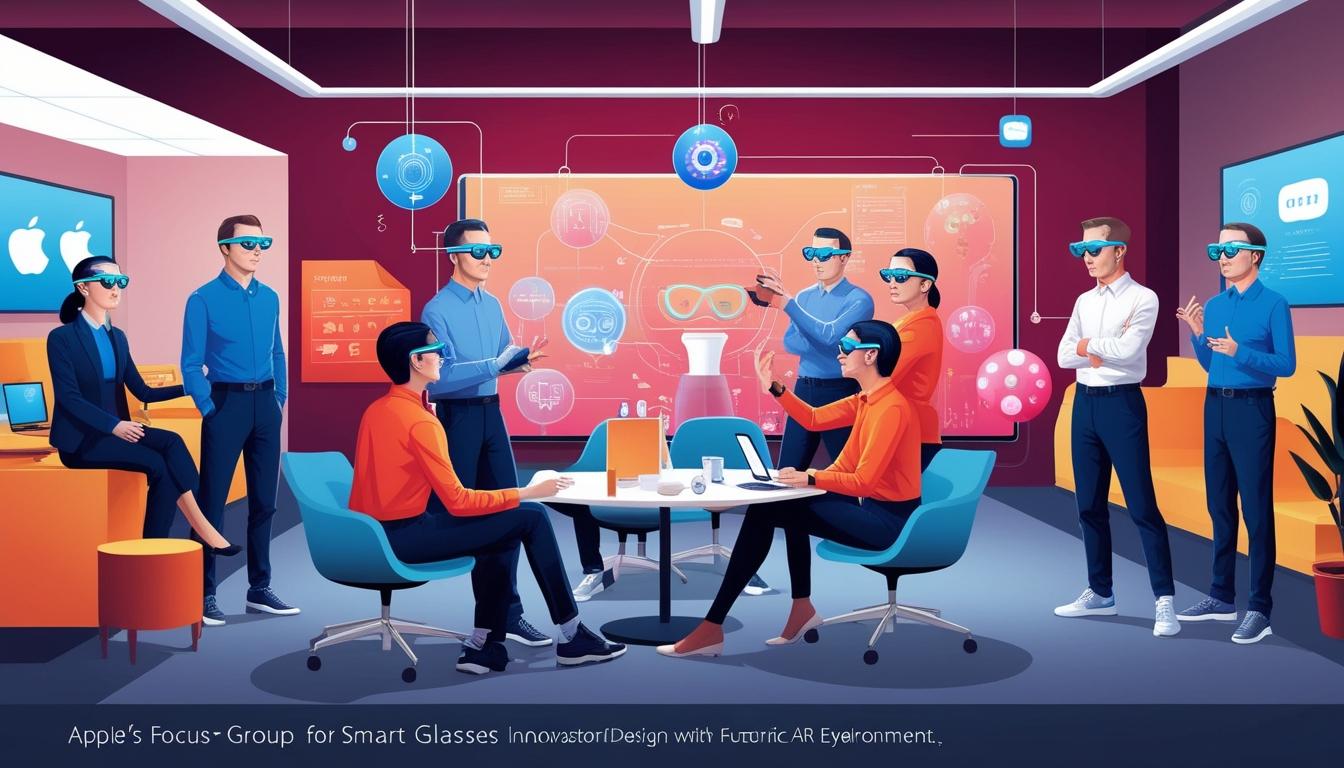
Apple Ventures into Smart Glasses Market: Conducts Internal Focus Groups to Gather Insights
In a move that signals its interest in the burgeoning smart glasses market, Apple has reportedly embarked on an exploratory initiative by engaging its employees in focus groups aimed at evaluating the practicality and appeal of smart glasses. This information comes from Mark Gurman, a well-regarded tech analyst who has highlighted Apple's strategy to incorporate employee feedback as a part of its product development process.
The internal studies, referred to internally as the Atlas project, are being conducted by Apple's Product Systems Quality team. The focus groups aim to ascertain employees' perspectives on the existing smart glasses available in the market, assessing what features they like or dislike in these products. This data collection is intended to guide Apple's design and feature considerations for potential AR glasses, which could eventually rival other smart eyewear solutions such as Meta's Ray-Ban smart glasses.
Apple's Competitive Landscape and Strategy
Apple's renewed interest in smart eyewear comes amidst growing competition, particularly from companies like Meta, which is enjoying early success in the market. Meta's smart glasses, known for incorporating features like in-built cameras, audio streaming capabilities, and AI integration, have set a benchmark for what smart glasses could offer. Recently, Meta's CEO Mark Zuckerberg unveiled new models equipped with further augmented reality capabilities, setting a high bar for competitors in this space.
Despite the competition, Apple's approach to product development in the smart glasses sector seems cautious. The company's existing products, such as the Vision Pro mixed-reality headset, have not yet seen the commercial success predicted. This may explain Apple's strategic approach of conducting in-depth internal evaluations before fully venturing into this market. As per Gurman's insights, Apple is likely to take its time in developing a smart glasses product, indicating that a meaningful entry into the market might still be years away.
Rival Interest: OpenAI's Entry with Former Meta Expertise
The smart glasses market is not just attracting hardware veterans like Apple. OpenAI, renowned for its AI capabilities, appears to be gearing up to enter this domain as well. Strengthening these speculations is the recent hire of Caitlin Kalinowski, formerly Meta’s head of AR glasses hardware, by OpenAI. Known for her leadership in developing Meta’s augmented reality initiatives, Kalinowski’s move to OpenAI may signal the company’s interest in developing AI-integrated smart glasses.
Kalinowski's new role involves leading OpenAI's robotics and consumer hardware division, where she aims to integrate AI technologies into physical devices, potentially paving the way for advanced smart eyewear. This development further intensifies the competitive landscape as both Apple and OpenAI prepare for possible entries into the market that Meta is currently spearheading.
Future Outlook: Innovations and Developments
As Apple gathers critical insights from its internal focus groups, it aims to understand the market better and innovate on features that resonate with potential users. While the release of any official product from Apple may be several years down the line, the tech giant's foray into this market segment highlights the increasing significance and demand for advanced wearable technology.
Meanwhile, existing smart glasses like the Solos AirGo 3 have already incorporated AI capabilities, powered by OpenAI's ChatGPT, suggesting room for diverse innovations within the market. As companies like Samsung and Qualcomm also inch towards smart eyewear, the competitive atmosphere is poised to catalyse a wave of new developments in wearable technology. The smart glasses market promises to be an exciting arena for technological advancement, with Apple, Meta, OpenAI, and others at its forefront.
Source: Noah Wire Services