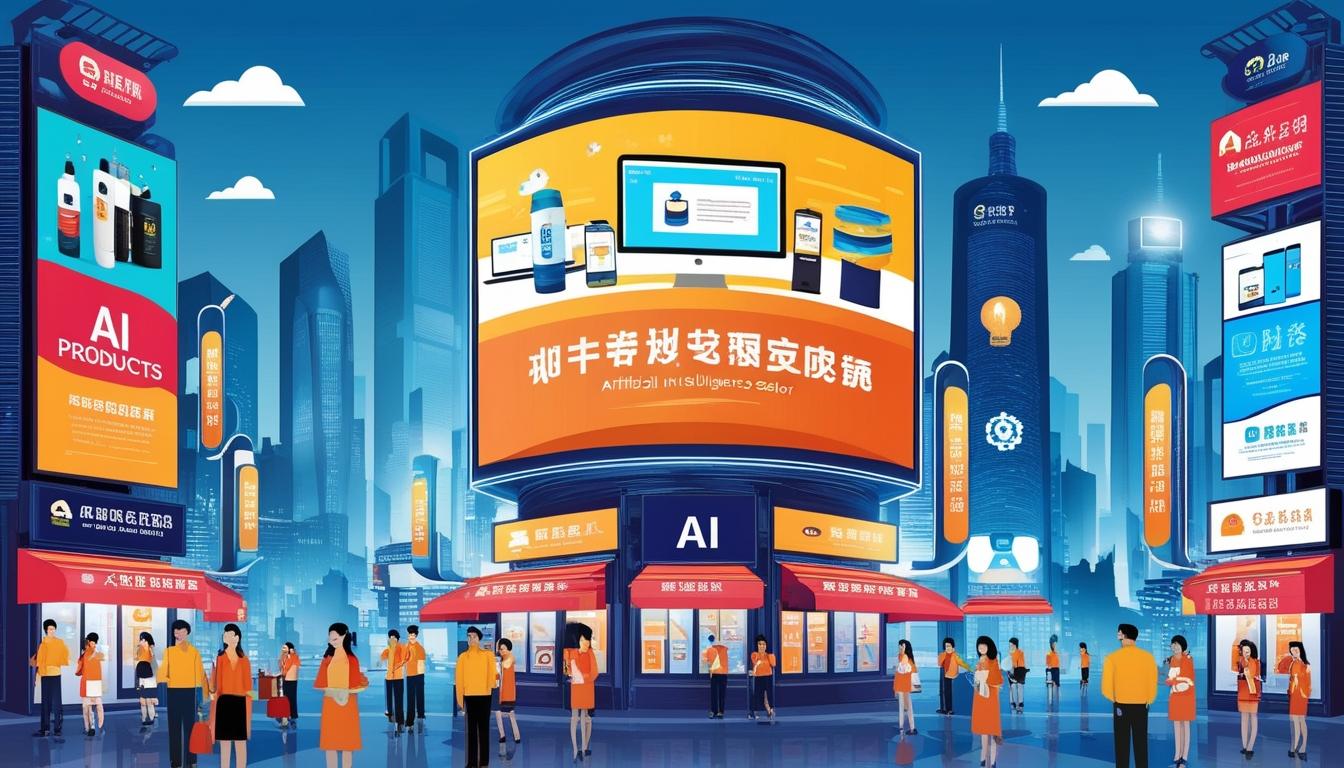
In China, companies in the artificial intelligence (AI) sector are on a spending spree, investing heavily in advertising amid intense competition both domestically and internationally. According to data from the marketing consultancy firm AppGrowing, released through Chinese media channels, these expenditures have surpassed 500 million yuan (equivalent to $70.2 million) in just the third quarter of the current year. This figure includes both budding startups such as Moonshot AI and Zhipu AI, as well as established technology titans like ByteDance and Alibaba Group Holding.
AI, with its significant proven capabilities and vast potential, has spurred a very competitive landscape in China, prompting companies to seize every opportunity to market their AI-driven products. As competition continues to escalate, new entrants frequently join the AI market, motivating established players to expand their AI product offerings.
Despite the high advertising spend, many Chinese AI companies, including notable names like ByteDance and Moonshot AI, opt not to disclose detailed information regarding their marketing budgets. AppGrowing arrived at these estimations through analysing public data from earnings reports combined with third-party marketing metrics such as daily active users, fees, ad loads, and cost per mille. These values are used as a reference for estimating the revenue of advertising platforms and advertiser intentions for specific periods.
During the third quarter, ByteDance—parent company of TikTok—was noted as one of the biggest spenders, allocating around 200 million yuan towards advertising its AI products. Moonshot AI followed closely, with promotional expenditures recorded at 150 million yuan, according to AppGrowing. Both companies' chatbots are reportedly among the most popular AI applications in China.
However, this aggressive spending hasn't come without controversy. Divergent opinions among Chinese experts reflect a discourse on whether these financial outlays are disproportionate, overshadowing essential foundational research in AI. Critics argue that an overemphasis on product monetisation could widen the technological gap between China and the United States unfavourably towards the former. Furthermore, in light of the US restrictions on providing sophisticated chips to China, there is a growing sentiment that China should shift its focus towards enhancing the quality of its AI sector—advocating for progress measured in terms of technological innovations rather than sheer market expansion.
Such sentiments are echoed by Yan Junjie, founder and CEO of Shanghai-based MiniMax, who highlighted a significant difference between Chinese and American AI marketing strategies. According to Yan, while US firms typically bank on their technological prowess for product promotion, Chinese companies, dealing with minimal product differentiation, rely heavily on marketing strategies to capture consumer attention.
Another layer to this scenario is the regional market saturation in China, where numerous generative AI-based chatbots and applications have been launched by local developers. This local oversaturation is considered to contribute to the increased marketing expenditure seen in the AI sector.
In addition to commercial competition, the proliferation of AI technologies has also brought up security concerns. Advanced AI capabilities, such as voice mimicry, have been exploited by cybercriminals, accelerating the need for enhanced cybersecurity awareness among users. As AI tools become more sophisticated, maintaining up-to-date knowledge in cybersecurity measures is deemed increasingly important in safeguarding personal data and devices.
As China's AI market continues to evolve dynamically amidst these challenges, stakeholders may find themselves grappling with the necessity for strategic pivots—balancing between leveraging advertising prowess, fostering technological innovation, and ensuring cybersecurity.
Source: Noah Wire Services