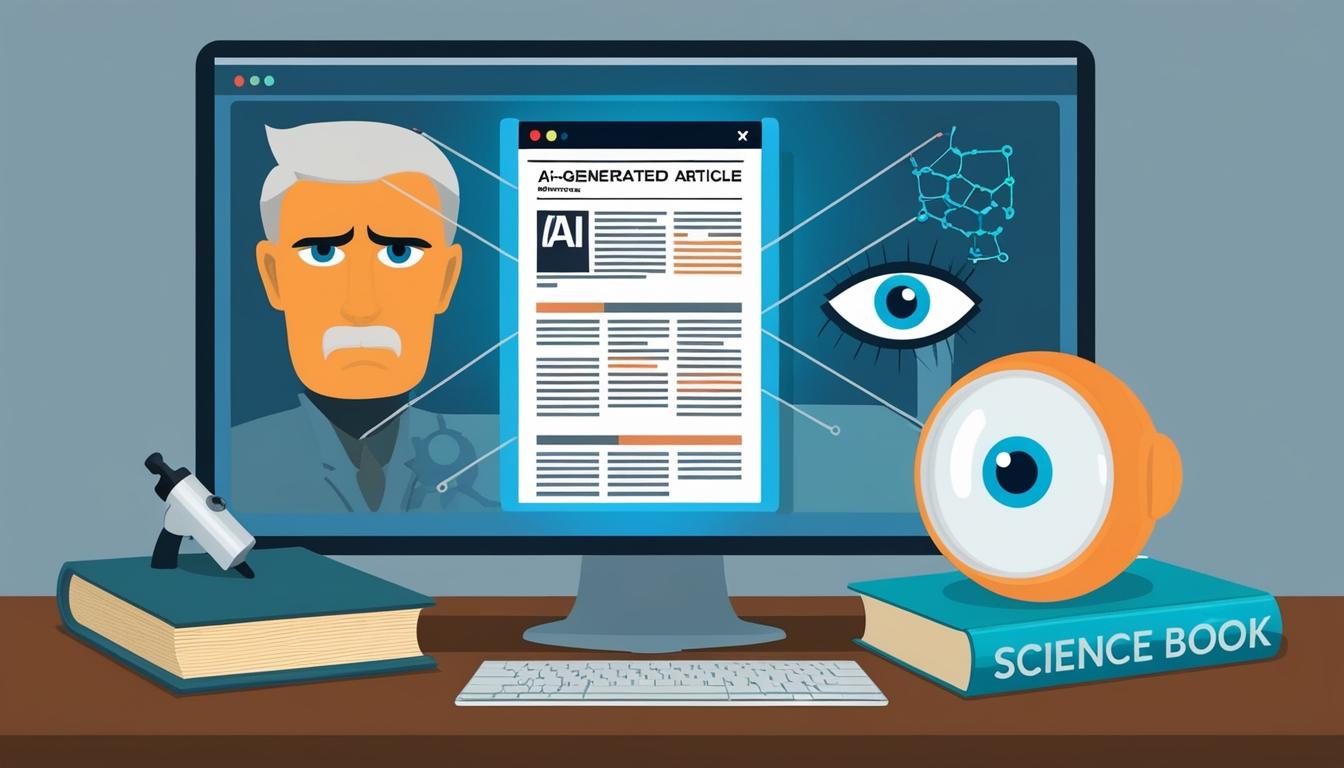
In August 2024, an experiment by the Australian popular-science magazine, Cosmos, brought to the fore both the transformative potential and the perils of generative artificial intelligence (AI) in science journalism. As part of an initiative funded by Australia's Walkley Foundation, Cosmos published a series of "explainer" articles on topics ranging from black holes to carbon sinks, with the content generated by AI. Despite rigorous fact-checking against the magazine's vast archive of past articles, inaccuracies were still discovered, sparking criticism from various quarters.
Among the critics was science writer Jackson Ryan, who argued that the experiment undermined the integrity of quality science journalism. Ryan expressed concerns about AI's propensity to fabricate information and its reliance on copyrighted material, further accusing the generative AI of producing dull and uninspired prose. Additionally, some contributors and former staff members voiced their grievances to ABC News, noting they were unaware of the AI-driven project, which followed the magazine's decision to lay off five of its eight staff members.
This incident highlights the challenges faced in the burgeoning realm of AI-assisted journalism, particularly in the science sector. The complex nature of generative AI, which builds on machine learning by not just recognizing and predicting patterns but also generating new content, poses unique risks. Errors and misinformation are prevalent concerns, as are biases that may be inherent in the datasets AI models are trained on. Notably, AI's propensity for "hallucinations," or generating incorrect information, has led to high-profile mistakes, such as Google's Bard incorrectly crediting the James Webb Space Telescope with capturing the first image of an exoplanet—a feat that was accomplished years prior by a different observatory.
Generative AI's role in science communication was further underscored when physicist John Hopfield and computer scientist Geoffrey Hinton were awarded the 2024 Nobel Prize for Physics for their contributions to the underlying technologies. This recognition indicates that, while AI's integration into science and communication is unavoidable, it necessitates careful management to avoid misinformation and maintain public trust in scientific discourse.
Figures like Kanta Dihal, a lecturer at Imperial College London, express deep concerns regarding AI's impact on science communication, despite acknowledging its potential benefits, such as democratizing access to educational resources and assisting individuals with disabilities. AI-powered tools like ChatGPT and other similar platforms like Google’s Gemini are projected to enhance educational access by offering interactive and personalized learning experiences.
In the newsroom, AI has been employed for years, with the Associated Press leveraging AI since 2014 to automate routine tasks such as financial reporting and data analysis. However, the debate continues over the extent to which generative AI can or should replace the human touch in journalism. Leading publications, including Physics World, affirm their commitment to maintaining human oversight over AI-generated content to preserve journalistic quality and credibility.
The exploration of AI's role in science communication is ongoing, with a pressing need for transparent and ethically guided use. While AI offers novel avenues for enhancing the communication of complex scientific concepts, it is critical to continually assess and refine its applications to safeguard the integrity of the information conveyed.
Source: Noah Wire Services