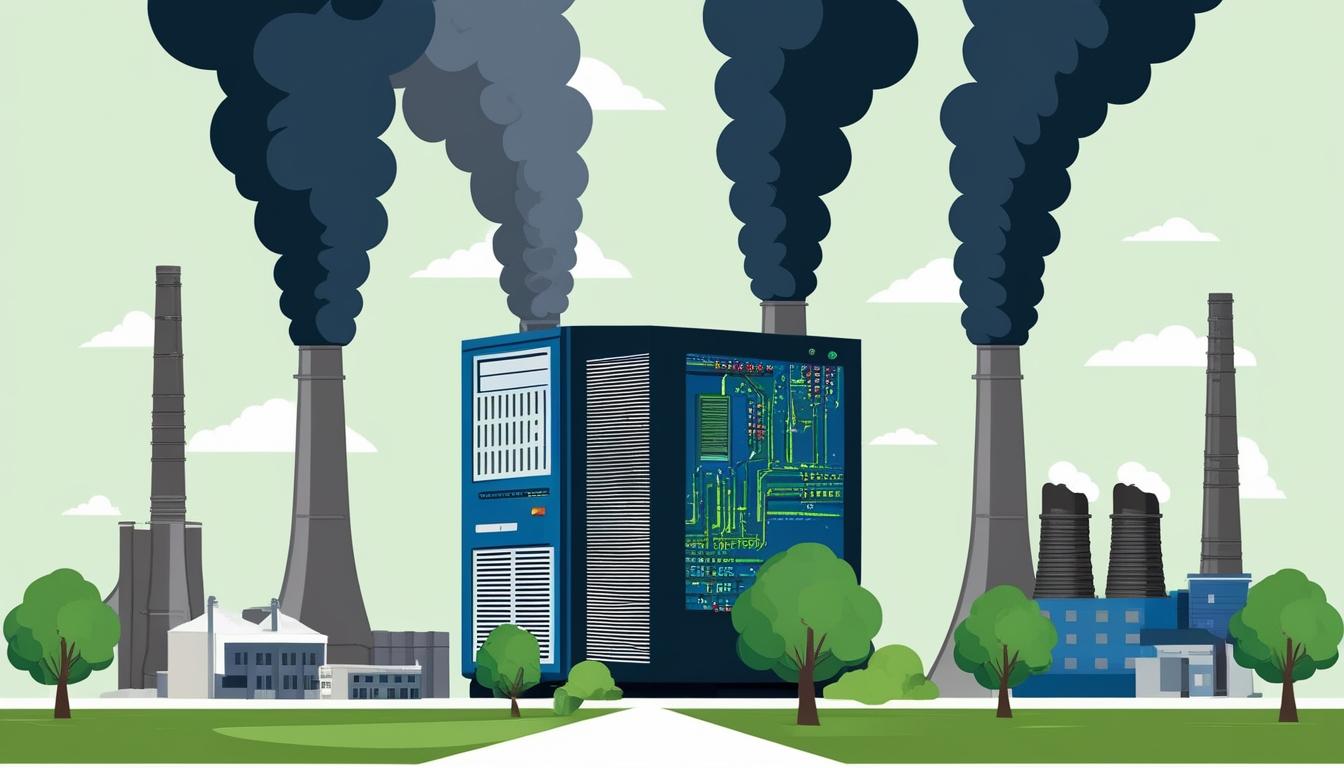
Elon Musk's ambitious venture to construct the world’s largest supercomputer has sparked significant concern among the residents of southwest Memphis. The project, pursued by Musk's artificial intelligence company xAI, is set to demand a staggering amount of electricity, equivalent to the needs of approximately 100,000 homes. This sizeable power requirement has led to unease among community members who are already dealing with substantial pollution burdens from existing industrial activities in the area.
The xAI data centre is located on a sprawling 550-acre site, a repurposed manufacturing facility that commenced operations in July. Delivering on its monumental power needs, the facility initially brought in nearly 20 mobile power plants, primarily fuelled by natural gas. xAI's cutting-edge AI models require intensive computing power, housed across thousands of high-capacity servers. Some models are even trained on data from Musk's social media platform, X.
Residents, however, are raising alarms on the environmental impact of such an enterprise. Southwest Memphis is home to an oil refinery, a steel mill, and several chemical plants, contributing to air quality concerns. KeShaun Pearson, president of Memphis Community Against Pollution, articulated these concerns, noting that the community frequently faces health advisories against outdoor exposure due to poor air quality amplified by industrial emissions.
The Tennessee Valley Authority (TVA), which manages the region's electric grid, has been pulled into the conversation as xAI pushes for an additional 100 megawatts of power, amounting to a total demand of 150 megawatts. This expansion plan necessitates several infrastructure upgrades, including substantial improvements to a transmission line and the construction of a new substation adjacent to the facility.
Memphis Light, Gas, and Water (MLGW) has sought to reassure local residents, stating that xAI will bear the financial burden of these upgrades. They insist that these enhancements will not compromise power reliability or availability for existing consumers. The company has committed to participation in a Demand Response programme, which involves reducing electricity consumption during peak periods to ensure stability for other users.
MLGW has highlighted potential economic benefits arising from xAI's presence. The project is anticipated to generate over 300 well-paying jobs, contribute approximately $500,000 in additional annual payments to the City of Memphis, and alleviate stress on local freshwater aquifers by incorporating greywater recycling techniques for cooling processes.
While xAI has touted its mission to advance scientific discovery through AI, its environmental impact remains under scrutiny. Critics argue that the high energy demand exacerbates carbon emissions unless mitigated by a transition to renewable energy sources. This situation underscores the broader imperative within the tech industry to balance innovation with sustainability, as the global community grapples with escalating climate change challenges.
In this context, xAI’s expansion brings both potential opportunities and ongoing challenges to the Memphis community, highlighting the complexities at the intersection of technological advancement and environmental stewardship.
Source: Noah Wire Services