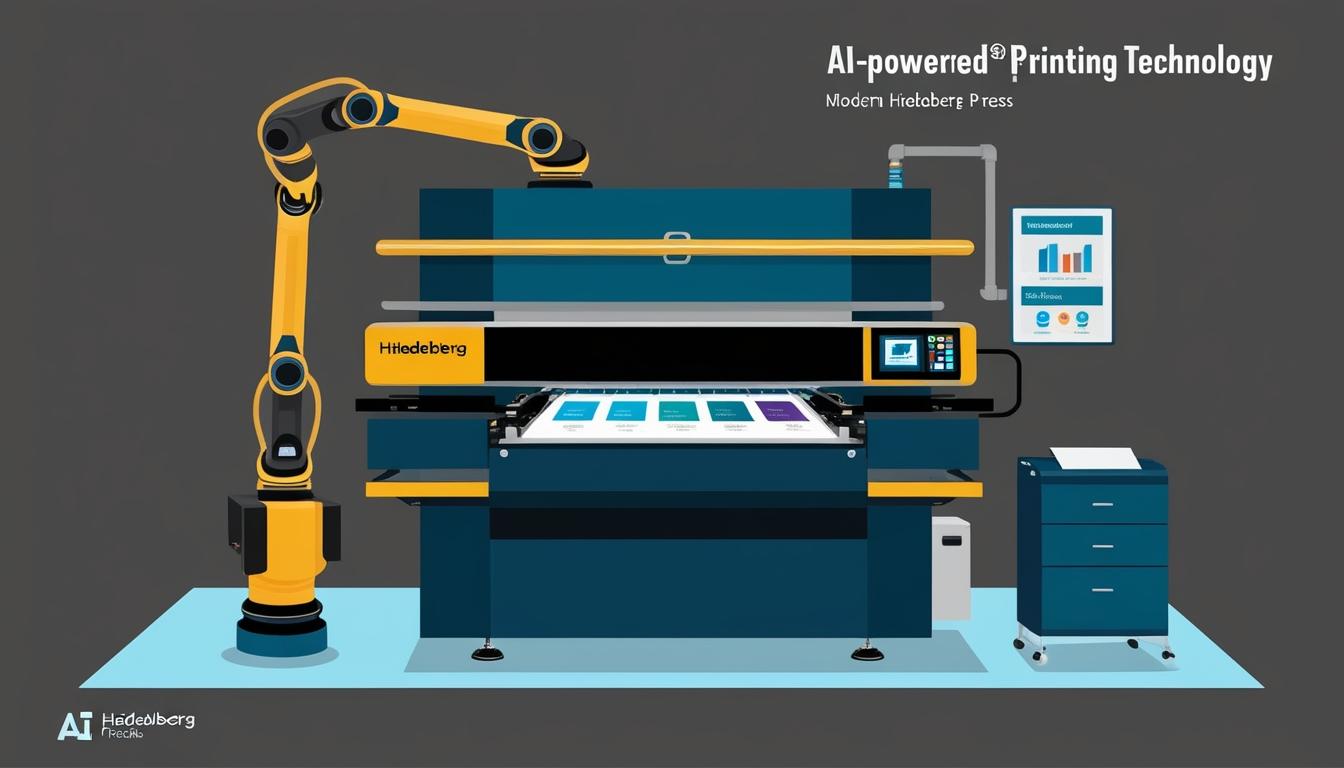
Heidelberg, a prominent figure in the printing technology sector since its foundation in 1850, continues to reinforce its position as a leader in the industry through substantial investments in digitalisation, data technology, and robotics. These efforts, which commenced earnestly in 2004, underscore the company's commitment to innovation and efficiency in print production.
David Schmedding, Heidelberg's Chief Technology and Sales Officer, recently highlighted the company's strides in integrating artificial intelligence into their operations. Since 2021, Heidelberg's AI-based consulting tool, known as 'PAT', has been assisting contract printers by offering straightforward recommendations to enhance workflow efficiency. The ongoing development emphasises Heidelberg's recognition of AI's potential to transform conventional printing methods.
The upcoming version of its established workflow software, 'Prinect Touch Free', represents a significant leap towards autonomous print production. This cloud-based application is designed to autonomously determine the most efficient and cost-effective printing process, whether offset or digital, and further calculate potential layouts on the print sheet without human intervention. Such advancements pave the way for the emergence of the AI-controlled printshop, marking a progressive step in the printing industry.
Heidelberg’s comprehensive approach extends beyond digitalised printing presses, delving into the realm of digital services and output-based subscription models. These subscription models are notably innovative, as they allow clients to pay based on the number of sheets printed, thereby aligning costs with production output and potentially mitigating financial barriers for smaller print shops.
Central to the deployment of these digital business models is the Prinect workflow software. This software acts as a control hub, managing and streamlining all work processes from the initiation of a print job to the delivery of the final product. Prinect's ability to digitally record and map workflows is crucial for enabling the full realisation of these advanced digital models.
The company has also been actively promoting itself as a 'total solution provider' for print shops, a strategy that was prominently showcased at Drupa 2024, the world's largest trade fair for the printing industry. This strategy includes offering a complete range of modern printing processes and the corresponding machines—encompassing everything from toner-based to inkjet solutions, as well as offset and flexographic printing techniques. By providing integrated solutions, Heidelberg aims to cater to a wide spectrum of printing needs.
The Drupa trade fair has proven to be a substantial success for Heidelberg, with Schmedding noting a significant backlog of orders, highlighting the buoyant market demand and the industry’s anticipation for Heidelberg's products and technologies. This high demand stands as a testament to the company’s robust strategy and effective alignment with the ongoing technological transformations in the printing industry.
As Heidelberg continues to pursue technological advancements and expand its service offerings, it remains poised to shape the future of the printing sector, building on its historical legacy with cutting-edge innovations.
Source: Noah Wire Services