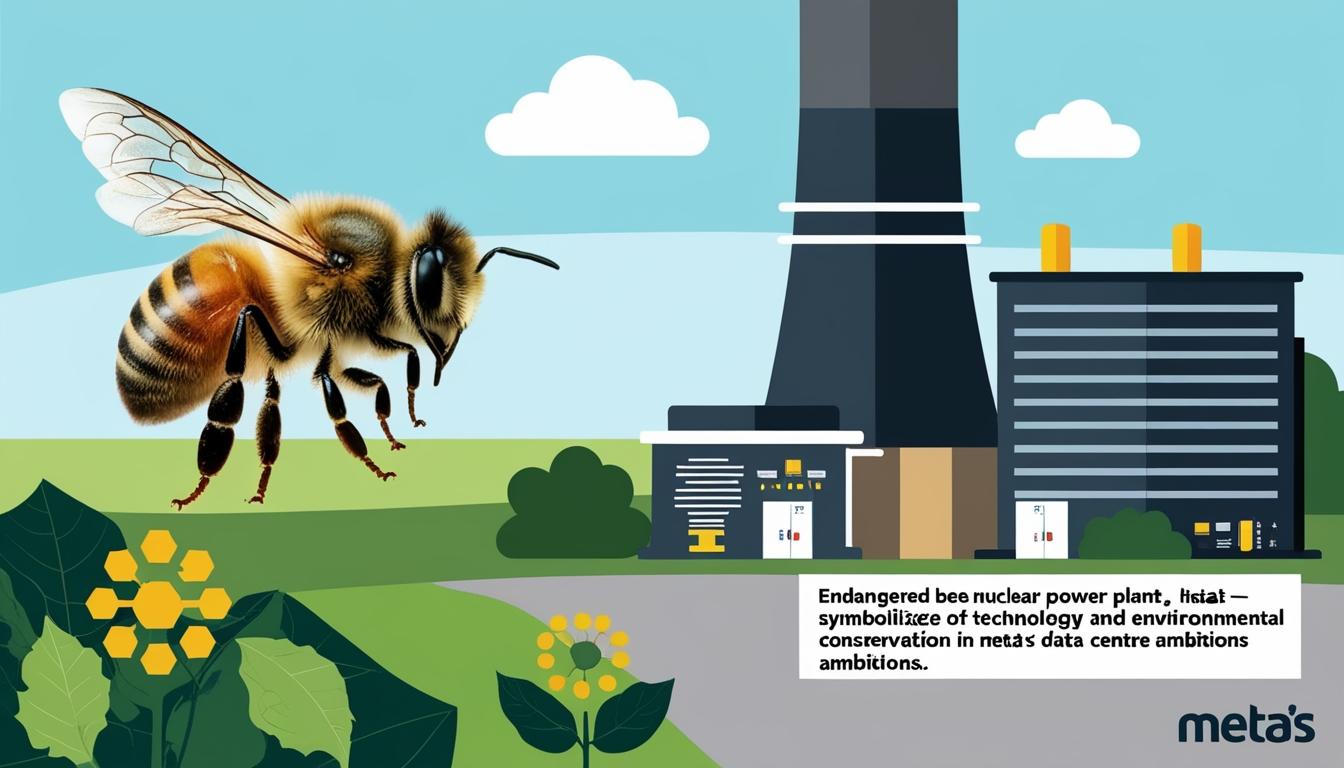
Meta's aspirations for a new data centre powered by nuclear energy have hit an unexpected obstacle in the form of an endangered bee species. The tech giant planned to construct the centre adjacent to a nuclear power plant to power its AI operations, aligning with its 2020 "net zero" emissions goal. However, the chosen site is near the habitat of rare bees, prompting environmental concerns that have stalled the project.
This setback comes amidst Meta's broader challenges with regulatory and environmental compliance as the company seeks to secure a nuclear energy deal akin to those pursued by competitors Google and Amazon. Unlike these rivals, Meta has been met with additional hurdles due to the United States' limited options for nuclear power compared to China's advancements in the sector.
The tech industry’s interest in nuclear energy is driven by the massive power demands of AI data centres, which require consistent and substantial energy supplies. Nuclear power offers a stable solution over intermittent renewable sources that necessitate complex storage systems like large batteries. Nonetheless, nuclear energy poses its own issues, including safety concerns and waste management, which further complicate construction plans.
The demand for AI data centres is spiralling, as highlighted in Turner & Townsend’s recent Data Centre Cost Index. The report underlines the growing need for power-heavy infrastructure to host AI-driven processes, a sentiment echoed by Lisa Duignan, the firm’s data centres sector lead for Europe. Duignan articulates the shift towards liquid cooling technologies necessary to manage the higher heat generated by AI data centres, driven by their increased power density.
Navigating environmental and regulatory challenges is becoming a critical component of site selection for data centres. Turner & Townsend’s findings reveal that access to power is a paramount consideration over geographical location, with a vast majority of developers prioritising energy availability. This has opened opportunities for developments outside traditional hubs like London, with regions such as Cardiff and Manchester becoming attractive due to their potential for energy partnerships, including small modular reactors (SMRs).
Mark Savage, global lead for nuclear at Turner & Townsend, highlights the potential for AI data centres and associated SMRs to invigorate smaller UK settlements economically. Google’s data centre development in Rochdale exemplifies how such initiatives could transform regional landscapes and foster investor confidence in areas outside the typical metropolitan centres.
While many tech firms like Microsoft explore renewable solutions, nuclear power remains a critical component of their energy strategy, especially in regions where renewables alone cannot guarantee the requisite energy resilience. The strategic interest in SMRs could provide a viable pathway to sustainable, long-term power solutions, capable of meeting the soaring demands of the burgeoning AI sector.
In the UK, achieving a clean power grid by 2030 is deemed possible by the National Energy System Operator (Neso), yet it presents substantial challenges that demand coordinated, swift action. Neso’s analysis, detailed in their Clean Power 2030 advice report, suggests reforms and increased investments in offshore wind and other clean energy technologies as pivotal measures.
The report underscores the necessity of making key policy decisions and accelerating investments in the energy sector to ensure successful delivery of sustainable power solutions, which will be crucial for supporting the expanding demands of data centres and their associated technologies.
As the landscape evolves, the data centre industry finds itself at a crossroads, necessitating innovative energy solutions. The road to integrating SMRs and refining renewable energy infrastructures looks set to redefine how tech giants like Meta and others power their future ventures.
Source: Noah Wire Services