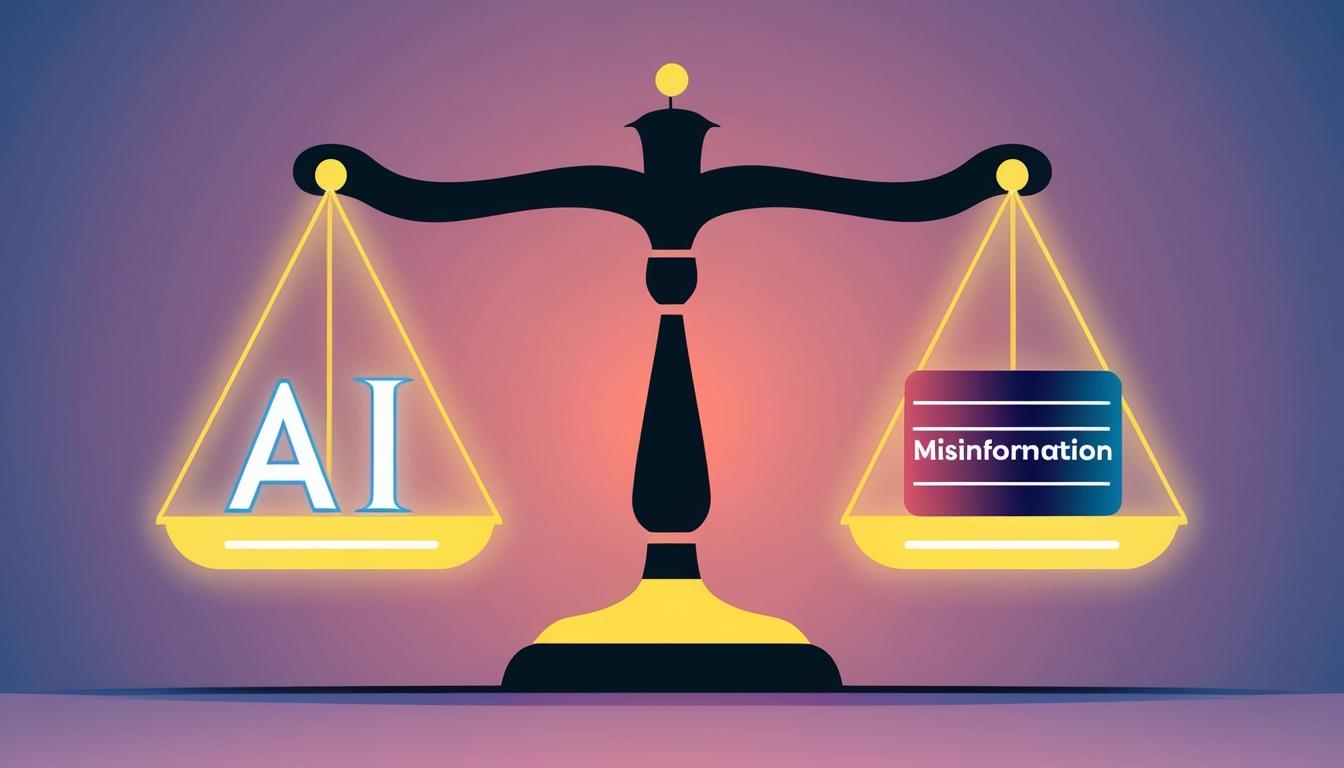
In the lead-up to the US elections, a significant dialogue took place at a TechCrunch-hosted event addressing the increasingly sophisticated issue of AI disinformation. The discussion focused heavily on Meta's self-regulation policies, shedding light on the interplay between corporate oversight and the broader challenge of moderating false information in the digital age. Pamela San Martín, Co-chair of Meta's Oversight Board, played a central role in this discourse, highlighting the complexities and criticisms surrounding the social media giant's approach to AI disinformation.
Meta's Oversight Board, a body claimed to exercise independent judgement on content strategy for Facebook and Instagram, has drawn scrutiny due to its financial ties to Meta, receiving $280 million in funding over five years. This dynamic raises questions about the board's true level of independence and its effectiveness as a self-regulator. San Martín, acknowledging these potential conflicts of interest, emphasised the dual role of AI both as a propagator of misinformation and a tool to combat it. She argued that automated systems are integral to moderating vast amounts of online content, either by flagging it for human review or taking direct action.
Among the approaches advocated by San Martín is the idea of labelling rather than removing disinformation, thereby informing users in a manner akin to the X community notes function. However, she noted the limited efficacy of public reports in mitigating harm to private individuals, as opposed to public figures or well-known information.
Debate ensued over the concept of self-regulation, with San Martín advocating for regulation focused on transparency and accountability, while expressing concerns about any regulation impinging on freedom of speech. Brandie Nonnecke, founding director of the CITRIS Policy Lab, and Imran Ahmed, CEO of the Center for Countering Digital Hate (CCDH), expressed scepticism regarding Meta's internal transparency reports. Nonnecke critiqued the reports as potentially misleading, suggesting they tallied actioned disinformation without addressing the scope of untouched content, potentially offering a misleading sense of due diligence.
Ahmed echoed a critical stance on self-regulation, positing that true regulatory authority necessitates answering fundamental questions about the power dynamics at play—questions that remain unanswered if the Oversight Board remains tightly linked to Meta. In his view, the board’s independence is undermined by its inability to decisively address these checks and balances.
San Martín countered these concerns by clarifying that her position could not be terminated by Meta directly, though she conceded that the continuation of funding by a Meta-initiated trust introduces an element of indirect control. This complication underlines broader concerns over the sincerity and effectiveness of transparency reports and self-regulatory models.
Moderator Kyle Wiggers highlighted recent layoffs within the Meta oversight board, underscoring the financial control Meta maintains over its initiatives, despite claims of the trust's irrevocable nature. The panel's deliberations underscore a broader unease in the trustworthiness of Meta's self-regulatory framework, particularly as public scepticism grows amid incidents such as the Goodbye Meta AI chain mail phenomenon.
Ultimately, the dialogue from the TechCrunch event raises pressing questions about the efficacy of self-regulation in an age where AI-generated misinformation has become increasingly indistinguishable from reality. As technological capabilities advance, the call for comprehensive and external oversight becomes more apparent, challenging industry leaders like Meta to navigate the fine line between innovation and accountability.
Source: Noah Wire Services