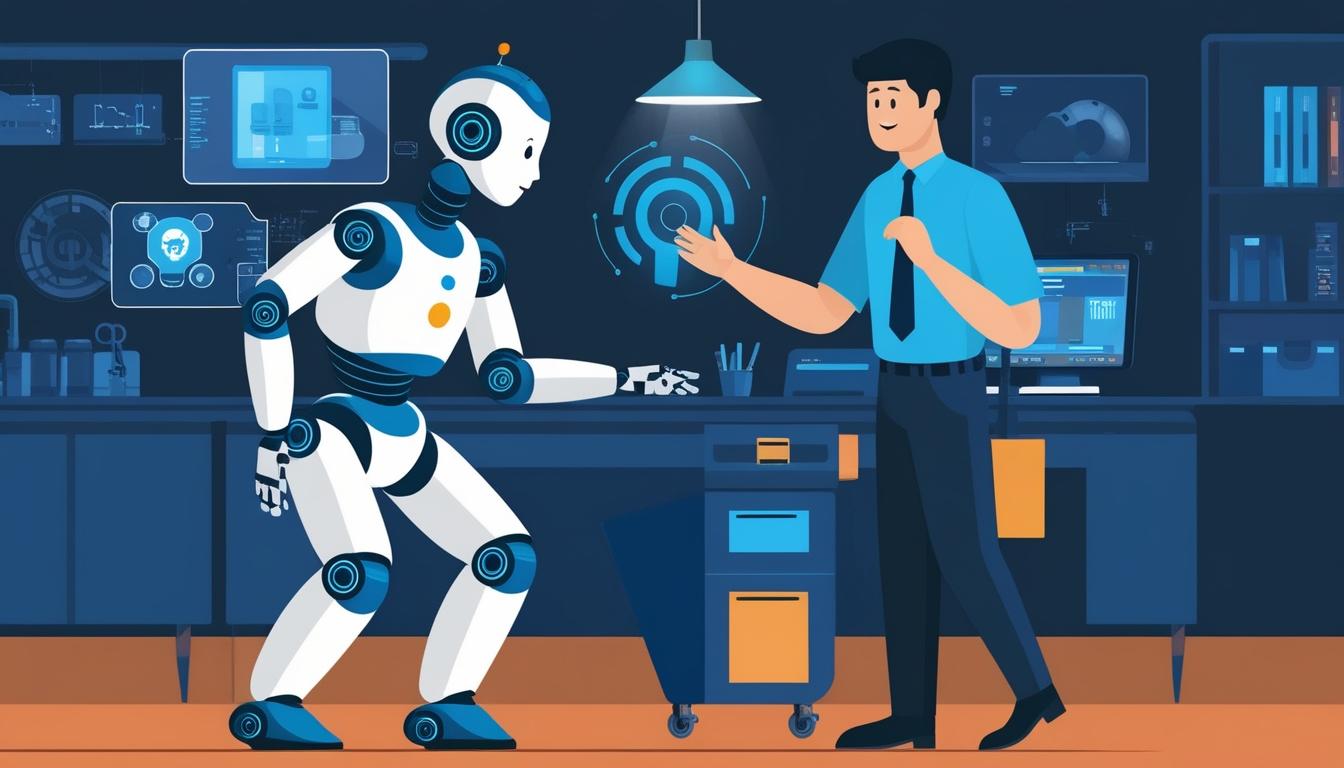
In the past year, a significant number of Polish companies have experienced a shift in their employment strategies, with 37% having laid off at least one employee in favour of replacing their work with artificial intelligence (AI). This trend, which has been developing across various industries, has sparked discussions about the future role of humans in the workforce. One notable voice in this conversation is Prof. Dominika Kaczorowska-Spychalska, the director of the Intelligent Technologies Center at the Faculty of Management, University of Łódź.
The integration of AI into the workplace is not a recent phenomenon, according to Prof. Kaczorowska-Spychalska. She highlighted that AI technologies have been incrementally incorporated into industry operations for several decades. Initially discussed in 1956 by John McCarthy, the father of AI, these technologies now operate at varying levels of autonomy, offering capabilities such as forecasting, providing recommendations, and offering advice.
The recent project by Kraków Radio OFF, where content creation was predominantly driven by AI tools, has brought fresh focus to the implications of AI replacing human labour. Prof. Kaczorowska-Spychalska has emphasised that while AI's inroads into digitally-driven jobs were initially expected to be within roles involving repetitive and routine tasks, recent developments have challenged that assumption. AI has proven adept in fields previously deemed safe, such as those requiring creativity and specialised knowledge, particularly through the deployment of generative AI systems like ChatGPT and Midjourney.
Presently, over 3.6 million Polish employees are considered at high risk from automation in the 20 occupations most likely to be affected by AI, as reported by the Polish Economic Institute (PIE). These threatened roles include finance and insurance specialists, legal professionals, IT experts, marketing and sales managers, regulatory officials, and academic teachers. Notably, 82% of those at risk are individuals with higher educational qualifications.
Conversely, jobs involving simpler, manual tasks or those requiring unique physical skills, such as cleaning services, machine operators, dancers, and fitness trainers, are less vulnerable to AI replacement, according to data from the OECD.
Despite the increasing presence of AI, experts, including Prof. Kaczorowska-Spychalska, argue that the technology should not be perceived as inimical. The potential of AI lies in its ability to augment human work, reduce burnout, and counter demographic trends like aging populations, rather than merely replacing human resources.
However, as reflected in the data from the Polish Labor Market Barometer for the first half of 2024, the progression has resulted in tangible job losses. The driving factors behind AI adoption include process automation, efficiency enhancement, and cost reduction, alongside its capability to handle and analyze large datasets swiftly, highlighting its effectiveness in sectors such as customer service, product innovation, diagnostics, and logistics.
AI's impact on the labour market is indisputable; however, Prof. Kaczorowska-Spychalska encourages a balanced view. She likens the transformation to historical shifts in labour, where jobs have evolved or vanished without AI's involvement. Highlighting the redundancy of jobs like muleteers or knife sharpeners, she points out the emergence of new roles requiring updated competencies. The advancement of AI does not imply the redundancy of all current professions, but it will indubitably alter the nature of jobs across sectors.
The recent initiative at Kraków Radio OFF illustrated AI's vast potential but, as Prof. Kaczorowska-Spychalska noted, the true value lies in enhancing human capabilities through AI collaboration. The future will be shaped by our choices on integrating AI: whether it replaces or supplements human efforts will depend on how skills are adapted and harnessed in concert with technology, blending human insight with technological power to generate innovative solutions.
Source: Noah Wire Services