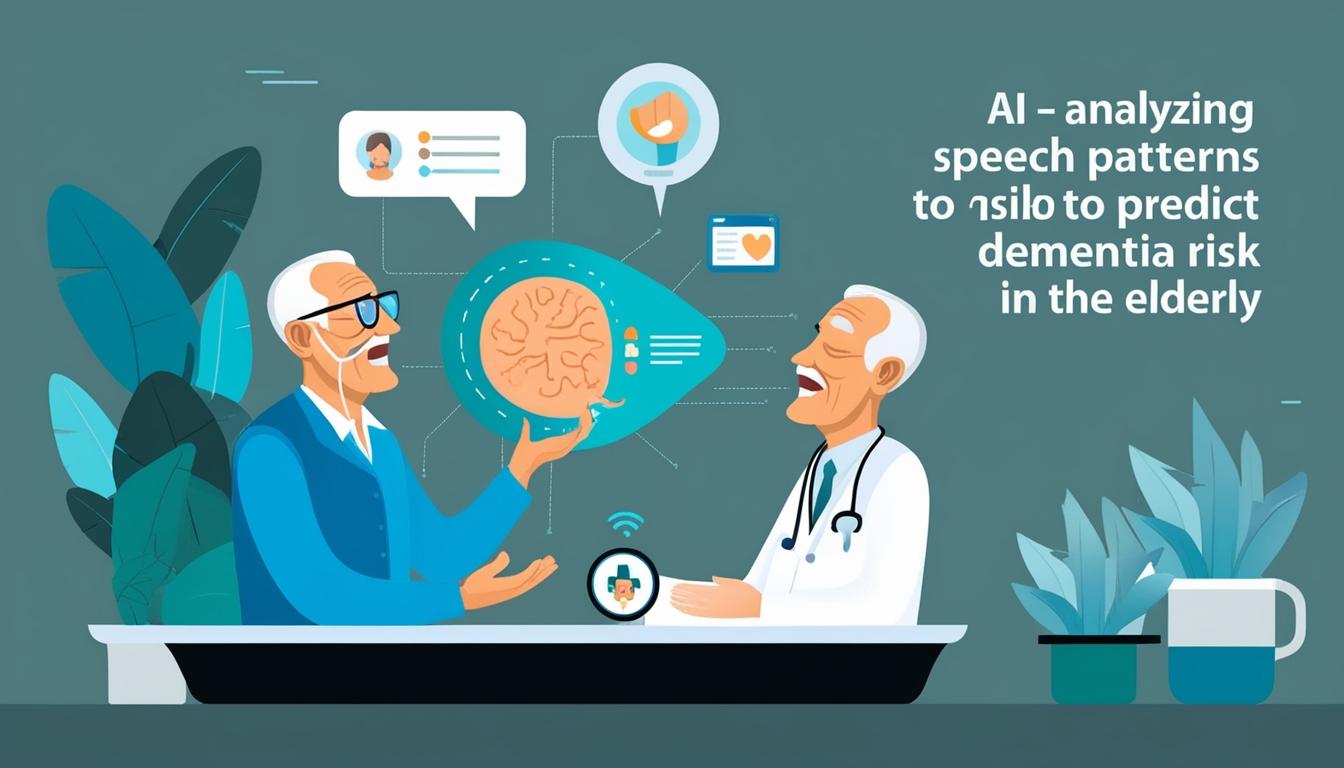
South Korean Researchers Develop Innovative AI-Based Dementia Prediction Technology
Researchers from the Electronics and Telecommunications Research Institute (ETRI) in South Korea have unveiled a groundbreaking artificial intelligence (AI) system designed to predict and screen for dementia in the elderly. This innovative technology analyses speech patterns to identify individuals at high risk for mild cognitive impairment and dementia.
The AI development focuses on understanding speech utterances—a sophisticated process that intertwines cognitive functions such as memory and attention with language generation and colloquial abilities. By analysing everyday conversations, researchers aim to detect early signs of decline in cognitive, language, and motor skills associated with brain degeneration.
ETRI's Integrated Intelligence Research Section has leveraged its existing expertise in AI and multimodal technologies to create this new predictive model. Notably, the team combined the Large Language Model (LLM) for the first time with voice and text analysis technologies. This advancement enabled the research team to achieve a substantial 87.3% accuracy rate on the ADReSSo Challenge Dataset, surpassing the previous record of 85.4%. The challenge, hosted by the University of Edinburgh in the UK and Carnegie Mellon University in the US, provided a platform for the innovative model's testing.
The results of this research were published in the February 2024 edition of the ETRI Journal, garnering considerable interest from global companies in the US and Germany regarding its potential commercial applications.
In addition to its initial success, ETRI further enhanced the technology by integrating the Visual Language Model (VLM) technology, allowing the team to surpass their previous achievements in the same challenge. The improved results have been submitted to esteemed Scientific Citation Index (SCI) journals for review.
An important outcome of this research is the development of a tablet-based application. This app is capable of predicting high-risk groups for mild cognitive impairment through the analysis of conversational speech. Despite challenges related to pronunciation accuracy and dialects common among the elderly, especially those with cognitive decline, the team successfully overcame these hurdles using a vast database of speech samples and robust multimodal AI technology.
The technology was developed with a focus on accuracy and user convenience, specifically targeting the elderly population. Plans are underway to conduct demonstration sessions at senior welfare centres across South Korea, in collaboration with the Korea Electric Research Institute.
Kang Byung Ok, a Principal Researcher at ETRI, highlighted the advantages of this approach, stating that it moves beyond the traditional screening tests that require patients to visit health centres. The new AI system allows for continuous and periodic monitoring through smart devices, significantly benefiting high-risk groups.
Experts suggest that this technology offers a new pathway for dementia prevention and early diagnosis, combining AI innovation with medical technology advancements. The anticipated commercialisation of the technology could have far-reaching impacts, not only reducing the societal costs associated with dementia treatment but also enhancing the global digital healthcare market.
As societies worldwide confront the challenges of ageing populations, this AI-based dementia prediction technology proposes an effective and efficient solution to managing cognitive decline in the elderly, promising improvements in their care and quality of life.
Source: Noah Wire Services