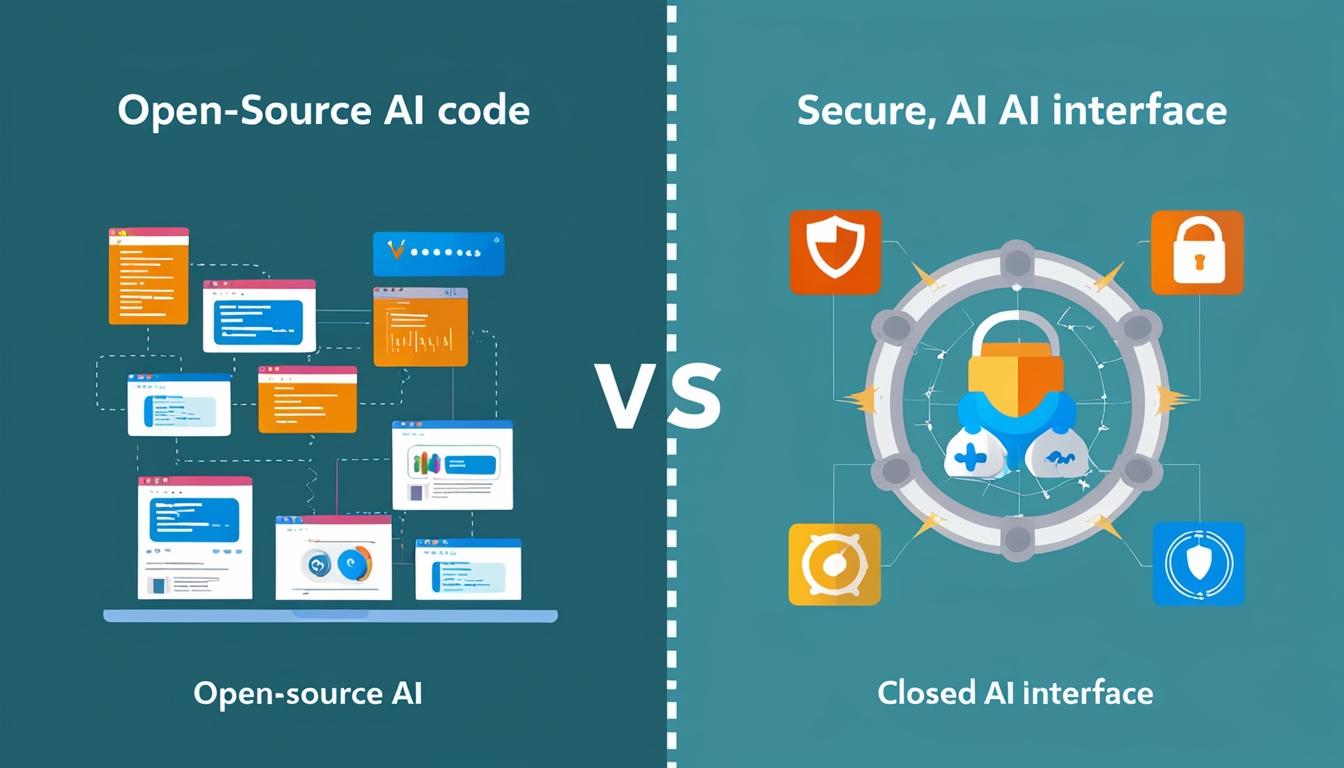
The ongoing debate around open and closed Artificial Intelligence (AI) models has been reignited following a recent report by the non-profit research group Epoch AI. The findings highlight a significant gap in the technological capabilities of open models compared to their closed counterparts, such as OpenAI’s ChatGPT and Anthropic’s Claude, underlining a lag of approximately one year.
According to Ben Cottier, the lead researcher behind the report, the top open models are on par with closed models but require more time to reach similar performance levels. An example cited in the study is Meta's Llama 3.1 405B, an open model released in July, which took around 16 months to match the capabilities of GPT-4's initial version. The potential release of Meta’s next AI iteration, Llama 4, as an open model could further reduce this gap.
The distinction between open and closed AI models largely hinges on accessibility and usage restrictions. Open models can be downloaded, modified, and utilized by anyone for almost any purpose. In contrast, closed models operate under stricter creator-controlled terms to prevent misuse. The discussion around these terms is further complicated by recent definitions by the Open Source Initiative, which require companies to share the model, data, and code. Meta's models, while tagged as open-source, do not fully comply with this updated definition, mainly because they do not disclose the training data or code fully.
The implications of these findings reach into spheres of governance, security, and ethics. Policymakers are increasingly challenged to manage the advent of powerful AI technologies, especially as they potentially influence global information environments, including electoral processes. Certain open models, once released, can pose risks if used for malicious purposes, as illustrated by a recent report where a Chinese research institution adapted an older version of Meta’s Llama model for military applications.
Conversely, proponents, such as Elizabeth Seger from Demos and Yacine Jernite from Hugging Face, argue that open models promote diversity, transparency, and innovation. Open-source AI development engages a broader spectrum of contributors globally and allows the public to scrutinise possible biases or faults in AI systems, exemplified by projects like Stable Diffusion 2.
Nonetheless, both open and closed models face governance challenges. Closed models, while more secure due to restricted access, remain opaque, hindering external audits for biases or sensitive data. Open models, however, can be freely adapted, which necessitates a different governance approach, especially as the capabilities gap shrinks.
The proprietary stance is economically significant for firms like OpenAI and Anthropic, where selling access to models forms a central business strategy. Meta, on the other hand, operates differently, focusing on making Llama models available broadly, particularly within the U.S. defence and national security sectors.
Amidst this evolving landscape, AI capabilities continue to expand. For instance, Anthropic recently introduced a feature allowing its model to control a computer, a move indicative of the ongoing innovations in AI systems. These advancements, while marking progress, also add layers of complexity concerning regulation and safety.
Stakeholders from various sectors underscore the importance of delineating clear threat models related to AI. As Ethan Mollick from the Wharton School notes, regardless of further advancements, it may take years for these systems to be fully integrated into society, highlighting the urgency of developing robust governance frameworks tailored to specific risk scenarios.
As the AI industry moves forward, the discourse surrounding the balance between openness for accountability and regulation for safety continues to evolve, posing critical questions on the future trajectory of AI technology and its role in global society.
Source: Noah Wire Services