As advancements in artificial intelligence (AI) continue to surge, a key conversation has emerged around the role of large-scale models and their future implications. Prominent models such as Large Language Models (LLMs), Generative AI, and Transformers are at the forefront of this discussion, raising questions about dependency, creativity, and independence in human decision-making.
AI's Increasing Complexity and Reliance
The complex nature of these AI models has led to increased reliance, prompting debate over the possible influence AI might exert over human creativity and decision-making. This dependency is underscored by a series of critical questions concerning the future trajectory of artificial intelligence:
- Data Corpus: What is the origin and reliability of the data used to train these expansive models?
- Model Size: Are large pre-trained models necessary for specific tasks, or could smaller, more efficient models suffice?
- Algorithm Efficiency: Can existing algorithms continue to meet desired outcomes effectively?
- Hardware and Energy Efficiency: Is the current hardware capable of supporting these models sustainably, and at what energy cost?
These are not merely theoretical musings; they highlight practical considerations that require attention as the sphere of AI continues to expand.
Harnessing the Potential of Edge AI
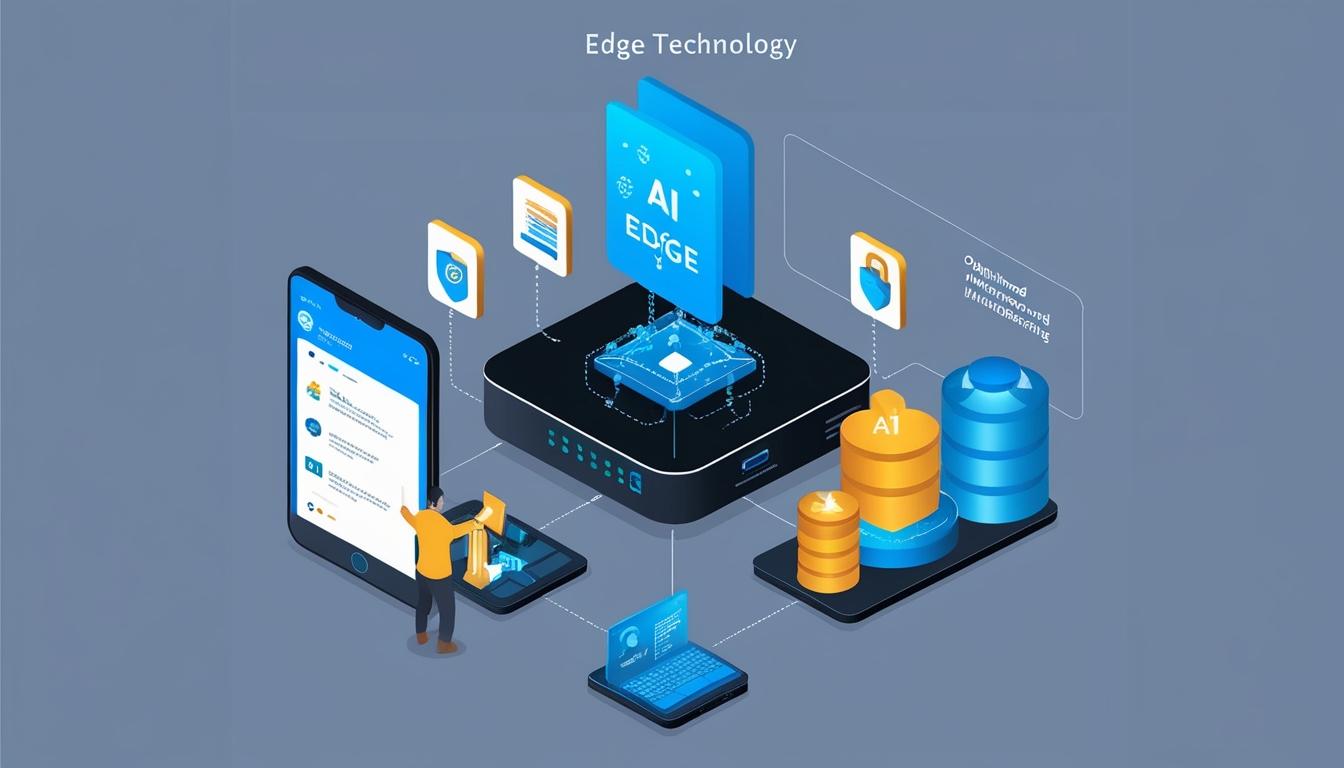
Despite these challenges, Edge AI presents a promising solution. Edge AI refers to the deployment of AI models at the local level—closer to where data is gathered—rather than relying on centralised, cloud-based systems. This approach can effectively handle various AI workloads with lower complexity and resource demand.
Although custom algorithms are becoming less frequent in AI implementations due to the ease of pre-trained models, Edge AI provides opportunities to tailor algorithms specifically to the needs of a task. This is particularly useful when dealing with resource-limited devices, as it enables the development of more streamlined models that can operate efficiently on these platforms.
Debunking Misconceptions About Edge Devices
A prevailing opinion among some AI developers is that edge devices are unsuitable for running AI models due to size and resource constraints. However, this viewpoint overlooks the potential for optimisation. By leveraging a comprehensive understanding of algorithms and collaborating with experts, it is possible to fine-tune AI models to perform effectively, even on devices with limited memory capacity. Applications such as computer vision, speech recognition, and sensor fusion exemplify manageable workloads achievable through Edge AI solutions.
Advantages of Edge AI Implementation
Edge AI offers compelling benefits over traditional, cloud-dependent models:
- Low Latency: Reduced processing time due to proximity to data source improves efficiency.
- Enhanced Privacy and Security: Data remains on the device unless explicitly shared.
- High Accuracy: Local models can match or surpass the precision of larger models.
- Energy Efficiency: Optimized models and hardware to reduce power consumption.
- Complete Control: Users have full autonomy over data management, troubleshooting, and ownership costs.
- Reduced Hallucinations: Customising training data and parameters prevents AI deviations from reality.
Developing AI Models for Edge Devices
Building AI models tailored for edge devices requires a strategic approach:
- Adopting a mindset focused on edge-appropriate solutions.
- Collecting real-time, representative data.
- Implementing thorough data preprocessing techniques.
- Engaging with subject matter experts for feature selection.
- Understanding algorithm flow to optimise model convergence.
- Designing models with scientific backing to fit specific needs.
- Rigorous model testing prioritising sensitivity, specificity, and performance metrics.
The Path Forward with Edge AI
With the appropriate tools and methodologies, deploying AI models on edge devices can be highly efficient. Companies like Ambient Scientific are pioneering in providing a complete toolchain for custom AI model training and deployment optimized specifically for edge hardware.
Edge AI emerges not just as an alternative but a powerful approach for achieving accurate, efficient, and secure AI operations. By embracing the nuances of algorithm optimization and leveraging the right tools, the challenges of large-scale AI can be surmounted, unlocking substantial potential for edge computing in the modern tech landscape.
Source: Noah Wire Services