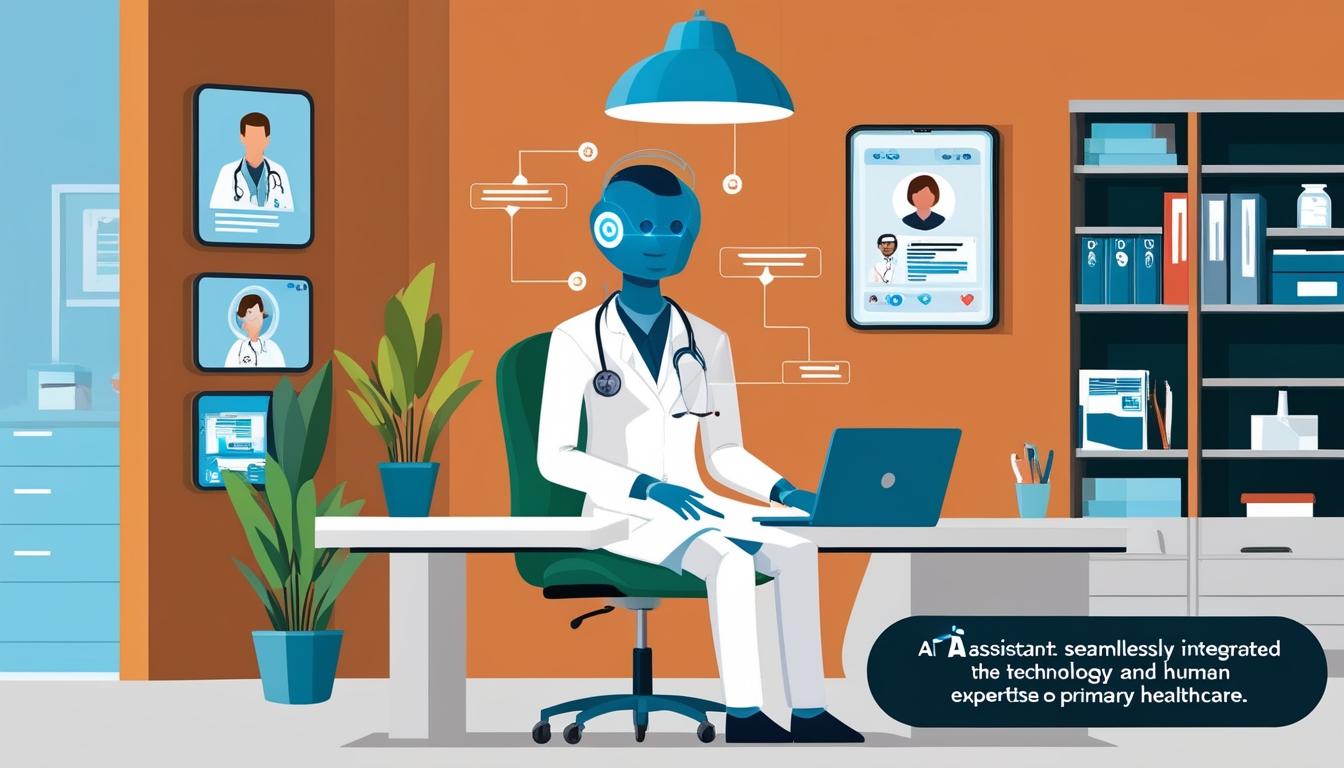
AI in Healthcare: Assessing ChatGPT's Potential in Primary Care
In recent years, the integration of artificial intelligence (AI) into various domains has become increasingly prevalent, with healthcare being a primary focus of this technological evolution. While AI's potential in healthcare is undeniable, its exact role remains a subject of significant examination and discourse. A new study sheds light on AI's efficacy, particularly ChatGPT’s capability to address common primary care concerns, both in terms of responsiveness and the clinical appropriateness of its suggestions.
Study Insights: Evaluating ChatGPT’s Role
The study in question evaluated ChatGPT’s capacity to respond to inquiries regarding the ten most recurrent reasons individuals consult primary care physicians. This evaluation was grounded in two pivotal aspects: identifying possible causes for symptoms and suggesting appropriate courses of treatment. Family medicine clinicians assessed ChatGPT’s responses, rating approximately 95% as "useful" and 85% as "clinically appropriate". These promising figures suggest that AI could indeed assist individuals in understanding general symptoms and their potential treatments.
However, the study revealed that AI’s strengths do not uniformly apply across all health complaints. Specifically, ChatGPT's handling of urgent symptoms—such as shortness of breath—lacked the necessary emphasis on urgency, which sometimes is critical for health outcomes. These observations accentuate the AI’s role in guiding users through less critical health concerns but underscore its current limitations in urgent medical scenarios where immediate medical intervention might be requisite.
Challenges in Source Credibility and Clinical Judgement
An additional dimension of the study focused on evaluating the quality of references ChatGPT provides. Although the AI predominantly relies on secondary source material, the relevance and utility of these references can vary. For medically knowledgeable individuals, discerning the credibility of AI-sourced references might come more naturally. In contrast, individuals without a medical background may struggle to differentiate between validated medical advice and more generic health information. This variability presents a challenge to establishing AI as a reliable source for healthcare advice.
AI’s reliance on a vast but sometimes inconsistent reservoir of information contrasts sharply with human clinicians who employ real-time, authoritative sources to inform their medical guidance. Bridging this gap with real-time access to credible clinical data would enhance the trustworthiness of AI in healthcare settings.
AI: A Partner in, Not a Replacement for, Traditional Care
While the study highlights AI’s potential, it also serves to clarify its current limitations, positioning AI as a supplementary tool rather than an alternative to traditional medical practices. AI could potentially play a pivotal role as a preliminary source of health-related insights, particularly for non-urgent concerns, thereby augmenting patient education. However, the intuition and problem-solving skills of a trained physician remain irreplaceable, particularly when it comes to interpreting complex medical histories and symptoms with nuance.
The prospective future involves refining AI systems to better identify and respond to high-stakes health symptoms. This development could enhance the AI’s safety-first approach by integrating “triage sensitivity,” akin to the cautious nature of human medical judgments regarding critical conditions like chest pain.
The Path Forward: A Measured Integration
In conclusion, the emerging role of AI in healthcare as illuminated by this study should be viewed as a promising adjunct to human expertise. As technology advances, AI holds the promise of enhancing information access and supporting decision-making processes for both patients and healthcare providers. However, the nuances of medical judgment and the depth of critical thinking required in healthcare remain attributes that AI has not yet mastered. For now, AI’s most practical application lies in complementing traditional healthcare practices, supporting patients as they navigate their health journeys, rather than substituting the comprehensive care offered by experienced clinicians.
Source: Noah Wire Services