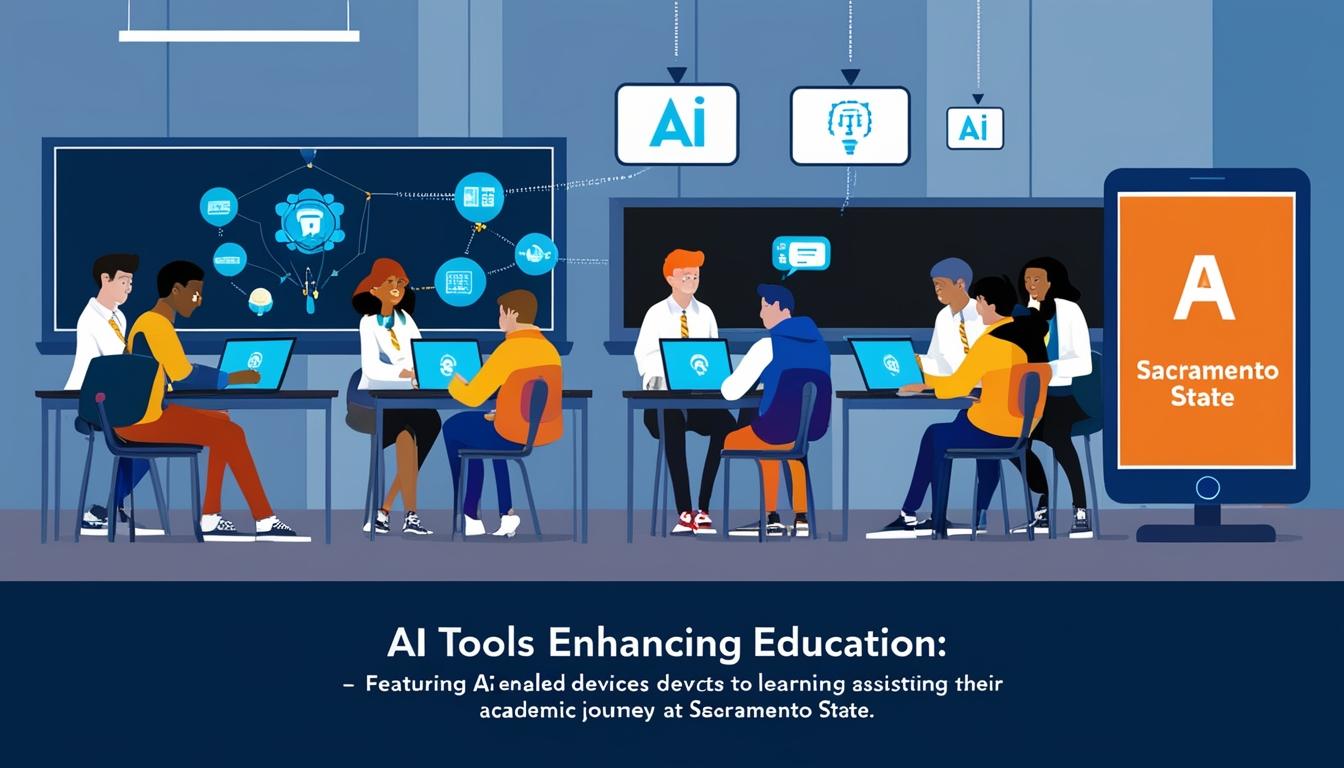
AI Integration Paves New Paths in Education at Sacramento State
Sacramento, California - The National Institute on Artificial Intelligence in Society (NIAIS) at Sacramento State is making strides in integrating artificial intelligence (AI) into the academic and administrative fabric of the university. Launched by Sac State President Luke Wood last year, the institute aims to streamline AI's incorporation into campus life, significantly enhancing the educational experiences of both students and faculty.
The initiative, spearheaded by Chief Artificial Intelligence Officer Alexander Sidorkin, focuses on creating AI-enabled tools that foster academic and administrative success. This includes the development of an AI Academic Advisor Tool, a revamped My Sac State application, an AI-Powered Admission Assistant for Business Major programs, and an AI tool to help optimise student elective choices. These tools have been designed with the vision of smoothing out academic pathways and improving institutional efficiencies.
One of the prominent figures in this initiative is Associate Assistant Professor of Information Systems and Business Analytics, Sadaf Ashtari. Ashtari has recently completed an AI-Policy Navigator, emphasizing the necessity for AI education within the curriculum. She expressed concern about the university's current lag in AI education, suggesting a stronger focus on equipping students with the necessary skills to thrive in AI-driven job markets.
The university is already making AI technologies accessible to its students through partnerships, offering tools like Microsoft's AI, Copilot, to all Sac State students using their institutional email accounts. However, as Sidorkin notes, the full spectrum of AI tools will be rolled out in phases over the next decade, following the development of specialised solutions by NIAIS.
On October 7th, the institute hosted an open seminar titled “Is Leapfrogging Effect Real? Cognitive Dimensions of AI-positive Pedagogy.” This event gathered Sac State educators to deliberate on AI's educational role and its broader implications. The discussion explored the potential of AI not just as a facilitator of basic skills but also in encouraging higher-level cognitive skills, notwithstanding the sector's ongoing debates on AI-driven learning efficacy and academic integrity.
As part of its educational offerings, the NIAIS has introduced a “College and Career with AI” course, designed as a two-unit elective focusing on AI's applications in research, learning, and problem-solving. This course aims to provide students with foundational AI competencies crucial for future professional landscapes.
Feedback from students has been positive, highlighting the perceived benefits of AI tools in academia. Herman Melnyk, a senior computer engineering major and President of Sac State's Information Technology Club, has praised the integration of AI for its potential to streamline learning processes and facilitate academic success. Similarly, senior computer science major Illya Gordyy sees the embrace of AI as vital for future workforce readiness and intends to pursue the newly offered course.
The commitment demonstrated by Sac State through initiatives like those by NIAIS signifies a progressive step toward embedding AI within the educational domain, equipping students and faculty members with crucial skills and understanding in a rapidly evolving technological landscape.
Source: Noah Wire Services