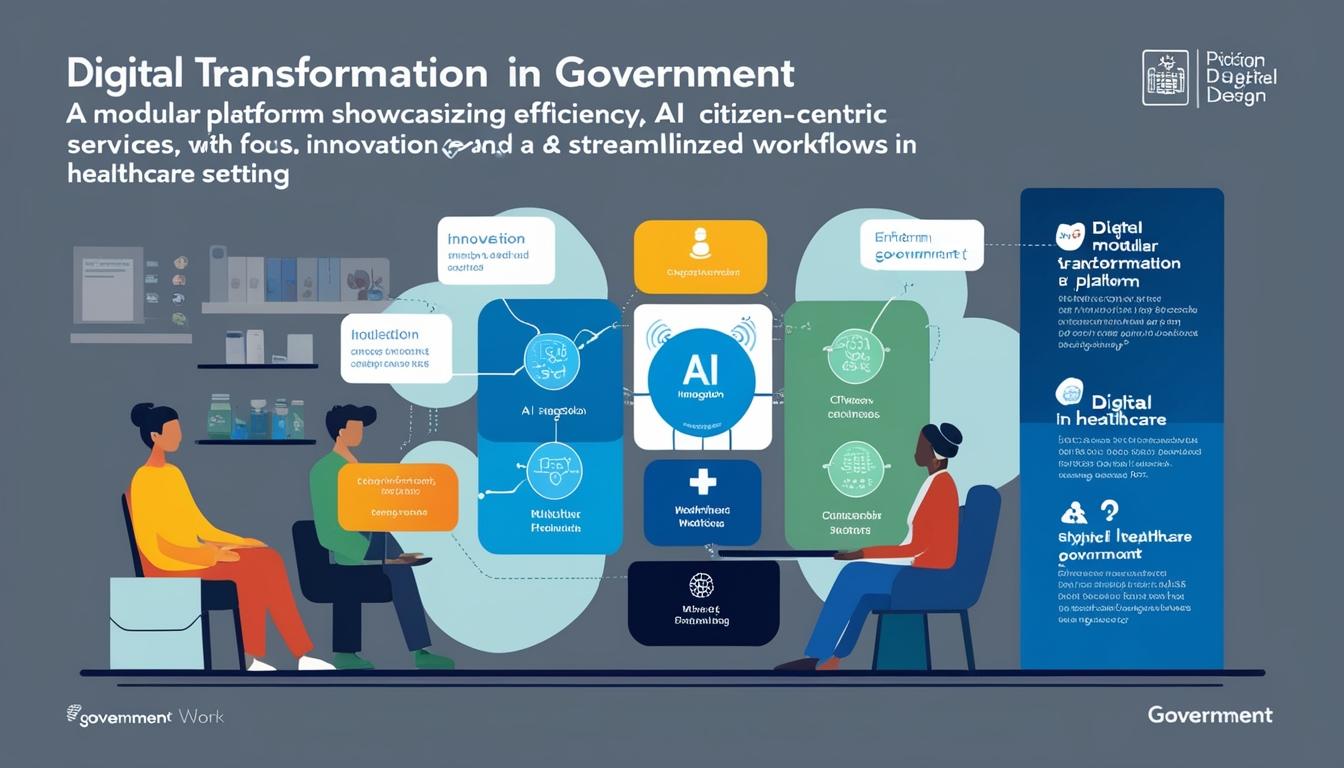
Australia's Government Advances in Digital Transformation Using Modular Platforms
Australia's governmental systems are undergoing a significant digital transformation across local, state, and national levels. This shift is largely driven by the escalating demand for efficient, citizen-centric services that harness technology to enhance connection and compliance while fostering digital trust. A crucial element in this transformation is the adoption of platforms that offer a modular approach akin to assembling with Lego blocks. This strategy equips governmental bodies with the ability to simplify multifaceted business processes, flow various citizen interactions, and crucially, safeguard recent technological investments.
Government departments and agencies are increasingly demanding the capability to scale up their digital services whilst ensuring that previous investments remain secure. These demands are being met by intelligent platforms that employ low-code solutions bolstered by advanced rules engines integrated with artificial intelligence (AI) and machine learning (ML). These platforms are designed to address complex issues spanning several domains such as document and application management, while adhering to regional compliance standards. Companies like Newgen are actively collaborating with cloud providers including AWS and Azure within Australia to meet data residency and security regulations, addressing vital public sector concerns.
Strategic investments have also led to the creation of ready-to-use solutions that cater specifically to public sector needs, such as grants and correspondence management. These systems streamline operations, cut costs, and enhance service delivery quality. AI and ML technology integration within these platforms facilitate the automation of routine tasks, creating faster and more efficient workflows.
A practical example of this transformation is demonstrated by an Australian hospital's recent adoption of a low-code platform. This implementation has optimized their administrative and clinical workflows, integrating advanced AI algorithms to elevate patient care and significantly cut down operational inefficiencies, achieving over 99 percent document accuracy—improvements unachievable through manual processes. This has resulted in substantial cost reductions and enhanced service delivery through the digitisation of essential processes.
Since 2011, a governmental authority in Victoria has processed transactions worth 1.5 to 2 billion dollars annually, translating to approximately 600,000 transactions each year. Having initially relied heavily on paper processes, the agency transitioned to a predominantly digital platform for bond lodgement, marking a pivotal shift especially noted during the COVID-19 pandemic. The digitisation greatly enhanced operational efficiency and ensured secure, uninterrupted transaction processing through vital integrations with entities such as VCAT, DFFS, and Homes Victoria. This transformation accentuates the enduring value provided by adaptable and robust digital solutions.
Utilising low-code platforms with modular features enables government agencies to adapt more efficiently to the dynamic needs of their citizens. These platforms are helping government bodies across all levels to boost cost efficiency, adaptability, and compliance, whilst ensuring they are well-prepared for future demands. This initiative is guided by thought leaders such as Krishna Kumar, Business Head Australia at Newgen Software Technologies Pty Ltd, who highlight the potential of these technologies to revolutionise governmental operations.
Source: Noah Wire Services