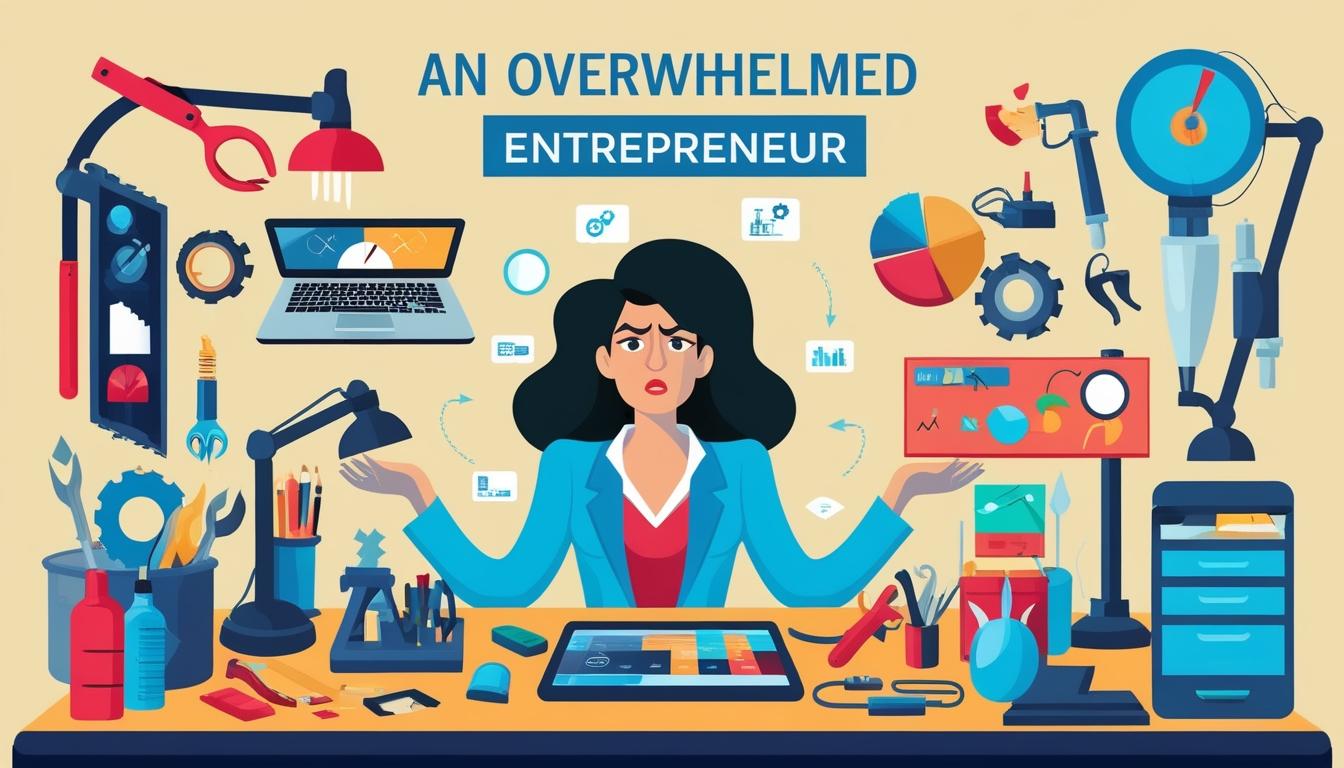
In the bustling world of entrepreneurship, navigating the balance between a burgeoning side hustle and a demanding full-time role can be a daunting task, as illustrated by the experiences of a neuroscientist who embarked on establishing a consulting business. While juggling responsibilities as a neuroscience team member at a hospital and dedicating every spare minute to nurturing a nascent consultancy, the pursuit soon became overwhelmingly taxing.
The neuroscientist, whose identity remains undisclosed, initially faced the entrepreneurial challenge while still engaged in her 9-to-5 role. Utilising every lunch break for website development, late nights for drafting emails, and sacrificing vacation days to meet clients was only part of the struggle. The intense pace led to burnout, epitomised by the moment she inadvertently placed her toddler in the bath half-dressed in the midst of her pressing schedule.
To tackle the unsustainable workload, the entrepreneur decided to enlist help by hiring assistants to manage podcast production and social media content. However, the intended solution backfired. Despite the competence of her assistants, she found herself overwhelmed. This difficulty stemmed not from the workload per se but from entrenched productivity habits: overworking, maintaining exorbitantly high standards, and constantly feeling the need to progress.
Amidst the chaos, the neuroscientist realised that hiring additional help was not the remedy. Instead of alleviating her burdens, the attempt only increased them as she felt the need to keep the assistants occupied, leading to an expanded workload. As her stress levels soared, she was compelled to explore alternative productivity strategies.
In an era teeming with technological solutions, artificial intelligence (AI) emerges as a potential ally for small business owners. While many extol AI's ability to expedite tasks like social media content creation or book writing, the neuroscientist emphasised the importance of preserving creative control over the core aspects of her business. Her aspirations for AI included its potential to alleviate mundane household tasks, thereby freeing up creative energy for impactful business activities.
Drawing from her scientific insight, the neuroscientist posited that energy, rather than time, constitutes a vital asset in productivity. The challenge thus lies in reducing mental clutter to maximise creative efficacy. Through her TEDx talk, strategies were outlined for enhancing one's productivity while minimising the mental strain of daily tasks:
Automate Through Biohacks: Simple technological automation, habitual routines, and preplanning can relieve cognitive load, facilitating smoother daily operations.
Delegate with Systems: Even solo entrepreneurs can delegate tasks to technology through templates and workflows, thus conserving mental resources for essential decisions.
Simplify Decision-Making: By streamlining trivial decisions, individuals can preserve cognitive power for critical business tasks, reducing the risk of decision fatigue.
Implementing these strategies enabled the neuroscientist to reclaim five hours weekly, culminating in the ability to manage efficiently without external assistants. More broadly, she highlights the importance of self-optimisation for entrepreneurs. As businesses expand and necessitate larger teams, a well-conditioned cognitive state can ensure that the benefits of additional support are fully harnessed.
In sum, the trials and triumphs of this entrepreneur illuminate the intricate dance between growing a business and maintaining personal well-being. As the landscape of work and technology evolves, these insights demonstrate that managing one's mental resources may be as crucial as any tool or team in achieving sustainable success.
Source: Noah Wire Services