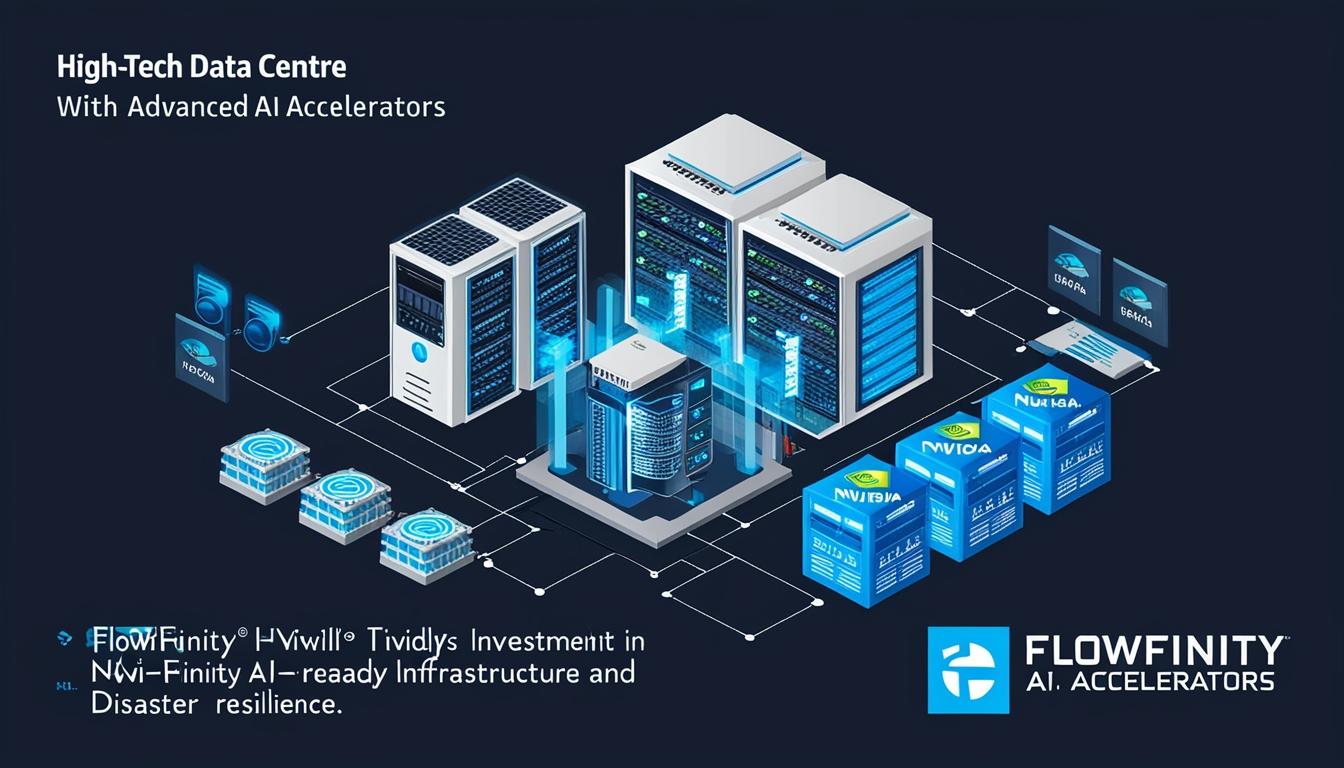
Flowfinity, a prominent provider of cloud-based solutions, has made substantial investments in upgrading its data centre infrastructure to keep pace with the growing adoption of artificial intelligence (AI) among its clientele. The company, which operates two strategically located data centres in Canada, has ambitious plans to ensure it can meet the increased processing demands from AI technologies.
With a pair of data centres situated over 2000 miles apart — one in Toronto, Ontario, and the other in Vancouver, British Columbia — Flowfinity has long emphasised disaster resilience as a foundational element of its services. This vast distance offers robust protection against localised disruptions, such as power outages or equipment failures, by allowing each data centre to operate independently. This configuration ensures continuous service availability and enhances Flowfinity's ability to handle unforeseen events.
The recent upgrades focus on Flowfinity's Toronto data centre, where efforts have been directed toward expanding its physical space and augmenting the power allocation. Key enhancements include the installation of new fibre-optic cables, increased server capacity, and improved network redundancy. These efforts are aimed at ensuring the data centre's readiness for AI applications and safeguarding against potential system outages.
Larry Wilson, Flowfinity's Vice President, expressed enthusiasm regarding these developments, saying, "We’re excited to make these material infrastructure investments to support our client’s current and future processing requirements as they incorporate AI into their business processes." Wilson highlighted that these upgrades not only improve capacity for AI readiness but also bolster protection against possible system failures.
Additionally, the expansion is complemented by the deployment of new Nvidia AI accelerators within the Toronto facility. These accelerators arose from several research projects within the Flowfinity AI lab, positioning the data centre to support impending AI-powered functionalities in forthcoming Flowfinity products.
Flowfinity's approach to integrating AI into its services also emphasises data sovereignty, ensuring that client data remains secure and manageable. The firm provides encapsulated cloud services, allowing customers to leverage AI technology without compromising control or security of their data.
This strategic expansion signals Flowfinity's commitment to future-proof its operations amidst the dynamic AI landscape, ensuring that its infrastructure is aligned with the needs of its clients who are increasingly integrating AI into their operations.
Readers interested in discussing the impact of these developments or seeking further insights can engage with Flowfinity through X, at @IoTNow_, or visit the IoT Now homepage.
Source: Noah Wire Services