Global AI Boom Fuels Surge in Data Centre Development
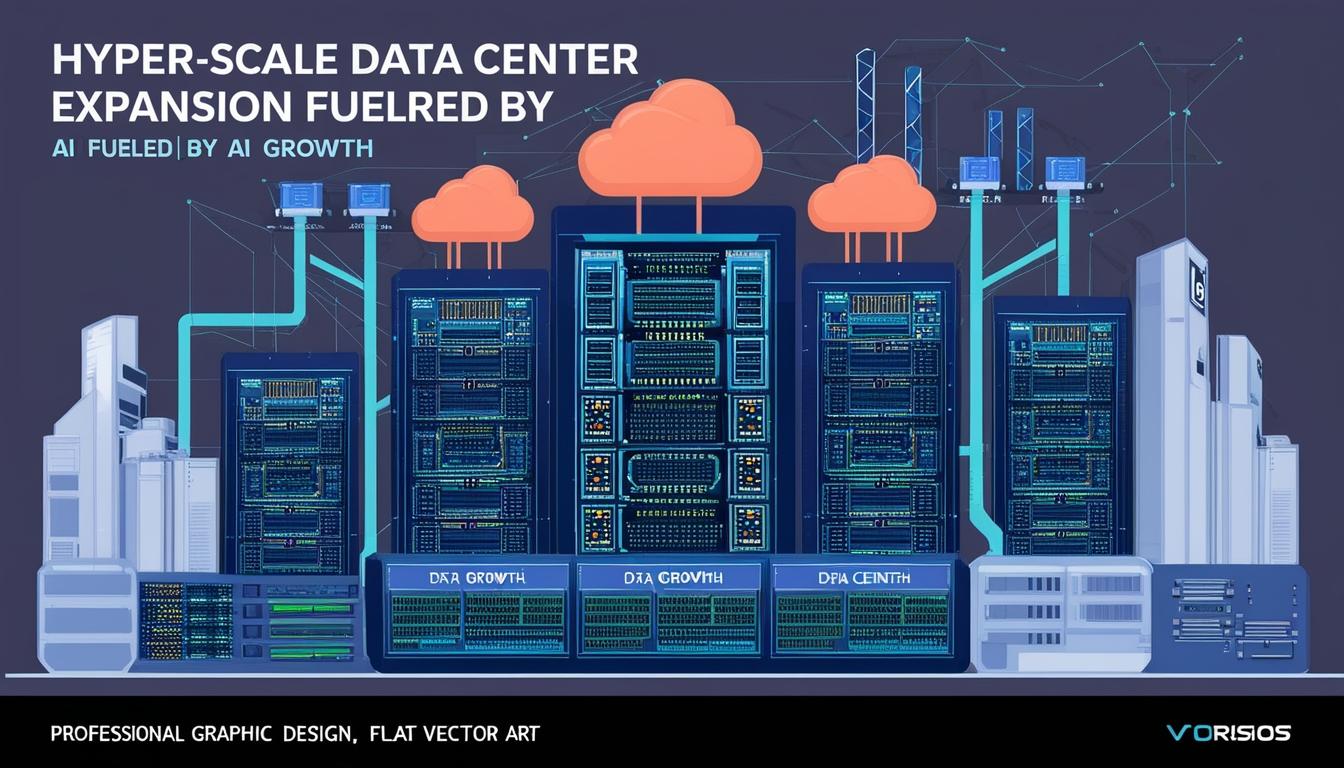
In an era marked by rapid technological advancements, the artificial intelligence (AI) industry is experiencing unprecedented growth, leading to a substantial increase in demand for data processing capabilities. This surge is driving the expansion of hyperscale data centres—facilities exceeding 100,000 square feet—which are cropping up at an accelerated pace across the globe. Projections indicate that over 1,000 hyperscale data centres will be operational by 2024, with expectations that an additional 120 to 130 will come online each year. These vast infrastructures are essential for housing the computing power necessary to support AI operations.
Prominent technology companies are at the forefront of this expansion. Notably, Elon Musk's xAI group is set to develop a data centre spanning 750,000 square feet, with the capacity to accommodate 100,000 Graphics Processing Units (GPUs). Similarly, Microsoft has announced plans for a data centre in Wisconsin, USA, which will span an impressive two square miles of land.
The burgeoning demand for infrastructure to support these massive data centres serves as a boon for companies such as Dell Technologies. With a focus on providing essential tools like racks, storage, servers, and software, Dell stands poised to capture a significant share of the market. The company has identified a $91 billion addressable market in AI infrastructure by 2025, which it anticipates will grow to $124 billion by 2027.
Dell's position in the market has the potential to be further solidified due to challenges faced by one of its competitors, Super Micro Computer. Supermicro has recently encountered financial turbulence following a short-seller report that alleged financial misconduct, coupled with the resignation of its auditor. These developments could translate into an opportunity for Dell to attract more business as Supermicro navigates these complications.
In terms of financial performance, Dell's recent results reflect the impact of the data centre demand. The company reported $7.7 billion in revenues from servers and networking last quarter, marking an impressive 80% year-over-year growth. Overall, Dell achieved total sales of $25 billion in the last quarter, representing a 9% increase from the previous year, while its operating income rose by 15% to $1.3 billion.
While Dell’s personal computer sales have remained steady amid a slowing economy, there is speculation about a potential upgrade cycle driven by AI-ready computers. However, it is predicted that data centre sales will predominantly drive future earnings.
Dell's commitment to shareholder returns is noteworthy, with the company pledging to return 80% of its free cash flow through dividends and stock buybacks. The quarterly dividend has recently been elevated by 20% to $0.445 per share, translating to a yield of 1.3%. In addition, Dell repurchased $1.4 billion in shares during the first half of its fiscal year 2025, amounting to 1.6% of the company’s market capitalisation reclaimed in a mere six months.
As the AI boom continues to fuel the rapid growth of hyperscale data centres, companies like Dell that supply critical infrastructure stand to gain significantly from this trend, marking an exciting chapter in the technological landscape.
Source: Noah Wire Services