Increasing Workloads and the Role of AI in the American Workforce
A recent report from Wrike has highlighted significant challenges facing American workers, with increased workloads and rising concerns about productivity inefficiencies. According to Wrike’s study, employee workloads have expanded notably, with workers reporting a 31% increase in their responsibilities over the past year. Some leaders within organisations estimate this increase to be even higher, at 46% for their respective departments or teams.
The sectors most affected by these trends include technology and financial services. These industries have been repeatedly hit by layoffs, leading remaining employees to shoulder the responsibilities of departing colleagues in addition to their existing duties.
Beyond increased workloads, the report sheds light on productivity challenges. It reveals that U.S. employees are spending an additional 40.8 hours annually compensating for time lost to inefficiencies during their workday. Furthermore, businesses are acknowledging the cost of unproductive work, estimating that nearly 1.5 days per week are spent on unnecessary tasks, amounting to $15,138.03 per employee each year.
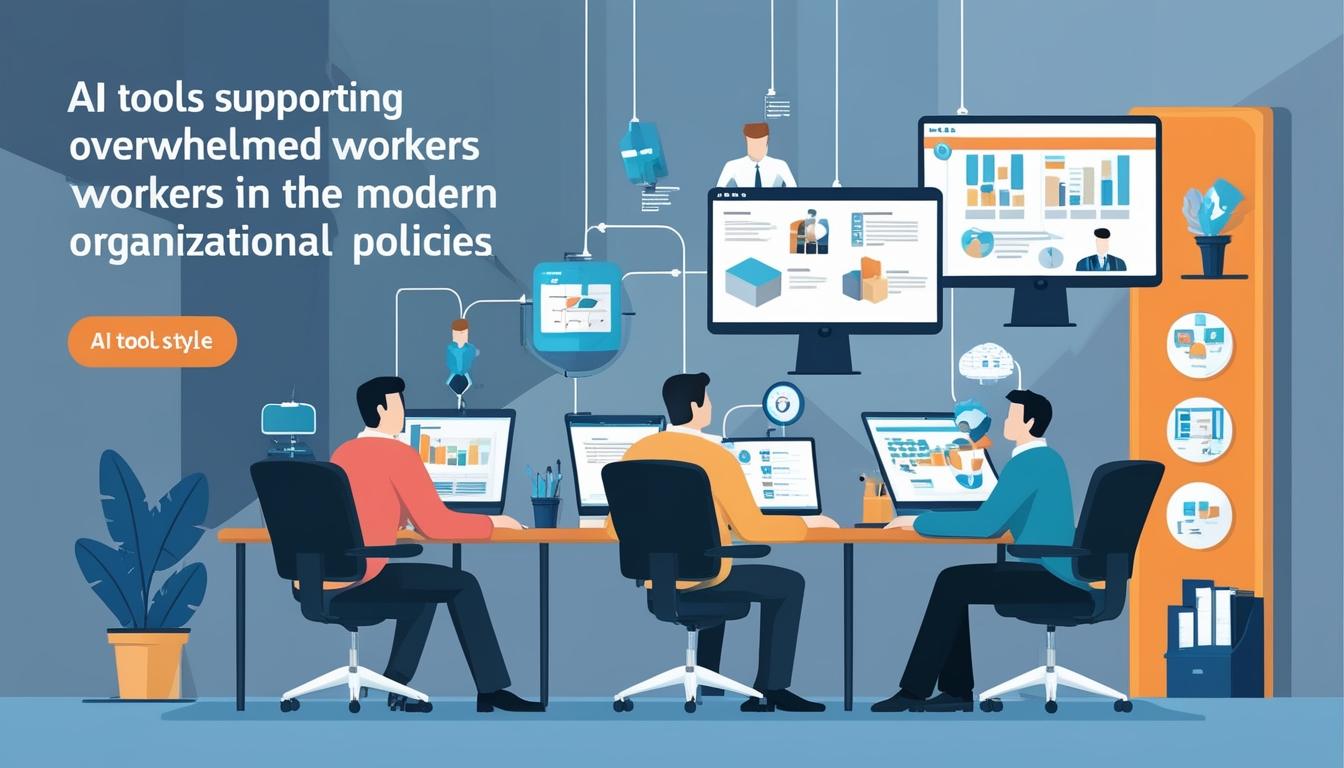
In response to these pressures, many workers are turning to artificial intelligence (AI) tools for support, giving rise to the trend of "bring your own AI" (BYOAI) to work. This trend encompasses the use of assistive technologies such as Gemini, Claude, Co-Pilot, and ChatGPT, which aid employees in various tasks, from conducting research to summarising meeting notes and drafting emails. According to a Thomson Reuters study, the adoption of these tools is expected to save knowledge workers about four hours per week—a significant productivity enhancement that equates to almost adding another colleague for every ten workers.
Looking forward, the Future of Professionals report suggests that by the end of the decade, AI tools could help employees save up to 12 hours per week.
Despite the benefits that workers gain from using AI, organisational policies have not kept pace with these developments. Asana's State of AI at Work report finds that only 31% of companies have a formal AI strategy. There is a notable gap between executives and individual contributors concerning AI enthusiasm, adoption, and perceived benefits. Just 13% of organisations reported having shared AI guidelines in place.
The lack of coherent strategies and guidelines has led some major companies to take precautionary measures. Samsung, for example, has banned the use of generative AI tools such as ChatGPT following incidents where employees used such tools for potentially sensitive purposes. Similarly, Verizon, Citigroup, and Deutsche Bank have restricted ChatGPT use over privacy concerns. Recently, Elon Musk suggested he might bar Apple devices in his companies should Apple equip iPhones with ChatGPT, citing security issues.
Research from Deloitte indicates that AI users often misunderstand the technology's limitations, with a quarter believing AI is always accurate and unbiased. Costi Perricos, a partner and global generative AI lead at Deloitte, emphasises the importance of improving business AI literacy. He advocates for the integration of comprehensive learning programmes, including ethics and responsible use training, alongside the deployment of generative AI tools.
Reporting from Asana underscores that employees who incorporate AI into their daily routines witness the most substantial productivity gains, with 89% claiming noticeable improvements. Frustrations can brew in organisations that are slow to adapt or provide insufficient guidance on the use of AI.
The evolving landscape of AI in the workplace underscores the need for organisations to adopt clear policies and invest in appropriate technologies, allowing employees to maximise efficiency and productivity as workloads continue to climb.
Source: Noah Wire Services