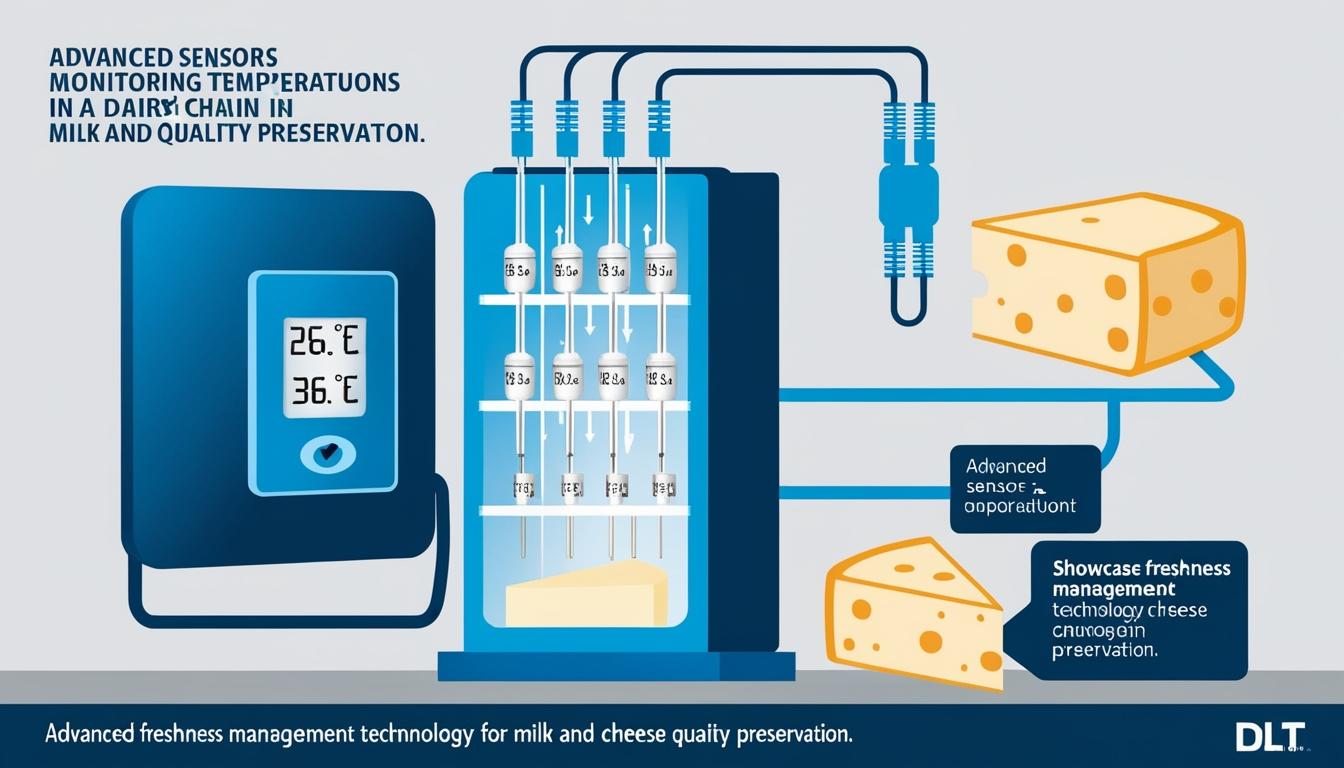
In the intricate world of dairy products, maintaining an unbroken cold chain from production to delivery is paramount. Dairy items such as milk and cheese are particularly susceptible to temperature fluctuations, where even slight changes can significantly impact their shelf life and quality. Despite existing regulatory guidelines and efforts by industry leaders, consistent challenges in maintaining the freshness of dairy products due to temperature-controlled storage and refrigerated transport persist. Common obstacles include seasonal temperature spikes, equipment malfunctions, transport delays, power outages, and adverse weather conditions.
Amid these challenges, advanced sensor technology is proving to be a crucial ally. Sensors are employed across the dairy supply chain to monitor various parameters, such as temperature, humidity, composition, and the presence of contaminants. By providing data on these factors, sensors can help mitigate spoilage and enhance product safety, offering an improved means to handle perishability issues.
One of the forefront companies in this technological upgrade is Evigence, a New Jersey-based firm that has developed the Evigence Freshness Management Platform. This platform, particularly their FreshSense sensors, is tailored to handle the specialized needs of dairy products within the cold chain. These sensors facilitate real-time temperature and freshness tracking by simulating the degradation process specific to each product through a chemical reaction. This data is captured by a camera-operated device, and machine learning models analyse the information to assess freshness metrics and estimate the remaining shelf life of the products.
Oria Malka, Vice President of Sales at Evigence, explains that their system supports the dairy industry by allowing businesses to monitor freshness at every stage—from production to consumption. The company's AI-powered dashboard offers real-time insights allowing managers to pinpoint areas that require attention and improve operational efficiencies to guarantee high-quality dairy products.
In parallel, other industry leaders like Baumer, Sani-Matic, and Burkert USA Corporation also contribute to the technological advancement in the dairy supply chain. Baumer has been involved for over thirty years, providing sensors adaptable to frequent media changeovers and temperature fluctuations. Sani-Matic uses various sensors in its clean-in-place and clean-out-of-place equipment to maintain hygiene standards critical to dairy production. Their cloud-based SaniTrend Cloud software captures and stores sensor data, enhancing operational efficiency. Meanwhile, Burkert USA focuses on advanced sensors for precision dosing and filling, using technologies such as bore magmeters and FLOWave with Surface Acoustic Wave technology.
These sensor technologies collectively offer a more granular view of the product condition throughout its journey, enhancing the ability to manage and preserve the quality of dairy products effectively. As these technologies evolve, they promise improved waste reduction, enhanced predictive capabilities, and a stronger emphasis on freshness and quality.
Looking forward, companies like Evigence are actively expanding their machine learning models to offer even more refined insights aimed at predicting spoilage and quality degradation before they occur. As the dairy industry continues to adopt these innovative solutions, it sets new benchmarks for food safety and sustainability, ultimately benefiting consumers with fresher, safer, and higher-quality dairy products. Through these efforts, sensor technology is reshaping the standards and expectations within the dairy industry, heralding a new era of supply chain management.
Source: Noah Wire Services