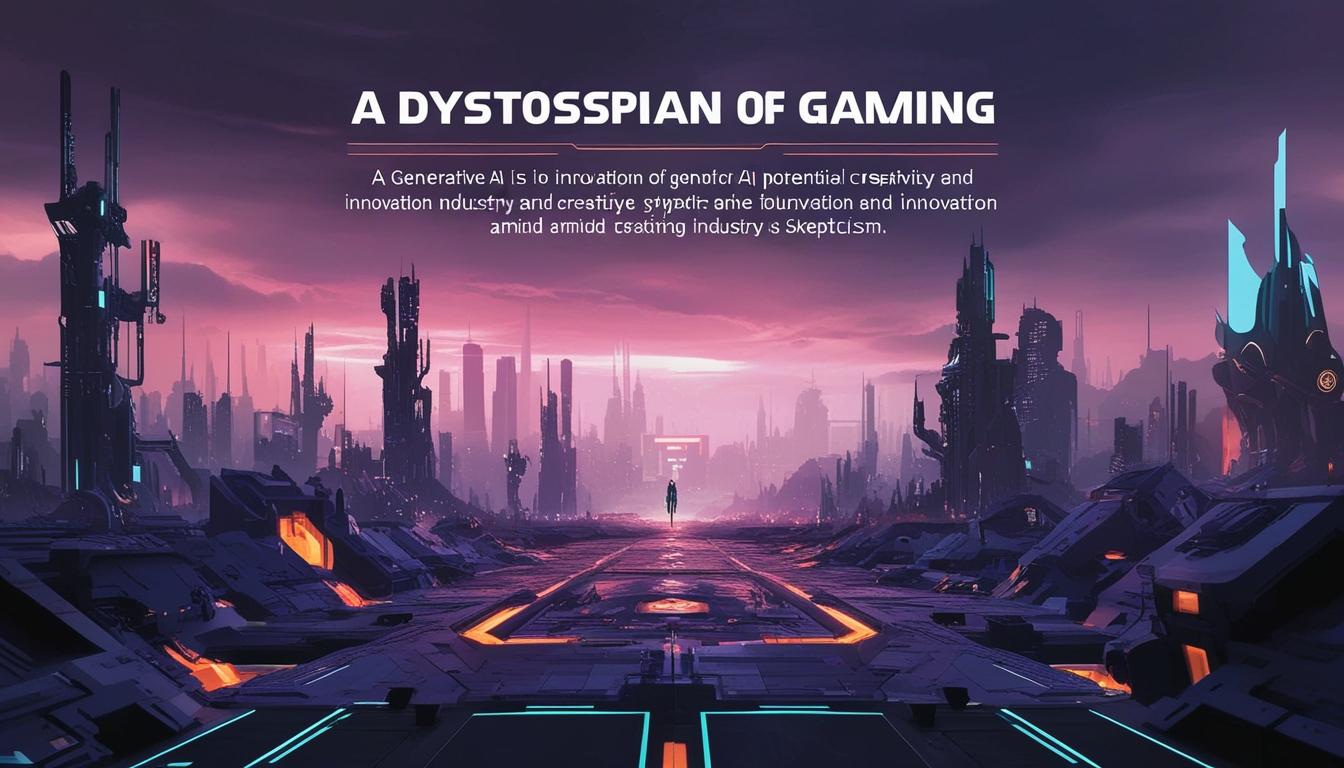
Netflix has confirmed its strategic shift towards incorporating generative AI into its game development division, a move that appears to have sparked apprehension and criticism within the creative sector. This decision comes shortly after the company's decision to shutter its AAA gaming studio, known as Team Blue, resulting in the layoff of several human developers.
The narrative is led by Mike Verdu, who has transitioned from being the vice president of Netflix Games to the vice president of generative AI for games. Through a LinkedIn post, which was accompanied by an AI-generated image depicting a dystopian cityscape, Verdu shared his enthusiasm about spearheading this significant technological shift. He described the initiative as a “once in a generation” inflection point aimed at enhancing game development and player experiences by leveraging generative AI.
Despite Verdu's assertion that the initiative embraces a "creator-first vision," and aims to position "creative talent at the center, with AI serving as a catalyst and accelerant," the announcement has not been met with unanimous support. The timing of this announcement has raised concerns, particularly due to its proximity to the layoffs at Netflix’s previous gaming studio.
In Verdu's view, generative AI has the potential to unlock new and groundbreaking experiences for players. “Many view this technology with fear, but I am a game-maker at heart and I see its potential,” he stated, noting that the gaming industry has always adapted to technological changes.
However, the gaming community's response suggests skepticism towards this optimistic outlook. Responses in the comments section of Verdu's LinkedIn post highlighted concerns about the impact of generative AI on jobs in the creative industry. Many questioned the viability of a “creator-first” AI approach, expressing fears that it might replace rather than support human creativity.
Further criticisms were directed at the disconnect between leadership initiatives and consumer expectations. Commentators pointed out the unique, engaging nature of gaming as opposed to other forms of media, emphasising the necessity for in-depth development, as demonstrated by studios like Rockstar Games, which are renowned for their extensively developed, high-quality games that take several years to produce.
Criticism extended beyond LinkedIn to social media platforms, where users echoed concerns that generative AI in gaming might become just another fleeting industry trend rather than a sustainable production tool capable of meeting consumer needs. Some expressed intentions to sever their Netflix subscriptions, demonstrating the extent of their disapproval.
The unfolding discourse reflects wider industry concerns regarding the use of generative AI, not only in gaming but across various creative industries. The scepticism is compounded by previous controversies elsewhere, such as backlash over the use of AI-generated art in public campaigns, such as the recent Halloween art initiative by Transport for Ireland.
As Netflix continues to navigate this transition, the company will need to address these critical concerns from both within the industry and among its consumer base. The dialogue around how generative AI can coexist with or even enhance human creativity remains ongoing, as stakeholders from various domains watch closely to see how Netflix's gaming strategy will unfold.
Source: Noah Wire Services