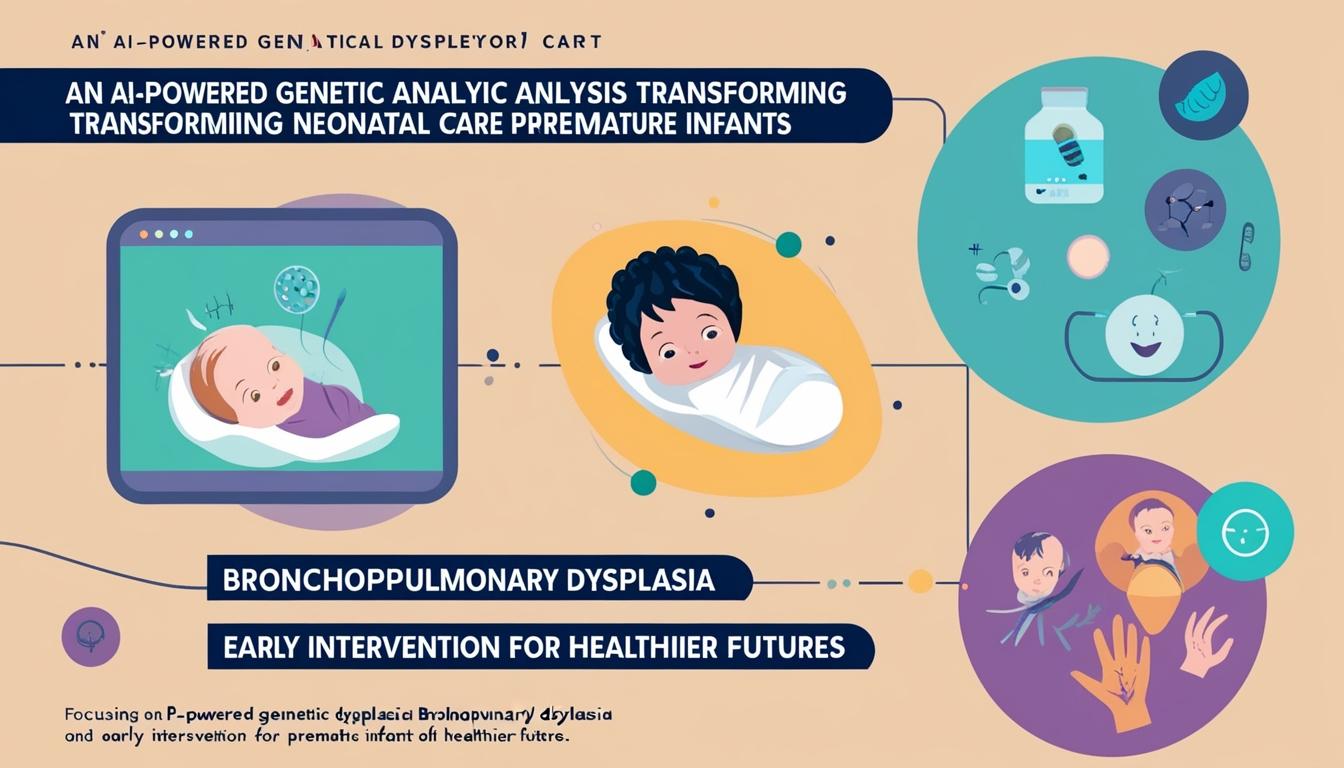
NIH-Funded Study Utilizes AI and Genetic Data to Enhance Neonatal Care for Premature Infants
A new research initiative at the Ann & Robert H. Lurie Children’s Hospital of Chicago is set to revolutionise the diagnosis and treatment of bronchopulmonary dysplasia in premature infants. With significant backing from a $7.6 million grant provided by the National Institutes of Health (NIH), the study aims to utilise artificial intelligence and genetic data to identify disease subtypes that will aid in predicting cardiorespiratory outcomes early in the neonatal care process.
Bronchopulmonary dysplasia is a lung disease commonly found in infants born over three months premature. This condition often continues into childhood, causing symptoms such as wheezing or abnormalities in lung and heart functions. Traditionally, diagnosis relies heavily on clinical observation, which limits the ability to predict disease progression and hampers opportunities for early intervention.
The study, which will span four years, seeks to bridge this gap by analysing genetic data from nearly 2,000 former premature infants. These individuals, who are now school-aged, were initially enrolled in studies during their time in neonatal care. Researchers will employ artificial intelligence and machine learning technologies to process this genetic data alongside clinical profiles, with the goal of identifying specific genetic pathways associated with distinct outcomes, such as the development of asthma or cardiac dysfunction.
Dr Aaron Hamvas, the principal investigator of the study and a prominent figure in neonatology at Lurie Children’s and Northwestern University Feinberg School of Medicine, emphasised the potential impact of this research: "Our study will investigate genetic influence on long-term cardiac and respiratory outcomes of premature infants in order to identify genetic pathways that correspond to high likelihood for specific outcomes," Dr Hamvas explained. He anticipates that the findings will enable genetic testing to be integrated into neonatal intensive care units, facilitating earlier and more targeted interventions according to the diagnosed disease subtype.
By establishing more precise categories of bronchopulmonary dysplasia based on genetic information, the research aims to unlock new insights into the genetic mechanisms that underpin these conditions. This, in turn, may lead to the development of more effective treatments and strategies to mitigate or prevent long-term respiratory and cardiac complications.
Dr Hamvas highlighted the transformative potential of the study results, stating, "We hope that our results will lead to genetic testing in the neonatal intensive care unit and allow earlier interventions according to the disease subtype. This advance may transform the trajectory of lung disease in premature infants."
Overall, the study represents a promising step forward in neonatal care, leveraging advancements in artificial intelligence and genetic research to offer a more personalised approach to managing complex conditions in premature infants. The initiative holds the potential to not only enhance immediate clinical outcomes but also to contribute to improved long-term health for these vulnerable patients.
Source: Noah Wire Services