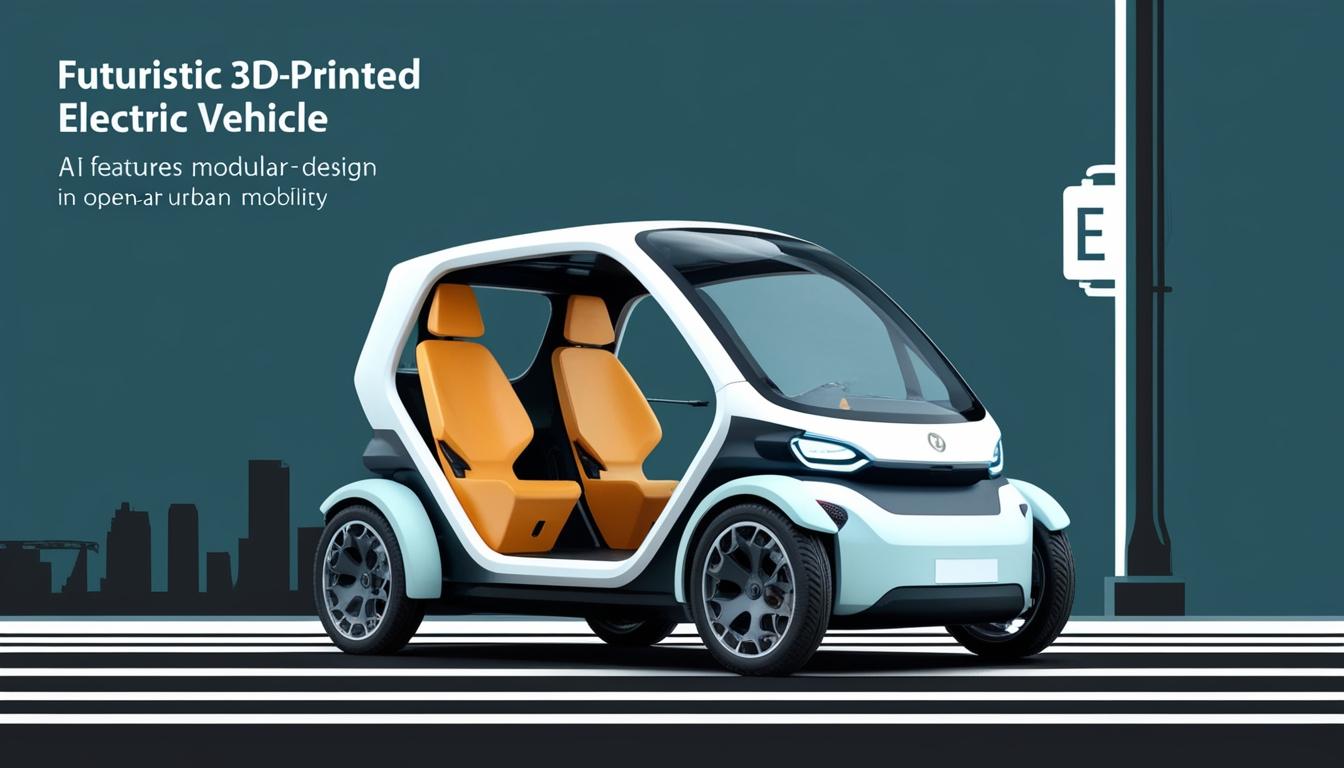
PIX Moving Team Introduces Revolutionary Robo-EV: A Fusion of AI, 3D Printing, and Modular Design
The innovative landscape of electric vehicles (EVs) has been further broadened with the unveiling of the Robo-EV by the PIX Moving Team. This cutting-edge micro metal car stands out due to its unique features, combining advanced artificial intelligence, a 3D printed structure, and a modular design, positioning it as a futuristic solution for urban mobility.
Introduction of Robo-EV
The Robo-EV promises to redefine personal transportation with its sophisticated AI capabilities. At its core is an AI-powered personal assistant programmed to detect and respond to the driver's emotional state. This feature not only aids in navigation and practical tasks but also offers emotional interaction. The vehicle integrates a large language model capable of understanding and interpreting the driver's tone and mood, providing what the developers describe as emotional support through voice-activated communication.
Modular and Futuristic Design
In terms of design, Robo-EV sets a new standard with its modular configuration, a feature that allows owners to reconfigure the vehicle for various applications beyond personal conveyance. Whether used for cargo transport, delivery services, or as part of a ridesharing program, the vehicle offers flexibility that is rarely seen in traditional automotive design. The car’s open-air structure—crafted using 3D printing techniques from metal—gives it a distinctive aesthetic that promotes both functionality and style. This design offers a sense of openness to the driver which is ideal for both warm and cool seasons by allowing natural airflow.
Innovative Manufacturing Process
The production of the Robo-EV marks another milestone in automotive manufacturing. The PIX Moving Team has implemented a pioneering approach by 3D printing the vehicle as a single cohesive unit. This technique bypasses the traditional need for assembly and the associated potential points of mechanical failure. As a result, the car benefits from improved structural integrity, a trait that could be critical for its durability and longevity on the roads.
The integration of basalt composites within the suspension system enhances the car’s strength while maintaining a lightweight profile, which is particularly beneficial for urban commuting where manoeuvrability is key.
Energy Efficiency and Design Features
Energy efficiency is another cornerstone of the Robo-EV’s design. The vehicle is equipped with regenerative braking technology, allowing it to recharge its batteries while in motion, thereby extending the range and reducing its reliance on external charging sources. Composite leaf springs contribute to lower weight and enhanced driving comfort while helping minimize the car's environmental impact by cutting down on emissions and improving resistance to corrosion.
The vehicle’s design is rounded off by thoughtful architectural influences seen in its dome-shaped roof, which accommodates drivers of varied heights. Coupled with fluid architectural door designs and 3D printed metal wheel arches, the Robo-EV boasts a sleek, modern appearance that underscores its avant-garde approach.
Development and Next Steps
On November 4, 2024, the PIX Moving Team conducted a test drive of the Robo-EV, marking a significant milestone in its development. The results of this test, eagerly awaited by industry observers and potential consumers alike, are expected to further showcase the capabilities and potential of this AI-enhanced, 3D printed electric vehicle. This endeavour by the PIX Moving Team could potentially herald a new era of innovation in the EV sector, offering a glimpse into what the future of urban mobility might hold.
Source: Noah Wire Services