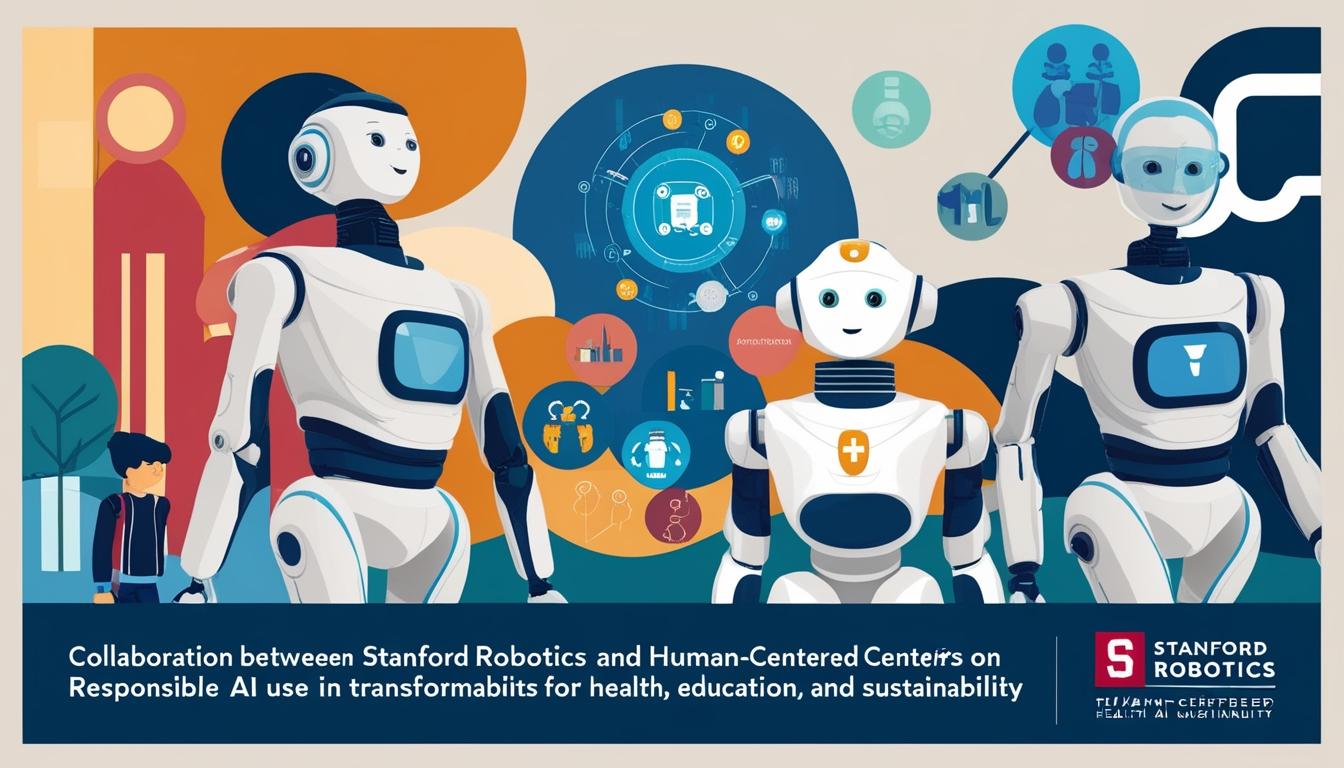
Last week, a new partnership was forged between the Stanford Robotics Center (SRC) and the Stanford Institute for Human-Centered Artificial Intelligence (HAI) with the primary aim of identifying responsible uses for artificial intelligence (AI). This initiative marks a collaborative effort to harness the latest technological advances in AI that could potentially revolutionise the field of robotics and ensure these benefits are shared widely.
Under the leadership of Oussama Khatib, director of the SRC, and Fei-Fei Li, John Etchemendy, and James Landay, co-directors of HAI, this partnership seeks to address the technical, societal, and economic challenges posed by the integration of robotics in various fields. These fields include health and wellness, education, sustainability, and the future of work—areas where robotics could have a significant impact.
In his statement, Khatib expressed enthusiasm about the collaboration, highlighting that the project is still in its nascent stages. He elaborated on the potential of AI to drive robotics towards more sophisticated capabilities and stressed the importance of discussing effective governance as these technologies evolve.
One of the goals of this partnership is translating multidimensional research into AI-enabled robotics for policymakers. This involves generating original research to aid policymakers in comprehending and managing the emerging technologies. Landay observed that the field of robotics is advancing in unprecedented ways and predicted that these innovations could transform nearly every industry within the next decade. He emphasised the critical need for collaboration at this stage to understand both the potential and risks associated with such rapid development.
The SRC prides itself on bringing together world-class researchers and industrial affiliates who share a vision for the future of robotics. The centre's collaborative infrastructure is designed to support large-scale innovative projects that could have transformative effects on both humanity and the planet. The SRC is actively engaged in projects across five core areas: field robotics, medical robotics, education and culture, the future of work, and domestic robotics. The centre's ongoing efforts are dedicated to foreseeing and meeting societal needs as robotic systems become increasingly integrated into daily life and work environments.
Established in 2019, Stanford HAI is committed to understanding and influencing the creation and impact of AI technologies that are inspired by human intelligence. The institute's mission includes researching AI, forecasting its societal implications and crafting applications that enhance human capabilities. It is further dedicated to educating individuals and leaders across all stages about AI fundamentals and perspectives, as well as fostering discussions at regional and national levels to potentially influence legislative measures.
In collaboration, SRC and HAI are poised to leverage their respective strengths to ensure that AI-driven robotics develops within a framework of safety, fairness, and success, aiming to maximise the benefits of this transformative technology for society at large.
Source: Noah Wire Services