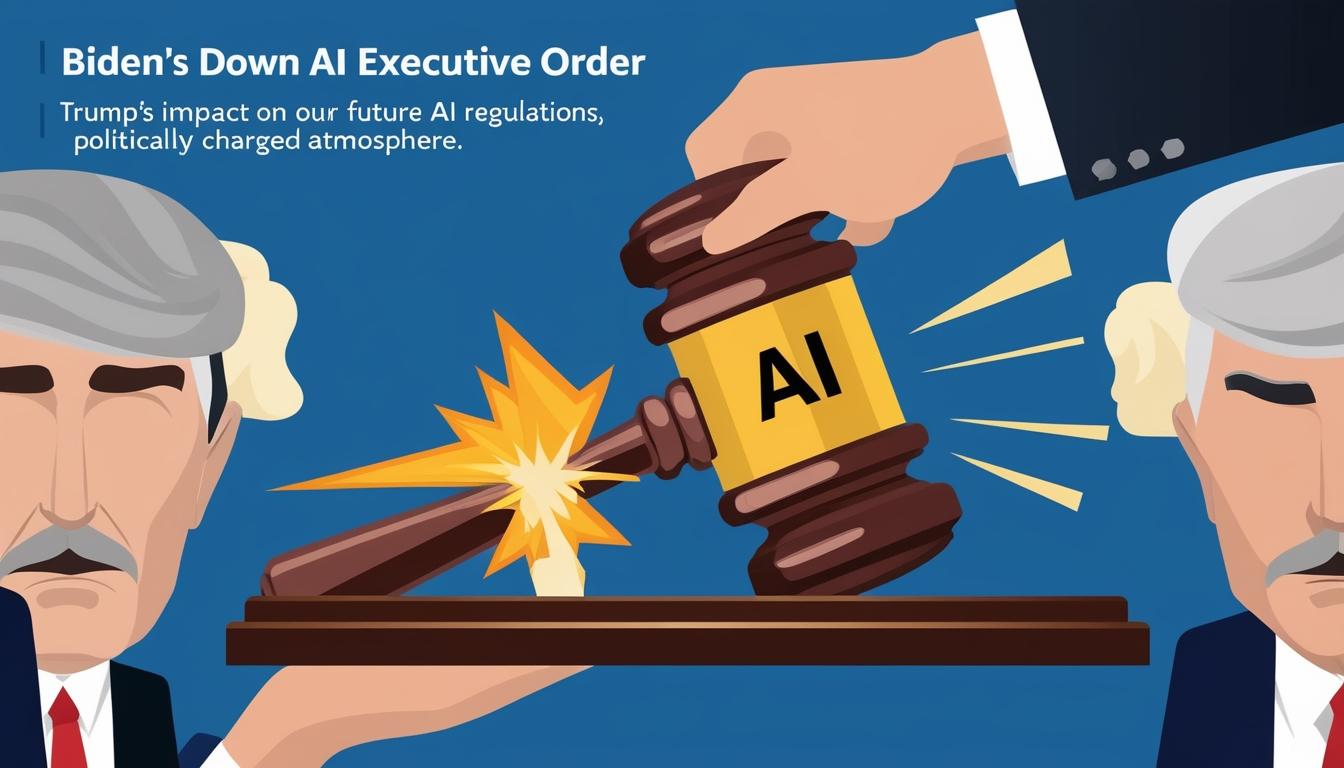
In a significant political turn of events, former President Donald Trump has emerged as the presumptive victor in the 2024 United States presidential election. This outcome is anticipated to bring about substantial shifts in federal artificial intelligence (AI) policy starting early next year, once Trump assumes office. A key element of Trump's agenda includes the immediate dismantling of President Joe Biden’s AI Executive Order from October 2023, a move that has already attracted attention and sparked debate.
The AI Executive Order introduced by President Biden aimed to institute comprehensive oversight of AI development within the United States. One of its primary measures was the creation of the US AI Safety Institute (AISI). This organisation was tasked with overseeing AI safety, requiring companies to submit detailed reports outlining their AI training methodologies, security measures, and the results of vulnerability testing. Additionally, the executive order commissioned the Commerce Department’s National Institute of Standards and Technology (NIST) to devise guidelines to assist companies in identifying and resolving flaws within their AI models.
However, the initiatives under Biden's executive order have been met with resistance from various quarters within the US government, primarily from Republican lawmakers. The sentiment among critics is that such regulatory measures could stifle innovation. Representative Nancy Mace of South Carolina voiced concerns in March, arguing that the reporting requirements might impede developments akin to ChatGPT. Moreover, Senator Ted Cruz of Texas described NIST's safety standards as a method of enforcing "woke" safety protocols, suggesting they could be perceived as a form of speech control.
With Trump's impending administration, the future of these regulations remains uncertain. Despite the AISI being equipped with both a budget and international partnerships, its continuation is contingent upon Biden's executive order remaining intact.
In addition to regulatory changes, Trump's trade policies could have profound implications for the AI sector. He has proposed imposing a 10 percent tariff on all US imports alongside a substantial 60 percent tariff on Chinese goods. These tariffs could disrupt the AI industry's access to essential technology and capital, potentially affecting the supply of graphics processing units (GPUs) crucial for AI training and inference tasks. Furthermore, there is speculation that the Trump administration may tighten export controls on AI chips and models destined for China, although currently, some Chinese firms are able to access these tools via cloud services.
During his latest campaign, Trump rarely addressed AI specifically. Nevertheless, his broader policy proposals could still have a significant impact on the industry. For instance, his intent to restrict H-1B visas could challenge AI companies by limiting their ability to recruit international talent. Additionally, plans to bolster oil and gas development might affect the computing resources available to these companies.
As Trump prepares to take office, stakeholders within the AI industry and beyond are keenly observing how these prospective policy shifts will unfold and what they may signify for the future of AI development in the United States.
Source: Noah Wire Services