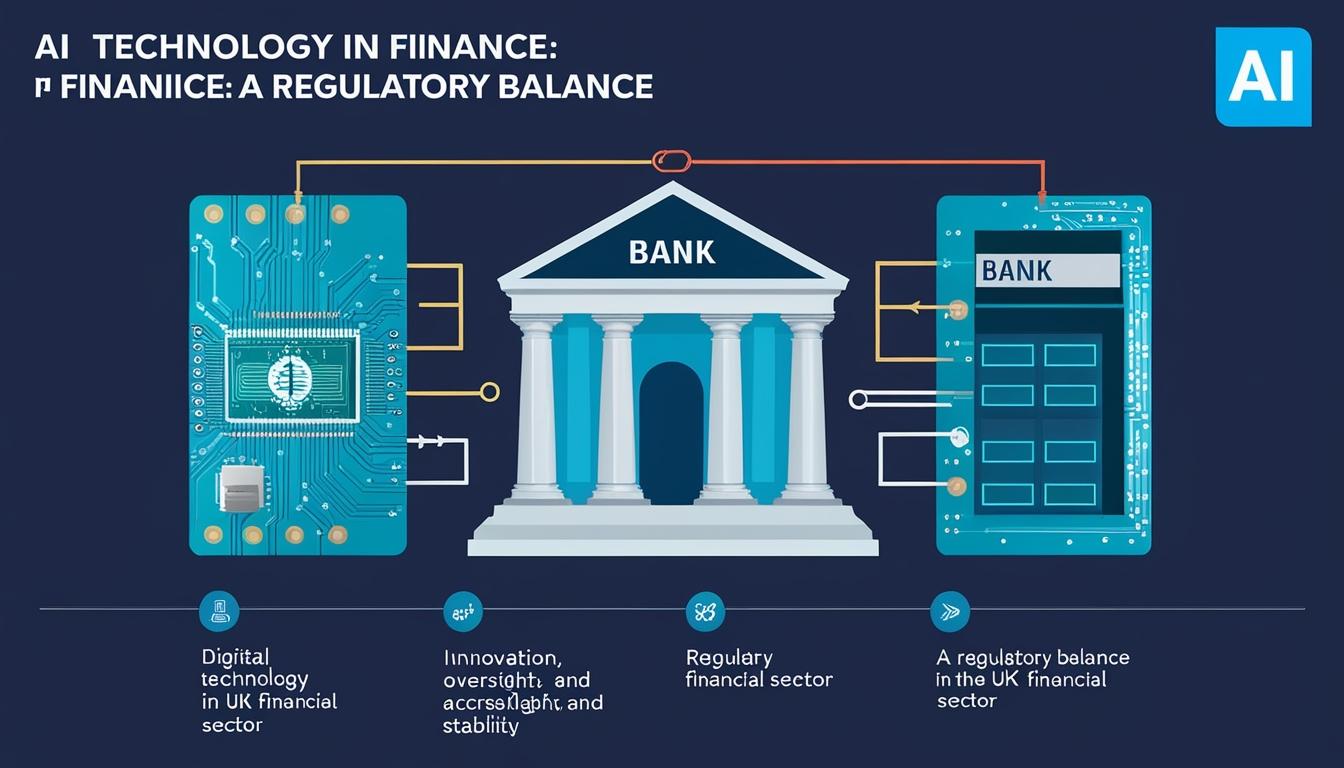
UK Financial Regulators Outline Strategic AI Approach
In response to rapid advancements in artificial intelligence (AI) and machine learning, the Prudential Regulation Authority (PRA) and the Financial Conduct Authority (FCA) have laid out their strategic plans to regulate these technologies within the UK financial sector. This initiative comes on the heels of the UK Government's pro-innovation AI strategy, which was launched earlier this year.
The PRA, tasked with ensuring the stability of the banking system and financial institutions in the UK, along with the FCA, responsible for monitoring the behaviour of the UK's financial markets, have expressed strong support for the government's principles-based, sector-led approach to AI regulation. This approach places the PRA and FCA at the forefront of regulating AI use within the financial industry.
In a keynote address, Sarah Breeden, Deputy Governor of Financial Stability at the PRA, elaborated on the dual aspects of AI regulation that concern both microprudential and macroprudential levels. Microprudential oversight focuses on the safety and soundness of individual financial firms, with Breeden advocating for technology-agnostic regulatory frameworks to mitigate risks associated with increasingly powerful AI models. On a macroprudential level, she highlighted the potential need for interventions to maintain system-wide financial stability, especially as AI technologies become more intertwined with shared infrastructure systems.
Breeden's speech underscored several key issues surrounding AI deployment in financial services, stressing the necessity for ongoing evaluation of the PRA and FCA's regulatory perimeters as AI technologies evolve. A notable point was her caution against complacency, asserting that historical experiences with technological innovations in other sectors illustrate the difficulty of addressing risks post hoc, once technologies reach a systemic scale.
The PRA and FCA conducted surveys revealing insights into current AI applications in the financial sector. Results indicated that 41% of firms are optimising internal processes with AI, while 26% use it to enhance customer support. Additionally, AI is employed by 37% of firms for cyber-attack deterrence, 33% for fraud prevention, and 20% for combating money laundering. Specific interest surrounds emerging areas such as AI-driven credit risk assessment (16% of firms) and algorithmic trading (11% of firms), with more firms planning adoption in the coming years.
Breeden highlighted concerns regarding model risk management and the understanding of third-party AI models by users within firms. Limited explainability of AI models has been identified as a significant risk, leading to calls for stringent explainability controls. Ensuring AI models are trained on high-quality, unbiased data is emphasized as crucial, along with proper governance frameworks.
Interconnectedness within the financial system, Breeden noted, is a critical macroprudential issue. AI can exacerbate interconnectedness, potentially destabilizing the financial system if firms rely too heavily on common AI technologies or service providers. Specific risks include cyber-attacks enhanced by AI and increased market speed and volatility under stress, which can result in correlated trading behaviours amongst firms using similar AI models.
As regulatory frameworks adapt to these technological advancements, the PRA and FCA underscore the importance of maintaining existing financial sector standards while developing governance structures that enable effective AI oversight. The PRA's focus extends to understanding critical third-party AI providers' roles, aligning with the new powers introduced under the Financial Services and Markets Act 2023.
In sum, the PRA and FCA's response to AI developments signals a commitment to fostering innovation while safeguarding financial stability and market integrity, ensuring adequate oversight of AI's burgeoning role in financial services.
Source: Noah Wire Services