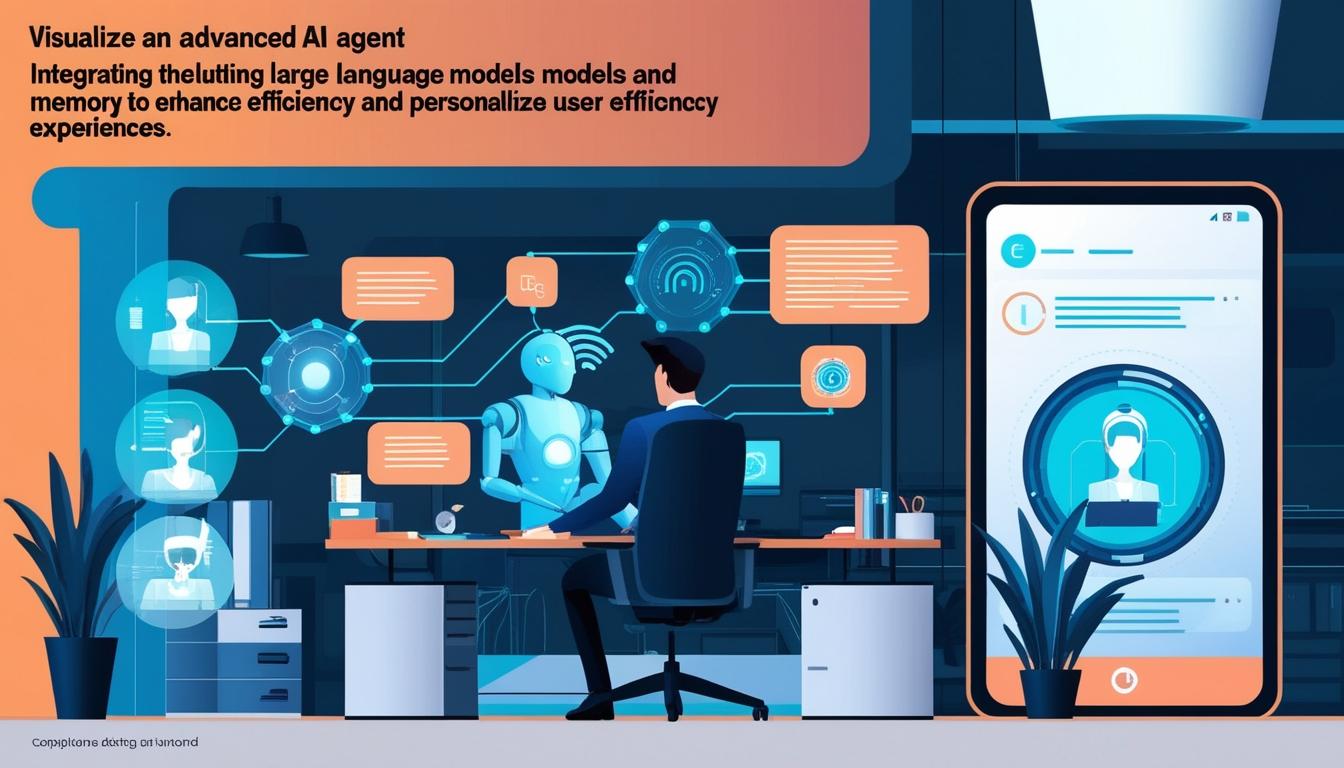
Understanding the Core Components and Benefits of AI Agents
Artificial Intelligence (AI) agents are becoming an increasingly vital part of various industries, providing a technological edge by performing complex tasks with efficiency and accuracy. Experts have identified three fundamental components that constitute an AI agent: Large Language Models (LLMs), memory, and tools.
The Components of AI Agents
Large Language Models (LLMs): LLMs enable AI agents to execute specific tasks effectively by analysing and responding to feedback. According to Andersen, these models can gather contextual information through retrieval augmented generation (RAG). This process allows an AI agent to connect with specific information pertinent to a business's needs. In industries such as healthcare and customer service, RAG facilitates the retrieval of sensitive data, which is crucial for maintaining operations that require proprietary data.
Memory: Memory in AI agents plays a critical role, especially in retail. An AI agent's ability to remember a customer's purchasing history can personalise and enhance user experiences. For instance, the agent might recommend products such as a specific type of water bottle based on the customer's previous purchase of a vehicle, ensuring compatibility with the car's cup holder. Andersen points out this capability as providing depth not typically achievable with standard e-commerce applications.
Tools: These are essential for AI agents to perform actions, such as handling queries and communicating through application programming interfaces. Saunders highlights that, alongside task-driven models, these tools include workflows that determine the steps necessary for job completion. Companies like Salesforce and ServiceNow are leveraging AI agents to streamline and manage basic business workflows.
The Benefits of AI Agents
AI agents offer significant advantages by handling repetitive tasks, thereby enhancing efficiency and freeing up human resources for more creative and problem-solving tasks. Microsoft's Copilot Studio exemplifies this application, allowing organisations to create agents that can autonomously respond to business task triggers.
Other major tech companies, including Google and NVIDIA, are exploring the capabilities of AI agents. Google introduced an AI agent named Astra in May, designed to experiment with audio and video technologies. NVIDIA provides an API catalogue with blueprints for AI agents, which can be customised to reflect a company's distinct style and experience.
Reflex agents represent another advancement, capable of executing single-step instructions. These agents manage specific tasks such as writing handlers, calling functions, and generating relevant text blocks, according to Anu Sharma from Amazon Bedrock Experiences and Tools at AWS.
Sharma also discussed the Amazon Q Developer, a contextually aware agent that aids HR professionals. This agent helps understand company policies contextually and manages benefits eligibility workflows to ensure accurate policy application for employees. The Q Developer not only suggests code modifications but also identifies errors, facilitating engineers to focus more on advanced problem-solving rather than routine tasks. Notably, it has supported the upgrading process of around 30,000 Java applications.
By utilising AI agents, organisations are aiming to optimise productivity and efficiency, providing their staff with the opportunity to engage more deeply with complex and innovative challenges, while maintaining high standards of speed and quality in software development.
Source: Noah Wire Services