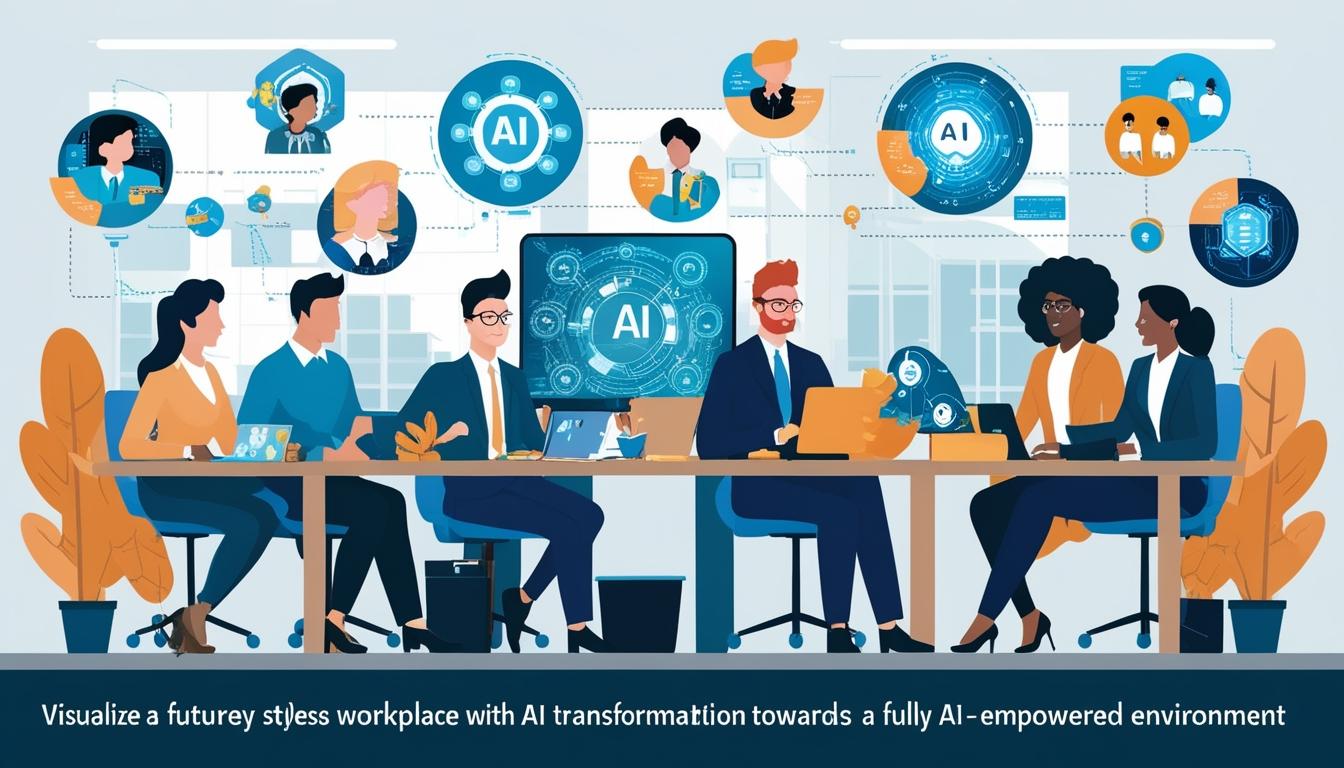
Unit4 and IDC Release Study Highlighting Strategic Path to AI Integration in Workplaces
In a new study conducted by IDC and sponsored by Unit4, organisations have been provided with a roadmap to successfully incorporate artificial intelligence (AI) into their operations. This research, entitled "The Path to AI Everywhere: Exploring the Human Challenges," outlines a three-stage journey towards achieving a fully AI-empowered workplace. Based on extensive data and expert insights, the study reveals long-term strategies for harnessing AI to transform the work environment effectively.
The Three Stages of AI Evolution
The study envisions a phased approach to AI implementation, predicting significant shifts in how organisations will operate by 2028. It suggests that by that year, 80% of Chief Information Officers (CIOs) will have initiated organisational changes designed to maximise the benefits of AI, automation, and analytics. These changes are set to enhance the capability of digital enterprises to act with agility and insight.
The journey begins with the use of AI Assistants, the initial stage where AI tools are primarily used to perform specific tasks, significantly boosting productivity. Employees in this phase need to develop skills in writing prompts and effectively utilising data to complete tasks efficiently.
The second stage introduces AI Advisors, where AI tools evolve to synthesise data and provide advanced insights. To navigate this stage, employees must become adept at managing diverse data sources and applying critical thinking to derive meaningful insights from AI outputs.
The final stage, AI Agents, sees AI becoming fully integrated and autonomous, driving innovation and giving organisations a competitive edge. Employees will be required to act as AI orchestrators, interpreting insights and fostering innovation through the support of AI technologies.
Challenges and Strategic Solutions
Despite the potential benefits AI brings, the study acknowledges the existing scepticism among employees. Notably, 43% of workers in Europe and North America expressed concerns over data handling in AI contexts, while 28% feared AI-driven job displacement. Moreover, half of the respondents indicated a need for additional training to effectively utilise AI tools.
To address these challenges, the study advises businesses to develop an 'AI DNA' that aligns with organisational culture and emphasises ethical AI use. This includes creating AI orchestrator roles to manage and enhance the relationship between AI systems and human employees. These roles will ensure data integrity and uphold policies protecting both employees and employers from potential misuse of AI technologies.
Claus Jepsen, Unit4’s Chief Product and Technology Officer, emphasised the importance of strategic AI adoption. He stated, "Organizations need clarity on the problems AI can solve, recognising that AI can't replace every aspect of human interaction or address every unique business scenario. At Unit4, we focus on AI's empowerment of people, grounded in human-centric design."
Future Implications
This study provides invaluable insights into AI's transformative potential in business environments. By charting a clear path towards AI integration, organisations can prepare for a future where AI not only optimises productivity but also drives long-term innovation and competitiveness. As companies navigate this evolution, addressing employee concerns and fostering an AI-friendly culture will be crucial.
Source: Noah Wire Services