University of Michigan Explores the Impact of AI on Campus and Beyond
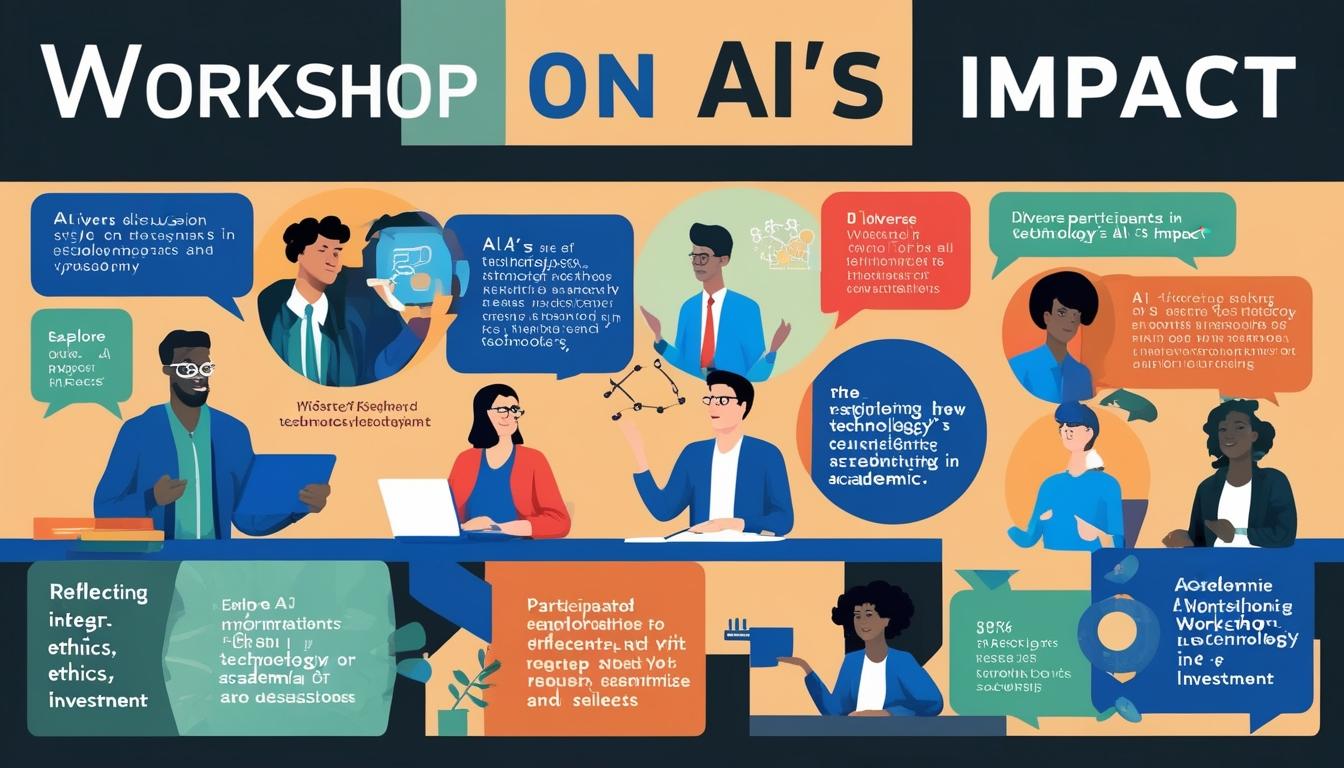
A diverse group of over 50 individuals, including University of Michigan students, staff, and community members, gathered on Friday evening to delve into the far-reaching impacts of artificial intelligence in a hybrid workshop. This event, facilitated by Rackham graduate students Nathan Kim, Linda Huber, and Francesca Lameiro, took place at North Quad Residence Hall and was also accessible via Zoom.
The workshop commenced with presentations delivered by graduate students, who shed light on a variety of AI-related topics. They discussed the intricate definition of artificial intelligence, its integration within the University, and considered the broader implications of AI's prevalent use.
Francesca Lameiro highlighted the University of Michigan's investment in generative AI tools such as UM-GPT, U-M Maizey, and MiMaizey. Notably, she mentioned that the University has allocated $180 million towards developing proprietary AI interfaces, setting it apart as one of only six institutions in America to create a bespoke AI platform. Lameiro's insights highlighted a departure from the norm, with many other universities opting to leverage ChatGPT services offered by OpenAI.
In response to inquiries about the University's AI expenditure, University spokesperson Kay Jarvis stated that the institution does not publicly disclose investment figures.
The session also featured Ali Alkhatib, Director of the Data Institute at The University of San Francisco, who offered a broader perspective on AI. Alkhatib queried the authenticity of AI as a widely adopted system and posited that AI potentially curtails human voices. He acknowledged AI's ideological underpinnings, prompting discourse on whether its use should be universally embraced.
Alkhatib's message underscored the importance of personal experiences with AI, urging the audience to share their interactions with these systems. He stressed that individual encounters with AI are just as critical as the technical insights provided by the systems' creators.
Following the presentations, attendees participated in group discussions to reflect on AI's influence on their personal, academic, and professional lives. They were also prompted to voice opinions about the University's AI investments and how these initiatives might better serve their needs. Participants then shared summaries of their group discussions with the entire workshop.
Post-baccalaureate medical student Paige Feyock expressed concerns about the University's financial prioritization of AI, suggesting that some of these resources could be channelled towards enhancing student and staff welfare, particularly through housing and subsidies.
Conversely, engineering junior Thor Helgeson embraced a more positive perspective on AI, highlighting instances where machine learning had been utilised constructively in his work. Helgeson insisted that not all technology associated with AI contributes to an overarching agenda of domination.
In a subsequent interview, Information graduate student Linda Huber conveyed her aspirations for the event, hoping it spurred meaningful contemplation among participants concerning AI.
The workshop provided a platform for diverse opinions, fostering an environment where attendees could critically engage with the notions and implications surrounding the deployment of AI in academic settings and beyond.
Source: Noah Wire Services