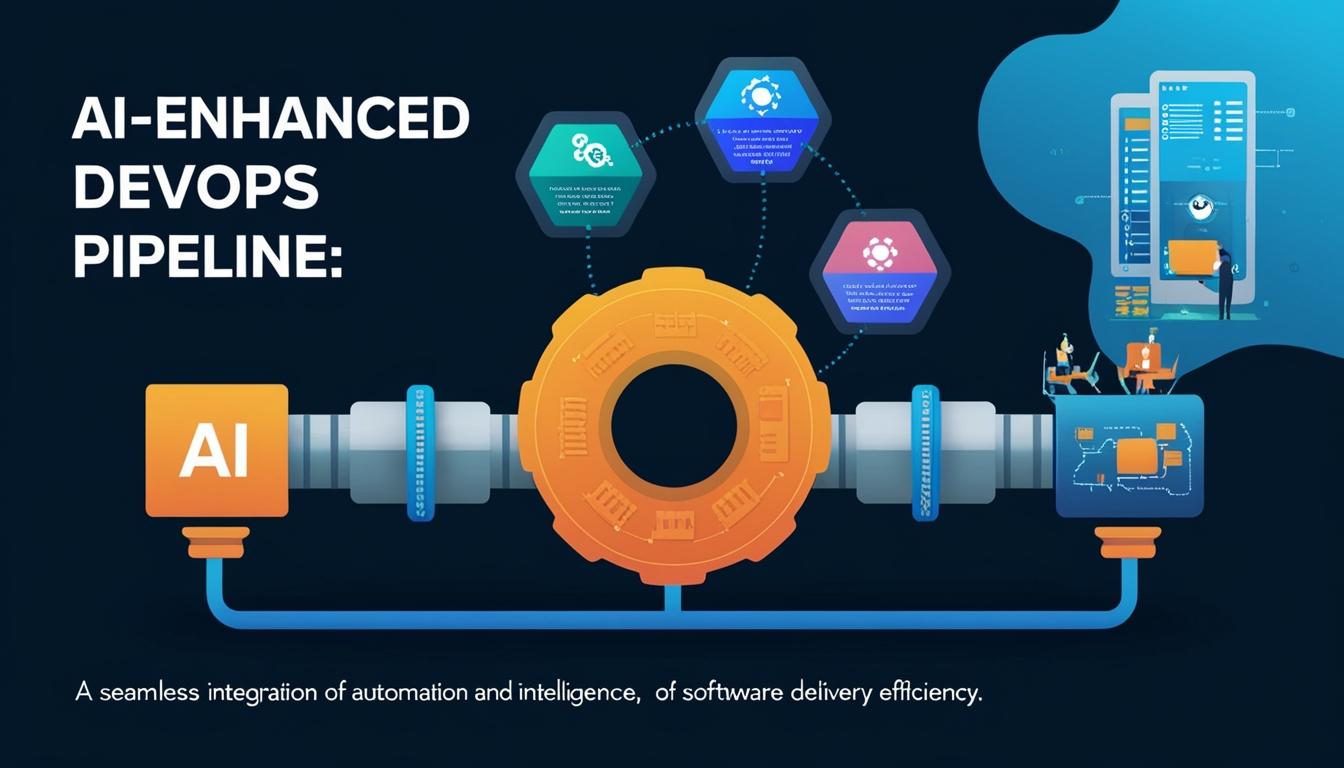
AI and DevOps Integration Transforming Software Delivery: Enhancing Efficiency in the Digital Age
In an era marked by swift technological advancement, the integration of DevOps with AI-driven automation is revolutionising software delivery processes. Organisations embracing this synergetic approach report reductions in software delivery times by as much as 80%. This enhanced efficiency is not merely about accelerating tasks; it represents a profound shift towards greater agility, resilience, and adaptability in the software development landscape.
A recent survey from 2023 reveals that a significant 70% of IT decision-makers are prioritising automation strategies that marry DevOps and AI. The objective is clear: eliminate manual bottlenecks and scale operations effectively. This novel approach extends beyond conventional automation, harnessing AI’s predictive capabilities alongside the established workflows of DevOps. Collectively, they empower teams to foresee, avert, and dynamically adjust resources, enabling continuous and seamless deployments previously considered unachievable.
Despite its clear advantages, the full potential of blending DevOps and AI remains largely untapped. Automation is often misperceived as a straightforward 'set it and forget it' task. In reality, it is an iterative and intelligent process that becomes intrinsically woven into the organisational fabric. Using DevOps as the foundation, AI acts as a powerful enhancer, promoting smarter automation that learns, adapts, and optimises with each iteration. This alliance facilitates the automation of not just faster, but more intelligent workflows.
Key Facets of AI and DevOps Collaboration
- AI-Driven Automation in DevOps
AI plays a critical role in fine-tuning Continuous Integration/Continuous Deployment (CI/CD) pipelines. These pipelines are crucial components of modern DevOps frameworks, typically involving continuous code integration, automated software testing, and software deployment to production. Traditionally ridden with manual interventions, this process is prone to errors. AI significantly boosts the CI/CD pipeline by automating redundant tasks and embedding predictive functionalities, thereby streamlining operations.
AI also revolutionises testing and bug detection—areas notoriously known for being tedious and prone to human error. AI-augmented test automation run tests more efficiently and intelligently, prioritising them based on the likelihood of detecting defects. AI systems can autonomously identify code anomalies, flagging potential issues in real-time and thus reducing overall testing duration.
Furthermore, predictive analytics powered by AI allows for foresight into potential risks, failures, or performance bottlenecks based on historical data. Tools employing AI can warn developers of likely issues anticipated in upcoming releases, enhancing preparedness and preventing future complications.
- DevOps Through MLOps
Machine Learning Operations (MLOps) expands DevOps practices to manage the full lifecycle of machine learning models. With AI solutions rising, organisations require comprehensive frameworks to manage these models efficiently in production environments. By integrating DevOps methodologies into machine learning through MLOps, companies can ensure smoother deployment and continuous monitoring of AI models, keeping them performant and relevant.
MLOps facilitates automated model deployment, crucial amid frequent updates necessitated by new data. This capability supports model version control and continuous deployment, ensuring machine learning models remain up-to-date and effective.
- AI in Incident Management
AI enhances incident management within the DevOps pipeline by enabling proactive monitoring and root cause analysis. By analysing extensive data from servers, logs, and application performance metrics in real-time, AI identifies possible system anomalies. This capability enables teams to address issues preemptively, reducing the impact of downtime and enhancing reliability.
AI-driven root cause analysis automates the cumbersome task of identifying problem sources, accelerating detection and resolution processes. Intelligent incident detection further elevates the process, leveraging machine learning to identify patterns indicative of potential failures before they occur, and enabling self-healing mechanisms that take corrective actions automatically.
- Optimising Operational Efficiency with AI
AI-driven DevOps optimises resource utilisation by learning usage patterns and automatically adjusting resource allocation according to demand. This balance assures that applications perform seamlessly without unnecessary resource wastage.
AI significantly contributes to infrastructure optimisation by analysing data to suggest improvements and adapt configurations based on usage trends. Efficient workload balancing in cloud environments further ensures high availability and performance by dynamically redistributing workloads across servers.
Real-World Applications and Success Stories
Numerous global entities have successfully implemented AI-driven DevOps strategies, demonstrating its transformative potential. Netflix, a leading example, utilises AI to enhance its Content Delivery Network and anticipate viewer demand, thus maintaining high service availability. AI tools analyse viewing patterns and prepare resources for peak traffic periods, ensuring seamless service delivery.
Similarly, Google has embraced AI-powered incident management systems to bolster service reliability. These systems continuously monitor performance, detect anomalies, and facilitate rapid root cause analysis, minimising downtime and enhancing user experience.
Uber has adopted AI to improve its CI/CD pipelines and incident management, employing AI tools to predict build failure probabilities and automatically resolve infrastructure-related issues, thereby ensuring high platform availability.
The intertwined use of AI and DevOps marks a new frontier in automation and efficiency, offering organisations the tools to refine their operations comprehensively. As companies such as Netflix, Google, and Uber illustrate, this combination propels organisations towards unprecedented operational efficiency and innovative capability, continuously driving industry transformation.
Source: Noah Wire Services