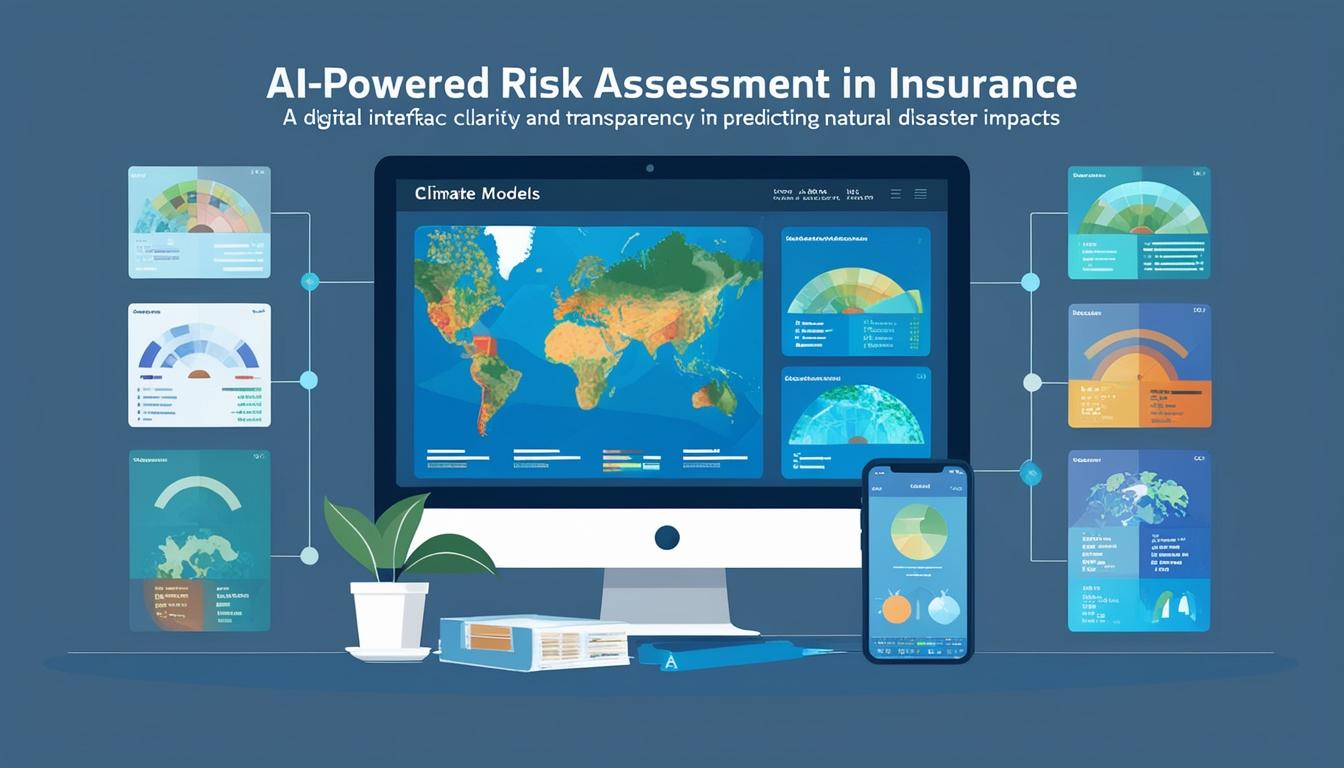
AI Technology Gains Ground in Climate Risk Management: Insights from the Insurance Sector
In a changing global landscape where natural disasters are escalating in both frequency and severity, the insurance industry is increasingly turning to artificial intelligence (AI) and machine learning (ML) models to better predict and manage climate-related risks. However, a recent survey by ZestyAI reveals a divided stance within the sector regarding the accuracy and transparency of these emerging technologies.
Survey Overview and Industry Sentiments
The survey, which involved more than 200 property and casualty (P&C) insurance executives, aimed to examine the current applications of AI-based models in climate risk management, highlighting both the enthusiasm for their potential and the concerns regarding their practicality. Attila Toth, founder and CEO of ZestyAI, underscores the transformative potential of AI in strengthening the insurance industry's ability to safeguard policyholder assets amidst increasing complexity.
The industry's adoption of climate risk assessment models reflects a diverse approach depending on the specific hazards involved. For instance, traditional actuarial models remain the prevalent choice for assessing wildfire risk, with 54% of insurers utilizing these methods. In contrast, the evaluation of severe convective storms sees stochastic models in the lead at 45%. AI and ML models, which rely on sophisticated data inputs like imagery and climatology data, are gradually infiltrating these domains, though they currently account for 18% and 23% of adoption in wildfire and storm assessments respectively.
Varying Perceptions of Model Accuracy
Interestingly, the survey identifies no clear consensus on which type of model is superior in forecasting climatic threats. While 27% of industry professionals regard traditional actuarial models as the most accurate, stochastic and AI/ML models follow closely at 26% and 20% respectively. A notable faction, also at 27%, supports a hybrid approach, indicating a preference for combining different models to yield more comprehensive risk assessments.
Adoption Trends Across the Board
The acceptance of AI technology varies notably across different sectors of the insurance industry. Reinsurers and insurtech firms, comprising 100% of respondents, are particularly proactive in embracing AI's utility for managing climate-linked losses. On the other hand, larger national and regional carriers, plus farm bureaus, exhibit more caution. Only 75% of these insurers acknowledge the positive potential of AI, with the figure dropping to 67% among farm bureaus.
When selecting AI or ML models for risk assessment, insurers prioritize widespread adoption within the industry (45%), usage by reputable peers (40%), and cost considerations (37%). Regulatory approval and transparency, while important, feature lower on the list of priorities.
Advantages and Transparency in AI Utilization
Despite discrepancies in adoption, a broad consensus points to the advantages of AI in driving the insurance industry forward. A significant majority, 80% of executives, recognise that AI opens up new pathways for profitable growth. Additionally, 73% agree that AI enhances the management of climate-related losses and provides a competitive edge for early adopters.
Confidence in managing climate risk is markedly higher among companies using AI/ML models, with 81% of users expressing confidence. This sense of preparedness decreases for those employing stochastic (78%) and traditional actuarial models (66%). Notably, the confidence gradient persists across hierarchical levels within companies, with senior executives generally more optimistic than managers or individual contributors.
Transparency in AI models emerges as a dominant theme, with a significant 90% of insurance executives advocating for transparent predictive models. This call for openness is mirrored by 79% of respondents who support regulatory demands for model transparency. The drive for clarity serves both insurers and policyholders, enhancing communication on risk mitigation strategies and fostering trust.
As AI technology continues to reshape the insurance landscape, the balance between embracing innovation and ensuring accuracy remains a focal point of discussion.
Source: Noah Wire Services