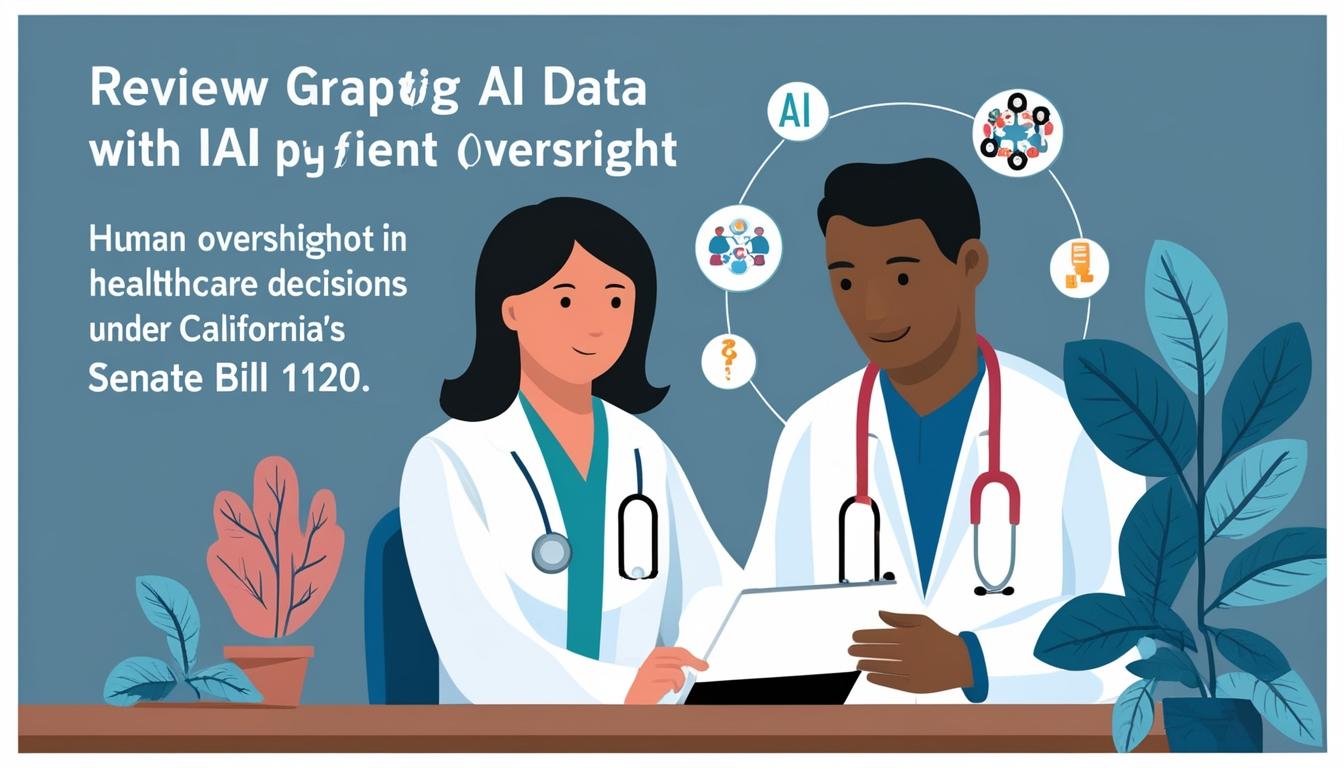
California Governor Gavin Newsom has enacted a new piece of legislation known as Senate Bill 1120, or the Physicians Make Decisions Act. This new law is designed to protect patients' access to necessary medical treatments by introducing stricter oversight measures when artificial intelligence (AI) is employed by insurers to evaluate the medical necessity of healthcare services.
The use of AI in healthcare, particularly in the realm of utilization management—the process through which insurance plans assess the necessity of requested medical services—has been gaining traction. This process often involves the evaluation of service requests, known as prior authorization requests, to ensure that insurance benefits are allocated to medically necessary services and to curb unnecessary expenses. While AI has shown promise in making these processes more efficient and reducing costs, concerns have been raised over its potential to produce inaccurate or biased results, leading to wrongful denial of claims. Senate Bill 1120 aims to address these oversight challenges.
The Act is applicable to health care service plans and any entities contracted to provide utilization review or management services, termed "Regulated Parties". This encompasses health plans licensed under the California Department of Managed Health Care. Under the new law, AI tools used in these processes must adhere to specific guidelines:
- AI decisions must be grounded in individualized data such as the enrollee’s medical history, clinical circumstances, and relevant clinical information.
- The AI tool cannot make determinations solely on group data statistics.
- Healthcare provider decision-making cannot be supplanted by AI.
- Discrimination against enrollees, in violation of state or federal laws, is not permitted.
- AI tools must be applied fairly and equitably across all cases.
- The algorithms used in AI tools must be open to inspection for auditing and compliance purposes.
- Regular assessments of AI outcomes are mandated to verify compliance and accuracy.
- AI must handle patient data in accordance with California's Confidentiality of Medical Information Act and HIPAA regulations.
- The AI tool should not cause harm to enrollees, directly or indirectly.
Moreover, the legislation stipulates that any decision concerning the medical necessity of a treatment must be made by a licensed physician or a competent healthcare professional, ensuring that AI does not replace the role of a medical provider in these decisions. This stipulation underscores the importance of maintaining human oversight in medical determinations.
Senate Bill 1120 is seen as a preliminary step in what is expected to be a broader set of regulations concerning the use of AI in healthcare. The potential for AI tools to influence significant healthcare outcomes highlights the importance of proper oversight to prevent inappropriate denials of coverage, which can lead to adverse health consequences for patients.
This legislation is essential for healthcare providers and insurers, as they will need to adjust their processes to ensure compliance with the new requirements. It marks a significant move towards balancing the efficiencies offered by AI with the need to safeguard patient care and medical integrity.
Source: Noah Wire Services